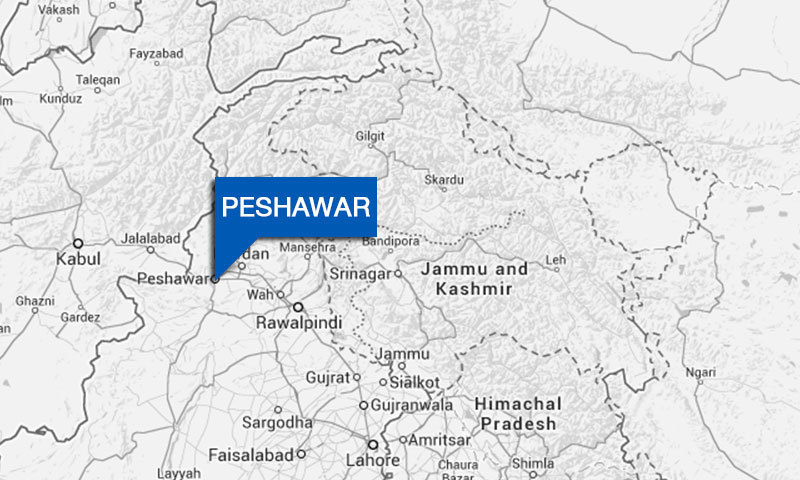
PESHAWAR: A Peshawar High Court bench on Tuesday stayed the provincial government’s minimum wage policy for 19 local industrial units.
While issuing the stay order during the hearing into several petitions, Justice Yahya Afridi and Justice Mussarat Hilali directed the provincial government not to act against the industrial units for not following the Sept 9, 2014 notification fixing the minimum wage of unskilled workers of Rs15,000 per month.
The notification had come into force from July 1, 2014.
The bench later adjourned hearing to Dec 17 asking the labour secretary to respond to petitions in writing by then.
The seven petitions were filed by industrial units, including several textile mills, which are members of All Pakistan Textile Mills Association, to seek the court’s orders to declare the labour department’s Sept 9 notification illegal and without lawful authority.
Asks labour secretary to respond to petitions by 17th
Through the notification, the provincial government has enhanced the minimum monthly wage of unskilled workers from Rs10,000 to Rs15,000.
The respondents in the petition are: Khyber Pakhtunkhwa government through labour secretary, law secretary, Minimum Wages Board chairman, and relevant director and assistant directors of the labour department.
The petitioners have also challenged Section 2 (XIII) of the Act, which provides definition of a juvenile worker, stating that it was contrary to Article 25A of the Constitution as the Article imposed a positive duty on the State to ensure free education to children from 5 -16 years.
They added that through the impugned notification the provincial government instead of ensuring free education was encouraging juvenile labour by enhancing wages, which had a very negative impact on the future of the land.
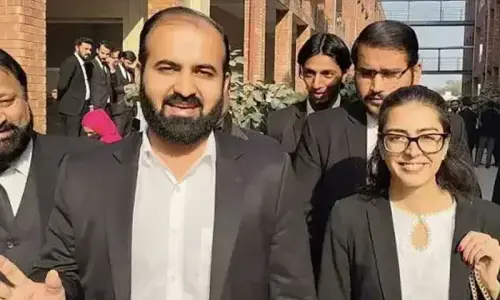
Qazi Ghulam Dastagir, Rehmanullah Shah and Ibrahim Shah, lawyers for the petitioners, said the notification was issued in violation of Section 3 of the Khyber Pakhtunkhwa Minimum Wages Act, 2013 under which the provincial government was supposed to establish a Minimum Wages Board with equal representation of employers and employee or workers.
They said the provincial government had unilaterally adopted Rs15,000 per month as minimum wage without the recommendations of the Board.
The lawyers said the government was not competent or authorised to declare any wages except with the recommendation of the board.
APTMA members have said in their petitions that Pakistan textile industry contributed more than 60 percent to the country’s total exports, which came to around $5.2 billion.
According to them, the industry contributes around 46 percent to the total output produced in the country.
In Asia, Pakistan is the eighth largest exporter of textile products.
The petitioners said the textile industry currently faced massive challenges including energy crisis, technology and other factors such as high interest rates and cost of inputs, non conducive government policies, terrorism, and non-guaranteed energy supplies hinder their competitiveness.
They said in light of the challenges, the industry was not in a financial position to pay such high minimum wages to unskilled employees or workers.
The petitioners said being part of textile chain industry, petitioners were contributing significantly towards foreign exchange inflows of the country and had potential to drive the country out of balance of payment deficit.
They said the provincial government through the Khyber Pakhtunkhwa Minimum Wages Act, 2013, introduced a minimum wages and various allowances for different categories of workers employed in certain industrial and commercial undertakings and establishments and for the matters connected therein.
Published in Dawn, December 9th, 2014