THE poultry industry has run into problems, or at least it says so. For the past few months, the rate of chicken meat has dropped to a level, which, according to the industry, does not even recover cost of production, leave alone a reasonable profit margin.
As a result, it claims that around 35pc, or 4,000 farmers have already opted out of business and more are on their way. If the poultry business is not rescued, the situation can worsen: production would decline further as more farmers leave, and price would rise because of squeezed supplies.
The industry leaders went public last week with the warning of declining production (resulting in higher prices) while pleading for a rescue package, including some concessionary loans for farmers to bring them back into business and deferring loan payments for those who are surviving on the edge.
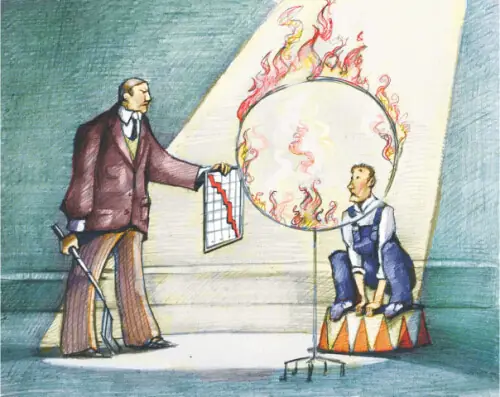
The industry has to create a balance between its profit margin and consumer concerns
They also demanded freight subsidy for exports, so that the industry could find some solace in foreign markets in these difficult times like this one. Finally, they asked the government to fix a minimum price for poultry so that falling prices do not force business closures.
Seeking incentives, the industry argues that if the government always moves to check abnormal high chicken rates, it would be in the fitness of things that it should also intervene to stabilise prices.
The poultry industry elsewhere has brought price stability through expansion in processing and exports. The Pakistani industry has not made strenuous for boosting exports despite having ample opportunity in the past one decade and also an elaborate platform — a world class genetic base and even better management practices that it brought in with huge investment.
This failure comes to haunt it in market cycle. It knows that during months of Eidul Azha and the holy month of Muharram, the prices fall. If its press conference was meant to warn the government and people to prepare for higher prices, the warning has been sounded but long-terms problems of the industry would not go away.
The poultry industry has to create a balance between its profit margin and consumer concerns. The farmers are producing blindly, without taking the cyclical impact of production, market and prices into account. They only become aware of the problem when price actually fall. There is a lack of production and demand database to forewarn farmers against shortages and gluts.
The industry has done almost nothing on this account despite having a pro-active association that regularly gets in touch with the media and the government during what it interprets as a crisis.
In the current over-production scenario as well, when excess new grandparent stocks were imported, converted into parent stocks and sold through massive marketing, it was bound to cause a glut. To make it more severe, the glut also coincided with low consumption months, and prices were relatively low.
But it is also a fact that within the next few weeks, prices would rise again as consumption rises on the renewed demand for marriage parties during winter, helped by a drop in the output by closure of many poultry farms.
The industry has not made serous efforts to boost exports of the processed chicken meat because it is generally making lucrative profits in the domestic market. However, its cost of production is slightly higher because of rising cost of inputs — wheat prices, power crises and rising labour charges.
But the industry has to invested more in increasing its efficiency.
Apart from pleading for a rescue package, the industry should try to strengthen its own weak links: inefficiencies, consumers’ awareness and farmers’ training.
It needs to invest more in processing and efficiencies and finding export markets. Unless it is able to do that, it would remain a willing victim of cyclical ebbs and flows of production, prices and profits.
It should only invite the government for policy matters. No industry around the globe has prospered on official handouts or rent-seeking on a long term basis. Pakistani poultry would not be an exception.
Published in Dawn, Economic & Business, November 3rd, 2014