ISLAMABAD: Prime Minister Nawaz Sharif once again tried to resolve the prevailing political crisis by accepting a demand of Pakistan Tehreek-i-Insaf (PTI) Chairman Imran Khan and requested that the Supreme Court announce a commission to investigate PTI’s allegations about the rigging in the May 2013 general elections.
However, his offer did not impress the PTI while many analysts on various new channels also dismissed it as “too little, too late”.
It was a day of political uncertainty as the standoff seemed to continue with little efforts at mediation. The only hope of reconciliation was the scheduled speech of the prime minister which was supposed to come at eight o’clock at night.
But, at seven o’clock, Imran Khan gave an exclusive interview to a news channel where he provided what the anchor called a concrete proposal for what the PTI chief expected to announce once he reached Islamabad — the resignation of the prime minister; an investigation by the Supreme Court and fresh elections under a government of technocrats.
It seems as if someone in the government was listening.
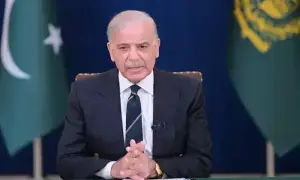
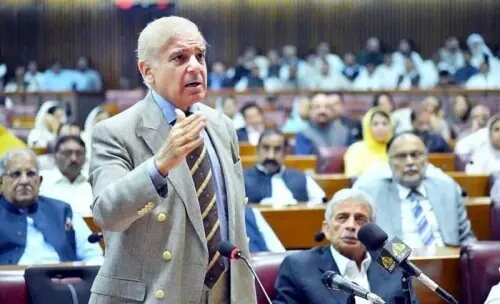
After a delay of half an hour, at eight thirty, the prime minister’s recorded speech was telecast on most channels.
Clad in a dark sherwani, the prime minister rambled on about mandate, his government’s ‘economic achievements’ and the supremacy of the parliament.
Partly sticking to his written speech and occasionally breaking away to speak extempore, he spent quite some time explaining that the parliament was a supreme institution that had the power to bring reforms and that change would not come through agitation on the street.
“All the paths to reforms will pass through the parliament. In the presence of the parliament, it is impossible that important national decisions are made on streets, squares and grounds,” he said.
He then spoke about the electoral reforms committee formed by the parliament.
He promised that all recommendations of the 33-member parliamentary committee will be implemented and, if required, laws will be changed accordingly even if it means amending the manner in which the Election Commission of Pakistan (ECP) works.
However, towards the tail-end of his speech, the prime minister suddenly announced that he was willing to offer a way out and appealed to the SC.
He said the government was requesting the chief justice to form a commission comprising three SC judges, which would examine the election results and present their findings.
“I hope that after this decision of the government there is no question of any agitation,” he said.
He also invited the annoyed political forces for a dialogue with the government, adding that he would not make his ego an obstacle in the way of national security, stability and prosperity in the country.
Before he made this offer, the prime minister referred to the long march announced by the PTI and the PAT without taking names.
He said that a “particular political party was levelling allegations of rigging in the polls without providing any evidence” which he said was “challenging the whole democratic system and the country’s economy, political stability and international reputation is being destroyed”.
He added here that though he believed in peaceful protests, no-one would be allowed to create anarchy and play with the constitution. “No one would be permitted to take the entire system hostage and provoke people, in the name of religion, to kill others.”
Analysts agreed that the prime minister made it clear by such sentences that while the government was willing to negotiate with the PTI, it would not tolerate the PAT protesters.
“No trouble-maker would be allowed to wrap up projects worth billions of dollars that are aimed at improving infrastructure and energy, throwing the nation into poverty, backwardness and darkness,” he warned.
The prime minister lauded the role of the media but cautioned that it should not be used as a tool for furthering the un-constitutional agenda of some elements.
Published in Dawn, Aug 13th, 2014