It is the season of political immaturity and nobody is putting their money on the outcome.
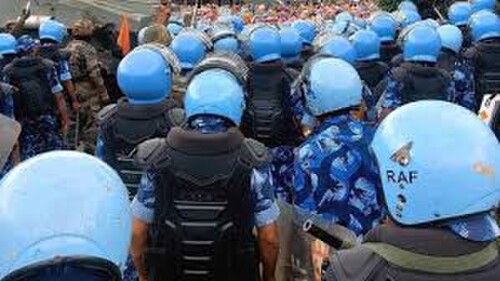
The stock market has seen historic withdrawals sparked by panic. The rupee is struggling as importers are buying dollars in large quantities, also driven by panic. Day-to-day government work has ground to a halt. Shipments of edibles and fuel into cities and towns across Punjab are disrupted, leaving markets and homes running low on supplies of perishable food.
Citizens have to first locate pumps that are open and then endure a four-hour wait to fill up. The intercity movement of goods and people is strangulated, decisions remain stuck in limbo, stocks are running low in factories and homes and uncertainty grips the financial markets as the country waits to see how the brewing confrontation between the government and the PTI will end. Pakistan may have witnessed worse situations before, such as the post-election violence of 1977, but even today, extra-constitutional intervention cannot be discounted.
The blame lies with the politicians, beginning with Imran Khan, who has thrown a spanner into the wheel of democratic consolidation in Pakistan. His grievances, while valid and in need of investigation, do not merit such extreme action, especially when it is yet to be demonstrated convincingly that the irregularities pointed out changed the outcome of the election. Many elections, particularly in developing countries, when examined under the microscope, will show irregularities of some sort, and Pakistan is no exception.
But, instead of calling for a re-election and demonstrating his support on the streets, the wiser course would have been for Mr Khan to accept the government’s offer of negotiating a way out of the stand-off. In the end, the vast and messy contest of democracy works only because all parties agree that the outcome in hand is the only one they have to work with in spite of imperfections in the process. Mr Khan might think he deserved to win the election last year, but he did not and must accept that reality.
And what is Nawaz Sharif’s excuse for his role in such amateur politics? After all, this is not his first taste of the combustibility of Pakistani democracy. He takes pride in presenting himself as the repository of Pakistan’s political memory, boasting three decades of experience in politics. Was it then so hard for the prime minister to deal with Mr Khan’s grievances before matters came to a head? Was it necessary to blockade his own capital and his hometown, thereby signalling his weakness and desperation?
Mr Khan has behaved like a novice by not leaving himself a way to climb down from the maximalist position he has taken. But Mr Sharif has played into his opponents’ hands by staying aloof for long and then panicking. The result is a march of folly that begins tomorrow and ends in territory as yet unknown.
Published in Dawn, Aug 13th, 2014