13
13


WASHINGTON: If Afghanistan and Pakistan fail to keep pressure on extremists within their borders, Al Qaeda could return to the region to plan 9/11 like terrorist attacks, warns a top US general.
Gen Joseph Dunford, who commands all US and allied forces in Afghanistan, also told Congress on Thursday that those in uniform did not necessarily support President Barack Obama’s decision to withdraw all American troops from Afghanistan by 2017.
“I think all of us in uniform, including the Afghans, would have preferred for that to be a bit more ambiguous,” he said.
Gen Dunford, who has now been nominated the next commandant of the US Marine Corps, told his confirmation hearing that success in Afghanistan also depended on Pakistan’s ability and desire to go after militants on their side of the border.
According to him, Pakistan has had some success against the TTP but they had been less effective against the Haqqani network.
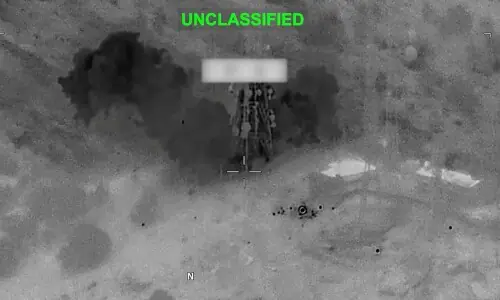
Zarb-i-Azb: The 'War of Survival'
Asked to grade the cooperation between Afghans and Pakistanis, Gen Dunford said he would give them a “D”.
Stressing the need for Afghanistan and Pakistan to work together to defeat terrorism, he warned that if they failed to do so, there would be a “significant risk” of Al Qaeda’s return to the region.
Earlier in his testimony, Gen Dunford said he agreed with the pace of the US withdrawal from Afghanistan but under questioning from Senator John McCain, he revealed that US military leaders did not recommend “a hard date” for the pullout.
He said that military leaders prefer to re-evaluate troop decisions based on conditions on the ground, as declaring a fixed date benefitted the enemy. In this case, the enemy learned that there would be no international forces in Afghanistan after 2017, he added.
President Obama plans to withdraw all but 10,000 troops by the end of 2014, cut that number in half by the end of 2015 and leave only about 1,000 after 2016 to provide security assistance to Afghan forces.
Gen Dunford told the US Senate Armed Services Committee that he was ‘not confident’ if the Afghan security forces would be able to sustain themselves after the withdrawal.
The general, who faced tough questions about his current assignment, acknowledged that even after 13 years of US-led campaign to eradicate terrorism, Afghanistan could still revert to being a safe haven for terrorists.
The Afghan military, he warned, did not have its own intelligence capabilities or a developed aviation system and this had affected its ability to combat terrorists. To defeat terrorists, Afghanistan would need an effective special operations force but such a force could not function without adequate intelligence and aviation facilities, he added.
Asked if the US could change its pullout plans, Gen Dunford said they were already working to meet the schedule set by Washington.
He said if the administration decided to send more help to Afghanistan in 2016; they need to plan it at least a year in advance. US special operation forces, however, could assist Afghans in fighting the terrorists, he added.
Published in Dawn, July 19th, 2014