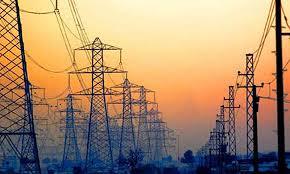
LAHORE: Contrary to official claims, the sectoral data shows that power situation worsened over the past one year as the power generation is now stuck at exactly where it was a year ago (around 14,500MW), but the demand increased by around 800MW, widening the gap between demand and supply which has caused an increase in loadshedding.
According to the system, demand-supply data prepared by Pakistan Electric Power Company (Pepco), the country on an average generated 14,424MW in July last year against the demand of 18,884MW, showing a gap of 4,460MW.
The peak demand-supply situation was slightly different. During 6pm to 11pm the total demand touched 20,012MW on July 30 and generation went up 16,170MW on that particular day. Otherwise, the generation remained well below 15,500MW throughout the month. The highest shortfall for the month was recorded on July 6 when it rose to 6,553MW — generation plummeted to 12,618MW against demand of 19,171MW.
During this year’s July so far, the maximum demand has touched 20,815MW and peak generation around 14,539MW, a deficit of around 6,276MW.
Know more:Power shortage leads to worst loadshedding
According to a former managing director of Pepco, one should not forget that the government had just cleared the entire circular debt a year before July and there were no system constraints. Every machine was running to its capacity. Now the circular debt has reared its head. Fuel supplies have been squeezed; the sector is getting around 22,000 tons furnace oil against total the demand of around 36,000 tons. So, the situation was bound to worsen, he added.
The government prematurely inaugurated the Nandipur plant and launched a media campaign that 425MW plant has been added to the system. Within days, the plant went offline because its basics were not put in place. It was originally designed for furnace oil, but was being run on diesel. Managers at the plant have refused to run it permanently on diesel.
Similarly, the 747MW Guddu power went offline because its contractor has refused to risk premature running of the plant. Same was the situation at 410MW Uch-I which still does not have transmission line to distribute power although the government’s media campaign led everyone to believe that it was in the system.
Both plants at Uch with total capacity of 835MW are available, but cannot transmit power; either one of them is switched off or Guddu is taken offline to supply power from that area. Had all these plants, with a combined capacity of over 1,500MW, been actually added to the system, the situation might have been better than the last year, the member of Wapda said.
Published in Dawn, July 8th , 2014