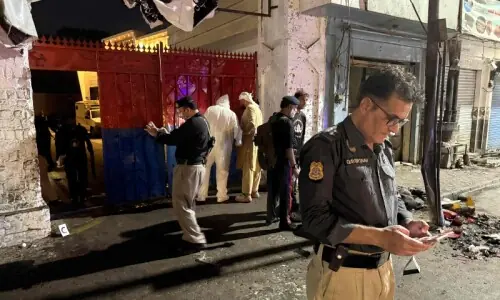
IF the militants had their way, the whole nation would forcefully be subscribing to their antediluvian code. All confessional and cultural differences would be vigorously stamped out as the extremists are not fond of difference of opinion. Perhaps that is why today, anything that veers even slightly from the ultra-orthodox path is under threat in Pakistan. Take, for example, Sufi shrines. As reported on Saturday, a shrine on the outskirts of Islamabad was targeted by an IED during urs celebrations. Luckily, due to the low intensity of the device no fatalities were reported, though some devotees were injured critically. Considering that a large number of devotees were attending the event, much greater carnage could have been caused. This is not the first time a Sufi durbar has been targeted in or near the capital. In 2005, an explosion rocked the Bari Imam shrine — perhaps the capital’s best known durbar — during the saint’s annual urs. Numerous fatalities resulted. In the years since, the shrine has been mostly closed during urs festivities, depriving devotees of the colour and zeal that marked the event. A few days earlier, the Auqaf department sealed the shrine as an explosive device was found near the structure in May.
While ensuring the security of people’s lives is amongst the government’s primary duties, we fail to understand why appropriate security measures cannot be put in place that would safeguard citizens’ lives while allowing them to continue with religious and cultural activities. Militants have attacked everything from mosques to markets; does the state feel that shutting everything down each time there is a threat is the best solution? Militants have also bombed the Data Durbar complex in Lahore, Abdullah Shah Ghazi’s dargah in Karachi as well as Baba Farid’s shrine in Pakpattan. Will the state one day disallow urs celebrations at these iconic shrines due to security concerns? Instead of curtailing cultural activities, the government needs to strike at the root of the problem. For example, there are numerous Sufi shrines in Islamabad and its suburbs, and a number of them are being threatened by the growth of some extremist madressahs sprouting up in the area. Police and intelligence agencies have done little to keep an eye on the activities of the extremists. What is clear is that the age-old cultural and religious practices of the people cannot be put on ice indefinitely due to the murderous bullying of obscurantists.
Published in Dawn, June 22nd, 2014