TUESDAY’s unfortunate clashes in Lahore and the MQM’s strike call, fortunately withdrawn, for Karachi are exactly the kind of incidents and reactions we do not need at a time when the armed forces have gone into action against terrorist sanctuaries in North Waziristan Agency. So far, the nation’s response to Operation Zarb-i-Azb has been overwhelmingly positive. In fact, parties long opposed to the operation came quickly round to acknowledging the TTP negotiators’ obduracy during the failed talks and upheld the decision to finally crack down on those who have given the country only death and demolition. Imran Khan’s Pakistan Tehreek-i-Insaf dropped its opposition to the military option, saying his party would stand by the army. The change in the Jamaat-i-Islami’s policy was even more radical: it repudiated its past stance and asked the insurgents to shun terrorism and join the political process. Thus, ignoring the grumblings of some small parties, the country seems more or less united on how the terrorists should be dealt with.
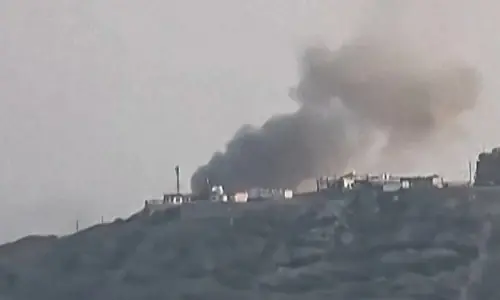
Unlike previous military operations — as those in Malakand and Bajaur — and the occasional punitive bombings, Operation Zarb-i-Azb has wider strategic aims and seeks to restore the state’s writ by wiping out the militants’ hub in North Waziristan. A possible backlash has been taken into consideration, with the high command deciding to deploy the army in Islamabad, Karachi and other cities. However, the very dimensions of the operation make exacting demands on the government, for the latter must keep the people informed of the progress of the war and let them know who exactly the enemy is. Will the operation take in its sweep terrorists of all hues — foreign militants, various TTP factions and the breakaway Sajna group — or will there still be a soft corner for the ‘good’ Taliban? So far, the nation has been given very little information about what is happening in the agency and how much ground has been covered by the troops. The danger is that an information gap could be exploited by the militants, and irresponsible sections of the media could lend credence to rumours by printing and broadcasting them.
It is also important that the unity now being demonstrated by the people is not allowed to erode because of short-sighted political goals or the temptation to upstage one political party or the other. True, in Pakistan some distance has yet to be covered before politicians realise that a united front will serve as a bulwark against any attempt to undermine a representative system. At the same time, the army too must realise that the support for the operation could prove short-lived, unless the clean-up operation is thorough. Given the existential threat that looms, the sooner our political and military leadership understand this, the greater our chances will be of prevailing over the forces of obscurantism.
Published in Dawn, June 19th, 2014