Having lived almost half my life overseas, I somewhat pride myself on having seen and crossed various international borders. Each border between two countries is reflective of the relationships it shares with its neighbour and has its own atmosphere. The Pakistan-India border at Wagah, for instance, is more like a carnival, where, despite all the foot stamping and glaring, there never seems to be any real danger of war breaking out. On both sides of the razor wire and fence, everyone seems too busy having fun. This seems reflective of our two nations, who while officially hating each other, still love smuggling khusas and paan across the border. Other borders I have crossed have been friendly or stern, officious or pompous, but all following a general theme of separating us and them.
I was unprepared, however, for the North-South Korean border, or the DMZ (Demilitarised Zone) as it is affectionately called. Before going, I thought I’d seen it all and had made up my mind that I was going to be unimpressed. After all, I’d been to Wagah and the Khyber Pass and lived to tell the tale, so I was sure that the border between the two Koreas would be more of the same.
 |
| Panmunjon |
However, I realised that it might be slightly different when I found out that one can only go to the DMZ with a tour bus, with a valid passport and strict ID checks. I was told that being Pakistani, I could only enter the DMZ, a 4km wide, 240km long stretch of land that separates the two Koreas, after faxing in copies of all the pages of my passport, birth certificate, marriage certificate, employment history and a few other obscure documents to the tour agency.
I was warned that despite fulfilling all these requirements, I still may not be allowed entry to the area. As I was jamming the fax machine at work, it did occur to me that perhaps North Korea might welcome us Pakistanis more than the South, but given that I live and work in Seoul, I felt it prudent to stay on this side of the border.
After the atomic attack on Nagasaki on Aug 9, 1945, three Americans in the US War Department drew a fateful line at the 38th Parallel, dividing Korea, then a Japanese colony and a country that had been united since time immemorial, into North and South Korea. The US entrenched itself in the southern half of the peninsula and put its weight behind Rhee Syngman while Russia installed Kim II-Sung in the North. Kim, who played Mao Zedong off Stalin to ensure that he would have at least one of the world’s heavyweights to support him, launched a surprise invasion of South Korea on June 25, 1950 and within three days had overrun Seoul, which lies less than 60km south of the border. On America’s insistence, the UN condemned the attack and 16 more nations joined the allied forces, including the British and the Turks. China joined the war on the North Korean side; it ultimately took three years for an armistice to be signed, establishing the Demilitarised Zone and putting a Neutral Nations Supervisory Commission (NNSC), made up of Swiss and Swedes (nominated by the South), and Poles and Czechs (nominated by the North) in charge of preventing further outbreaks.
Even today, technically, North and South Korea still remain at war; so the lists of dos and don’ts that the tour company licensed to operate in the DMZ sent me was exhaustive. No T-shirts, no torn jeans, no clothes with logos, no zoom cameras, no standing, no waving and no talking until authorised. The list went on; I realised that perhaps this border was going to be different.
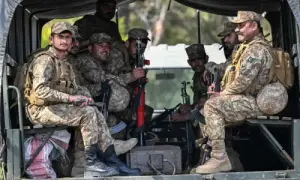
The bus lurched off from central Seoul with the usual motley crowd of tourists. We headed north, and eventually arrived at the first check point into the DMZ itself. Private cars are not allowed here; army personnel got onto the bus at three different check points to examine the documents and match every person’s passport to their face. I’d been scrutinised less while flying into New York!
 |
| The third tunnel |
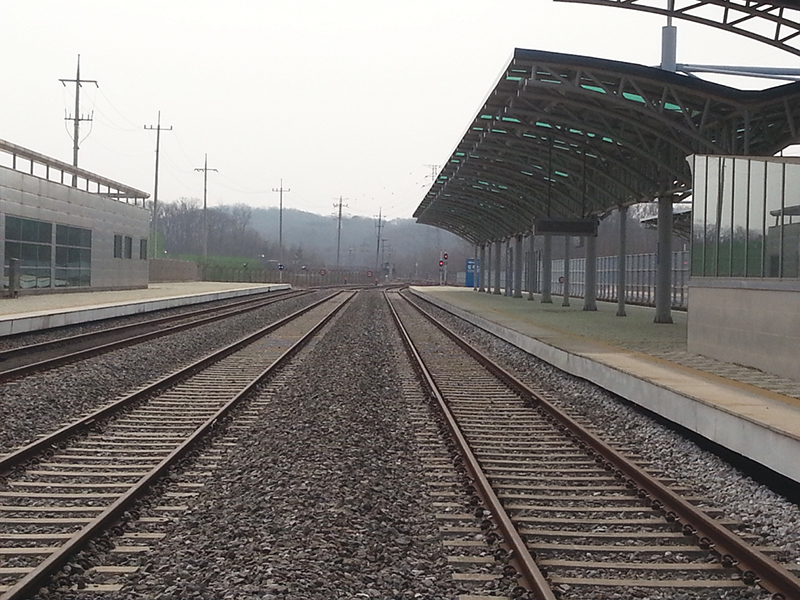
The first stop was Dorasan train station, on the line that once ran between North and South Korea. For some years, it was used to transport freight between the two countries, until North Korea closed the border in 2008. The station is eerily clean and quiet and one can pose for pictures next to the sign that reads Train to Pyeongyang. No train has run for many years now and families divided by the conflict are losing hope. It’s clear that the station is now more of a tourist trap than anything else but as one stands on the train tracks and looks north, it is not hard to think of the what if North and South Korea are united? What if the North came steaming down?
Other sites included in the tour were an observatory, where one could look into North Korea (no pictures allowed) to see the apparently dummy towns. The story goes that no one lives in these North Korean border towns, that the buildings have no windows and the lights come on and off at the same time every day.
On the southern side of the DMZ, the people are mostly rice farmers, who are given massive tax incentives to farm the fertile lands. But men of the region aren’t allowed to marry outsiders and women who do must leave. They farm the lands when allowed to by the army and have curfew hours. Not a pleasant existence, it seems.
The wildlife, however, thrives. One of the unexpected side effects of the war has been that the whole area has become a sort of eco-sanctuary for birds and other small animals who seem to be unaffected by land mines. One can also go into the tunnels that have been dug by the North Koreans. While this sounds all very exciting and like The Great Escape, it is a sobering thought that these tunnels are still being dug and used today.
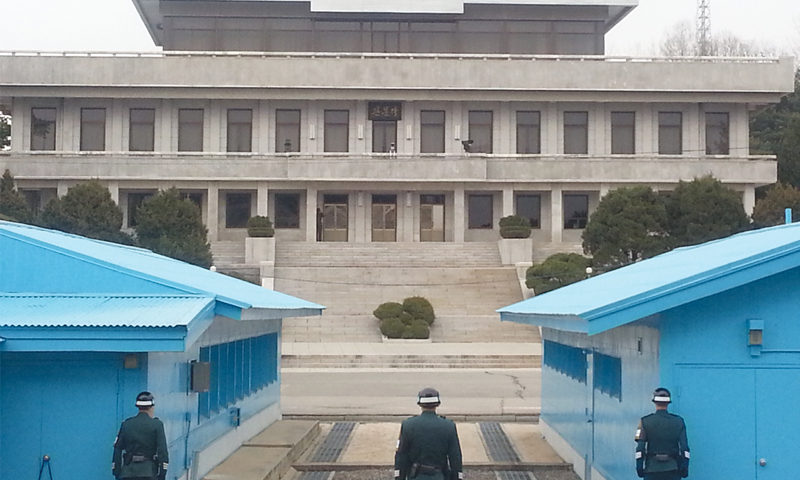
The highlight of the border experience, however, is Panmunjon — a village on the de facto border between North and South Korea. The official name of the area is the JSA, or the Joint Security Area, where discussions between the North and South still take place in the blue huts placed in the centre of the white line dividing the nation. Here, the microphones on the tables are always live and soldiers on both sides wear mirrored Raybans, to prevent the other side from tracking eye movements.
Armed soldiers stand at attention, half hidden by the huts, to face off the enemy. As visitors, we wore large blue badges, identifying us as the UN Command Military Armistice Commission (UNCMAC) guests, which presumably meant that we wouldn’t get shot. When looking over at the North Korean side, we were given strict instructions on where to look and how to behave; a tourist in our group was sent back for looking around. It was easy to believe that war could break out here, far more than any place I’d ever been, and I found myself nervously wanting to get back to the relative safety of the bus.
A short ride allows one to travel along the border; and the guides point out places where people have been shot coming over. This is the most heavily mined border in the world, so getting off the bus is not an option. Both sides seem determined to outdo the other, building ever higher flag poles and laying ever more anti tank traps.
A short ride allows one to travel along the border and the guides point out places where people have been shot coming over. This is the most heavily mined border in the world, so getting off the bus is not an option. Both sides seem determined to outdo the other, building ever higher flag poles and laying ever more anti tank traps. The magazine, Soldier of Fortune, apparently offers a hefty reward to anyone who obtains a piece of the 270kg North Korean flag that flies at the border. Several people have died trying and the South Koreans are now apparently manufacturing an even bigger flag! It’s a sobering place, more so because the world knows so very little about North Korea.
Back in Seoul, with its hustle bustle and business as usual, it’s hard to imagine that the DMZ is so close, yet still in an era reminiscent of the Cold War. Wagah it is not, but it’s certainly an eye opening experience, even for us veterans of hostile border areas.
Published in Dawn, Sunday Magazine, May 25th, 2014