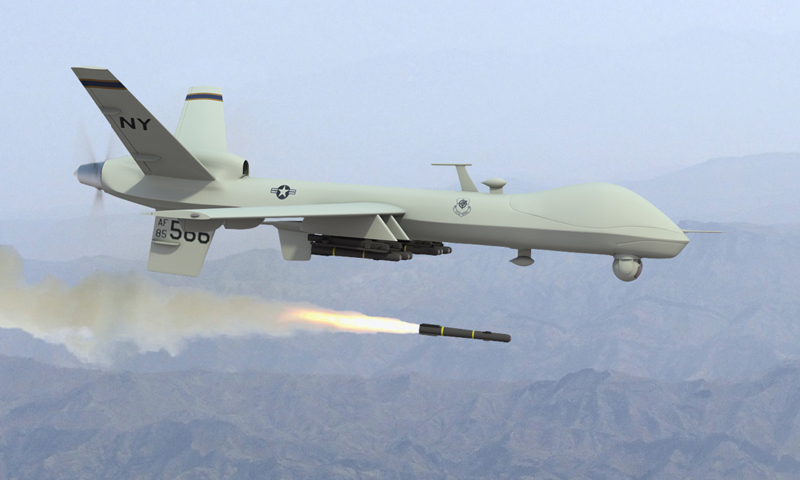


GENEVA: No Pakistani civilians were killed by US drones last year as Washington slashed its controversial use of the pilotless planes in the country, a UN expert said Wednesday.
“I am pleased to be able to report a very significant de-escalation in the use of armed drones by the United States in... Pakistan,” Ben Emmerson told reporters in Geneva.
The total number of recorded strikes in 2013 was down to 27 from a peak of 128 in 2010, said Emmerson, who monitors respect for human rights in counter-terrorism operations.
“But perhaps most significantly, for the first time in nine years there were no reports of civilian casualties during 2013 in the FATA area of Pakistan,” he added.
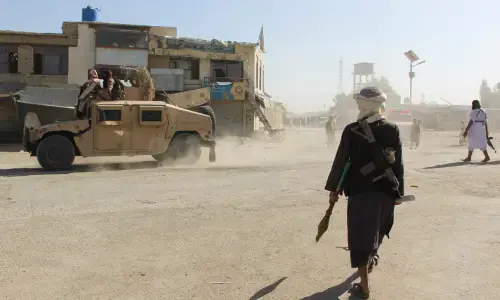
The FATA, or Federally Administered Tribal Areas, is a region bordering Afghanistan where Pakistan's military is battling the Taliban and the United States has used drones to strike at al Qaeda militants.
Drones, which beam footage to operators at distant US bases who then launch the strikes, are meant to allow precision hits.
But they have caused uproar in Pakistan over civilian casualties in botched strikes, as well as concerns that their use has hampered efforts to hold peace talks with the Taliban and breached national sovereignty.
Last May, US President Barack Obama raised the bar for launching attacks.
But despite the change of tack in Pakistan, Emmerson said that the picture in Afghanistan and Yemen was “much bleaker.”
Citing a report by the UN Mission in Afghanistan, he said that there was a threefold increase in drone-related civilian casualties between 2012 and 2013.
A total of 45 Afghan civilians died in drone strikes last year, he said.
“And the picture in Yemen remains cause for serious concern. The frequency of armed drone strikes appears to have intensified, particularly during the closing months of 2013, with a sharp escalation in the number of reported civilian casualties,” Emmerson said.
At least 12 people are believed to have died when a drone struck a wedding convoy in Yemen in December.
Emmerson spoke to reporters after addressing the UN Human Rights Council, where he presented research on dozens of drone strikes where civilians allegedly perished, pulled together by his team on a special website www.unsrct-drones.com which helps reconstruct attacks.