0
0


WASHINGTON: As the Pakistani delegation was visiting Capitol Hill earlier this week, a senior lawmaker told a Senate panel that the threat emanating from Pakistan’s tribal areas had diminished.
This was a marked difference from the recent past when Pakistan was often targeted as “the sources of all troubles” at Congressional hearings.
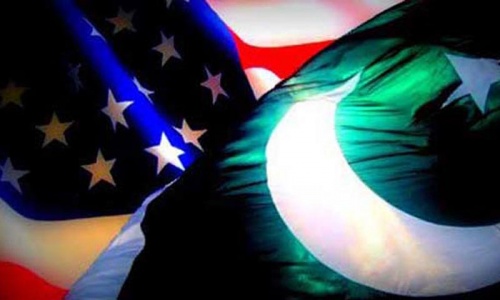
As a senior Pakistani diplomat noted, the resumption of the US-Pakistan Strategic Dialogue in Washington this week had also “reinforced the positivity” that started with US Secretary of State John Kerry’s visit to Islamabad in August.
During the talks both sides continued to view each other with suspicion. While State Department and White House officials were careful in public comments, the US media often quoted senior administration officials as telling them that they considered Pakistan “the most dangerous place” in the world.
But on Wednesday, Senator Dianne Feinstein, who chairs the powerful Senate Select Committee on Intelligence, told her panel that “the threat emanating from Pakistan’s tribal areas has diminished due to persistent counterterrorism operations; the threat from other areas has increased”.
The same day, the US State Department issued a statement saying that the United States was “confident that Pakistan is well aware of its responsibilities with respect to nuclear security and has secured its nuclear arsenal accordingly”.
This was in response to a New York Times report that a scare in 2009, when the United States feared that nuclear materials or a weapon was missing in Pakistan, led President Barack Obama to order the basing of a permanent monitoring and search capability in the region.
A joint statement, issued after talks between Foreign and National Security Adviser Sartaj Aziz and Secretary Kerry on Jan 27, when the NYT published the story, also underlined this point. The statement “expressed confidence in Pakistan’s commitment and dedication to nuclear security” and recognised that Pakistan was “fully engaged with the international community on nuclear safety and security issues”.
The media almost ignored Mr Aziz’s visit. Such reports, however, do not dishearten Pakistani diplomats who hope that the growing warmth in bilateral ties will “soon be noticed by the US media and will reflect in their reports too,” as one of them said.
US officials, who participated in the strategic dialogue, say that the talks were about making a blueprint for the future relationship and that has been achieved. They reject the criticism that no concrete decisions were taken and no agreements were announced after the talks. They say that at a briefing before the talks, senior US officials had already told journalists that this session was “not about deliverables” but about building bridges.
A senior Pakistani diplomat said that “outlines of future interactions” were drawn in these talks while “specifics will be decided in the working groups”.