1
1
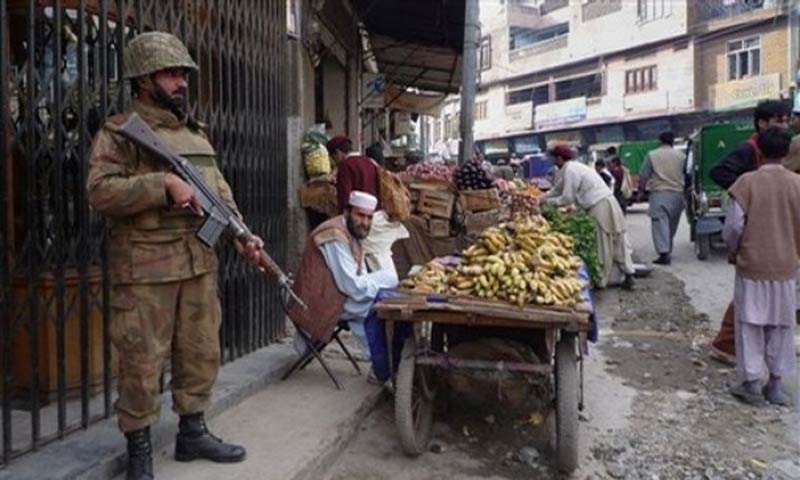

Dr Baseer, a resident of Tegdari village in Khwazakhela, is far too worried to enjoy the crisp, cold weather. And it’s not because he is short of gas.
The tall, fair man is worried about the future of a girls college in his village. “If this college is gone, our daughters may drop out instead of travelling long distances,” he says. “The next generation of mothers might be illiterate.”
Unflinchingly proud of Swati society that values and encourages women’s education, he is unhappy about the military’s planned cantonment in Khwazakhela, Swat, which will eat up land currently housing a girls degree college and hostel, a girls higher secondary school, schools for boys and an animal husbandry hospital. The plan for cantonment in Swat was announced shortly after the military operation in the valley. By now it is clear that the cantonment will comprise a cluster of three stations.
The first already exists in Chakdara, Malakand. The second will be established across the Swat river in Kanju township, a newly developed area in Kabal tehsil which overlooks Imam Dheri and the ‘Najya Hill’, which once housed the headquarters of Mullah Fazlullah.
Although land is being acquired here for the army’s use, there appears to be little resentment. “We want to extend our support,” said Israr Khan, a member of Kanju Township Residents Welfare Association.
But the third location in Khwazakhela is where Baseer and other residents of four villages are viewing the army’s plans with trepidation.
While their days are spent trying to resist the acquisition of their land, when they gather together at night they inevitably discuss the possible return of the Taliban.
Their fear is not unwarranted. There was a surge in targeted killings of the members of Village Defence Committees in Swat district last year, compared to previous years.
Eight defence committee members were targeted in Swat in 2013, though some locals feel that this number, released by the authorities, is lower than the actual deaths.
“More than 20 persons who were with the defence committee or supported issues such as girls education have been targeted,” said Rafiullah, a local journalist. “However, the police attributed many of these deaths to personal enmity or ordinary crime.”
But the more immediate fear remains the loss of land. The residents of Titabut, Tigdare, Shamak and Langar villages are aware that their agricultural land will be acquired by the military for its planned cantonment; some land in Titabut comprises residential areas.
“We supported the army against the extremists, but its cantonment will end our livelihood,” says Muhammad Riaz, another local farmer. The residents of Khwazakhela supported the military when it entered Swat, where one division is still stationed.
Relations turn sour
However, this mutually beneficial relationship has soured slightly in the recent past because of the move to acquire some 300 kanals of land. The main thoroughfare across Titabut village is now closed to traffic and a large area has been cordoned off with barbed wires.
Villagers are not allowed to access their fields if there is any VIP movement. “My peach orchid used to fetch around Rs500,000, but this year the contractor has offered only Rs70,000,” said Zahid Khan, explaining that the loss occurred because “labourers were not allowed to move freely last year and tend to the trees”. The locals fear that the compensation being offered is too low to offer a new life elsewhere. “They are offering us between Rs80,000 and Rs100,000 per kanal, but what will this fetch us elsewhere,” wonders Shamsher Ali.
“We have suggested that they use government land two to three kilometres ahead in Serai area or our unused land at Byana hills close by,” says Farooq Ali Khan, referring to the hills overlooking Khwazakhela.
When asked about the Serai land, Swat Deputy Commissioner Syed Imtiaz Hussain said it was protected forest land. Regarding the compensation issue, he points out that price being offered is based on last year’s sale prices. “The government is also offering a 15 per cent bonus plus compensation for profitable orchids,” he added.