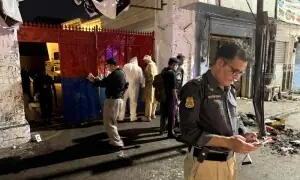
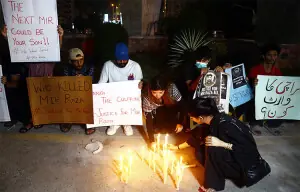
IT is a sign of the times when ‘only’ a handful of deaths means that an occasion has passed off relatively peacefully. At least four people were killed in Karachi on Tuesday as Imam Husain’s Chehlum was being observed when a bomb went off outside an imambargah in the city’s Orangi Town area. In another time and place such senseless violence would have caused widespread shock. But in today’s Pakistan both the state and society heave a sigh of relief when acts of terrorism take few lives, because we are aware of the mass slaughter terrorists are capable of carrying out. But it’s also true that Karachi remained the only spot where innocent blood was spilt; almost everywhere else in the country Chehlum passed off without incident. Before Chehlum, Rawalpindi was particularly tense because of the sectarian violence and bloodshed that erupted when mourners passed by a mosque on Ashura.
The authorities deserve praise for managing the situation despite high threat levels. Police, paramilitaries and the army had been deployed across the country, especially in locations considered extra sensitive, which helped maintain order. Attempts to foment trouble by extremists were quickly dealt with in Rawalpindi. However, there were chinks in the armour, as the Karachi blasts showed. Apart from the deadly bombing in Orangi, another device exploded on the route of Karachi’s main mourning procession on M.A. Jinnah Road. Credit must go to the citizens for remaining calm. Had the device exploded whilst the procession was under way, a major tragedy would have resulted. This shows that even better intelligence and preventive security steps are needed. Every year the threat level during religious occasions goes up, which means the security establishment needs to stay ahead of the curve.
While preventive security is important, the factors behind sectarian militancy and communal violence must be addressed, with all sides ready to amicably resolve matters that could cause violence — such as the routes of processions and the use of loudspeakers to fan hate speech. The ulema have a major role to play. A code of ethics to ensure sectarian harmony was mentioned a few weeks ago. This needs to be discussed and have the consensus of all schools of thought so that it can be effectively implemented. Most importantly, there must be zero tolerance for hate speech that demonises any sect or religion. Senior clerics must make sure those at the neighbourhood mosque level are not involved in spreading communal hatred, and where there are provocations the state must act under the relevant laws. Perhaps if such space is eliminated for extremists, all communities in Pakistan could live in peace and practise their faiths without let or hindrance.