The uniform issue
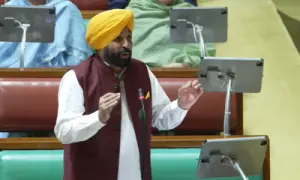
Unless the Punjab chief minister’s statement is contradicted by the president himself, the nation would be justified in assuming that the president indeed has plans to get elected a second time. If he resigns from the army and stands as a civilian candidate like any other, he would be justified in doing so. But if he also retains his uniform, that would be a set-back for all hope of Pakistan becoming a democracy in the real sense till the end of his second term in 2012. Must the nation wait that long if it has not already waited long enough? Pakistan’s history shows that contrived extensions of military-led governments failed to deliver. Ayub Khan seized power in October 1958 and enacted a constitution that ensured his rule for more than a decade. However, when he quit in 1969 following widespread riots, the nation had no constitution, and the country had to begin all over again under another general. In 1977, another military coup ended the government of the country’s first elected prime minister, and all that Gen Ziaul Haq left behind him after the August 1988 plane crash was a country without a prime minister and a constitution that had been tampered with. President Musharraf, too, has distorted the 1973 Constitution through the Legal Framework Order, which, thanks to the MMA, is now part of the basic law. The 17th Amendment made some changes to mollify the religious lobby, but it revived one of the worst features of Ziaul Haq’s handiwork — Article 58-2b. This gives the president the power to dissolve the National Assembly and sack the prime minister. As head of state, Gen Musharraf also presides over the National Security Council, which subordinates the civilian leadership headed by the prime minister to the army.
The systems given by Ayub and Ziaul Haq lasted so long as they were in power. Once they were gone, the civilian-military mix they created vanished. Ultimately, it was the nation that suffered. Must Gen Musharraf follow in their footsteps? Incidentally, Mr Elahi spoke of the general election being held in “2007 or 2008”. Why this ambiguity? The Constitution makes it clear that the National Assembly will be elected after every five years (or earlier, if need arises). Why should the chief minister sow confusion by creating doubts about the holding of elections in 2007? Perhaps, the president will be well served by his associates if he asks the latter to shut up and let the existing, hybrid arrangement come to its legal end.
Cadaver donation law
THE Senate chairman, Mohammadmian Soomro, told the National Institute of Child Health symposium the other day that the cadaveric organ donation bill that had been before the Upper House since 1992 is being reviewed. As the worthy senators take their time pondering the ‘technicalities and legalities’ of the bill, children in Pakistan are dying of kidney and liver failure when organ transplantation could have saved their lives as pointed out by the director of NICH. Mr Soomro’s statement testifies to the lack of credibility of the government, its apathy towards the health of the people and its indifference to the children of this country. Barely two months ago, the federal health minister had promised before an international audience at the ninth congress of the Asian society of transplantation that the organ donation law had been finalized and would be placed before the next session of the National Assembly. Thirteen years is a long time for the draft to have been reviewed. If it has not been done, there is something intriguing about it.
It is now agreed that organ transplantation is the only option for patients suffering from end-stage organ failure. While some have been fortunate to receive an organ from a relative, others have not been that lucky. By farming organs from cadavers, surgeons can give a gift of life to many. Hence the need for legalizing cadaveric donation. It is strange that in spite of the compelling need for a law of this nature and the fact that this phenomenon is universally accepted by religious scholars as being recognized by Islamic fiqh, Pakistan has been prevaricating on the matter. In fact, ours is probably the only country in the Muslim world which does not have a law of this kind although the support of religious leaders for the law exists. The problem lies in the “pressure and lobbying” that the federal health minister promised to resist. He also condemned the “unethical” organ trade which he described as a source of exploitation of the poor while allowing some doctors to “make profits in the name of serving humanity”. The Senate chairman should also resist the “pressures” of cupidity that are inevitable in a situation like this.
Outsourcing waste disposal
NEWS that Karachi’s nazim is committed to handing over the solid waste management system to the private sector by February 15 should bring some sense of relief to the city’s residents whose public and private spaces are generally littered with heaps of garbage. A cursory glance at even the more affluent areas of the city will bring out the fact that not only is the uncollected filth on the roads an eyesore, such areas are also a breeding ground for various contagious diseases. It is unfortunate that the city governments have failed to put into place an effective waste disposal system. Hopefully, outsourcing the job will bring the desired results. According to a report in this newspaper, the total amount of waste generated in the city is over 7,800 tonnes per day and this does not include construction, electronic, industrial and hospital waste for which statistics are unavailable. An efficient system needs to be in place whereby the waste is collected and either recycled or properly disposed of in designated places. A professional body free from corruption and inefficiency can ensure that the job is done properly.
One can learn from Lahore which has met with some success in this regard as is evident from the general cleanliness visible on the roads and in residential areas. Karachi’s city government should, however, monitor the entire privatization process with caution and ensure that the organization entrusted with the job does its work right. A previous attempt at privatization in 1994 by the now defunct KMC failed largely for administrative reasons. A repeat of that experience should be avoided at all costs.
Post-poll prospects in Palestine
 EARTHQUAKE: that was the commonest metaphor deployed by an evidently shaken international media in describing last week’s Hamas landslide in the occupied as well as the unilaterally abandoned Palestinian territories. In Israel and the West, the outcome of the democratic exercise was greeted almost universally with defiance: we will, they said, have nothing to do with a Hamas-led Palestinian Authority unless Hamas explicitly recognizes Israel’s right to exist and renounces the use of force.
In some cases, raising the latter demand clearly involved a heavy dose of chutzpah. Sure, it would be wonderful if Hamas renounced violence. But would it be such a bad idea for the ruling parties in the United States and Israel to follow suit? Furthermore, Israel’s suggestion that Palestinians, in voting overwhelmingly for Hamas, have slammed the door shut on the peace process ignores the reality that throughout Ariel Sharon’s tenure there has been no such process in evidence. Yasser Arafat, it was said, couldn’t be a dialogue partner because he was a terrorist. So he was besieged and threatened with extermination. His successor was more or less hand-picked by the US and Israel — and endorsed by the Palestinians in the expectation of progress towards a negotiated solution.
But no, Mahmoud Abbas wasn’t good enough either as an interlocutor. Why? Because he was presiding over chaos. It has been reported that Sharon was a bit jealous of American enthusiasm for the man better known by his nom de guerre, Abu Mazen. Which made it doubly convenient for him to pretend that discussions with Palestinians had been suspended because there was no one to talk to. Far from encouraging him to reverse this perverse strategy, the US went along with everything Sharon did — including the unilateral withdrawal from the Gaza Strip, which enabled Hamas to claim that the Israeli pullout was attributable to armed struggle rather than negotiations.
Even marginal progress in regular talks between Israel and a Fatah-led Palestinian Authority may have sufficiently dampened the appeal of Hamas to deny it an outright majority, and some analysts are convinced that the latter’s electoral success neatly slots into Sharon’s preferred modus operandi. “Lying in a coma in Hadassah hospital, Jerusalem, Ariel Sharon has achieved his final triumph,” wrote the British Labour MP Gerald Kaufman in The Guardian last Saturday. “The Hamas victory .... is not only the inevitable outcome of everything Sharon did as prime minister, but is precisely what he would have wished.”
The Sharon government’s attitude is, of course, only one of several factors that contributed to last Wednesday’s “earthquake”. Fatah did not flounder only because of Israel’s contempt: in the 10 years since the previous Palestinian elections, its administration also earned a reputation for corruption, nepotism and inefficiency. Arafat appears to have had little interest in dealing with these issues. Abbas said he did, but has made little headway, quite possibly as a result of being thwarted by powerful Fatah entities who have developed a vested interest in the status quo.
Furthermore, there is a long history of unresolved (and not particularly creative) tensions between the Fatah’s largely elderly hierarchy, consisting mainly of those who have spent most of their lives in exile, and the young turks — veterans of two Intifadas — who grew up under the occupation. Arafat’s reputation helped to keep these differences in check. Abu Mazen is no match for Abu Ammar, at least in this respect.
Hamas, meanwhile, is revered among Palestinians not so much for its sponsorship of suicide bombings as for its effectiveness as a social welfare organization. Its record in municipal governance is said to have its secret admirers among Israeli officials. Is it terribly surprising, then, that Palestinians in such large numbers decided to give Hamas a go? After all, they didn’t have much to lose. And it’s significant that Hamas sought to bolster its support by suspending, rather than stepping up, suicide bombings. As its spokesmen are now keen to point out, it has maintained a ceasefire for nearly a year.
The extent of Palestinian frustration with the Fatah-dominated status quo is exemplified by the fact that many of the voters were well aware that Hamas’s ascendancy could mean the loss of most international aid, but this knowledge failed to work as a deterrent — not least because of the perception that large sums were anyhow skimmed off by the bureaucracy.
Some western commentators, especially in the US, have been calling for a complete boycott of the new Palestinian Authority as well as the suspension of all aid, to make it easier for Palestinians to recognize the gravity of the mistake they have made. According to this line of thought, increased suffering will help the inhabitants of the occupied territories come to their senses and withdraw support from Hamas.
That is a dangerous fallacy. Palestinians are used to being ostracized, and pressure along these lines can almost be guaranteed to enhance the level of militancy and may well presage the return of large-scale violence, especially as Israeli voters sort of reciprocate the Palestinian gesture by returning Binyamin Netanyahu’s Likud party to power in elections scheduled for March.
Netanyahu has already dismissed the Palestinian poll result as the advent of “Hamastan” and blamed it on Sharon’s decision to evacuate all Israelis from the Gaza Strip. The ruling Kadima party, although it cannot disavow the Gaza decision, will try to out Likud, Netanyahu’s party, in other respects, its electoral prospects already diminished by Sharon’s absence from the helm.
In a speech last month, acting Prime Minister Ehud Olmert spoke of the likelihood of further unilateral withdrawals, without making clear precisely what he meant: he may not repeat himself in a hurry, but he couldn’t possibly have intended to imply a complete withdrawal from the West Bank a la the Gaza Strip — which would come pretty close to constituting the basis for a sustainable settlement.
It would probably do so despite Hamas’s majority in the Palestinian legislature. Although the organization has thus far not been able to countenance a two-state solution and is bound by its charter to the destruction of Israel — which makes its stance comparable to that of the PLO a little more than two decades ago — there have been indications that it would, in the appropriate circumstances, be prepared to settle for a lot less. Its leading members have been hinting that nothing is written in stone, that its charter is not the Quran.
Weaning Hamas away from violence and tempering its more unrealistic aspirations about statehood is not an impossible task, but it is a delicate one. It cannot be achieved through disparagement and disengagement.
The reluctance of Israel and the West to consort with a force that has vowed to obliterate the Jewish state is understandable. But everybody — including, one hopes, the bulk of Hamas’s leadership — knows that Israel cannot be destroyed. That’s only bluster. But to demand a disavowal, or disarmament, as a precondition for any sort of relations is unlikely to prove productive. In fact, it could nastily backfire. As The Guardian’s veteran foreign correspondent Jonathan Steele points out, “Hamas may eventually disarm itself and recognize Israel. That will be the end of the process of establishing a just modus vivendi for Israelis and Palestinians .... It cannot be the first step.”
Israel has been complaining that Hamas’s participation in the Palestinian Authority is a violation of the Oslo accords; it may have a technical point, but then Israel too has been steadily violating the accords, not least in respect of Jewish settlements on Palestinian soil. Besides, enthusiasm for democracy cannot be made contingent on the emergence of favoured candidates — or quislings — as victors.
It’s important, meanwhile, not to lose sight of certain facts. Although Hamas initially developed its social skills with Israeli encouragement, as a counterweight to Fatah, its leadership has been wiped out more than once by the Israeli army. For all that, suicide bombings are not its only legacy. Its political engagement could be interpreted as a tacit acceptance of the arrangements that flowed from Oslo. And for all their noisy refusal to have anything to do with one another, low-level contacts between Israeli and Hamas representatives have been taking place in the context of municipal administration.
Hamas has clearly been unnerved by the prospect of power on a broader scale and has expressed an interest in ruling as part of a coalition with Fatah and independent representatives. That is a relatively healthy sign, not least because it renders unlikelier the attempted imposition of Shariah which would alienate Christian and secular Palestinians.
Barring obvious provocations, chances are Hamas will be more determined to build on its reputation for clean and efficient administration rather than to risk flare-ups with Israel. The vast majority of Palestinians and Israelis are sick of the bloodshed that has all too frequently characterized their relations. It would be extremely difficult to conclude on the basis of the Hamas landslide and the projected extreme-Right recrudescence in Israel that the goal of peaceful coexistence has been brought any closer.
But who knows? Sometimes it’s the most belligerent factions that are best placed to engineer the cessation of violence. So let’s keep our fingers crossed. There is plenty of cynicism, with good cause, about the possibility that last Wednesday’s tremors could turn out to be a blessing in disguise. But stranger things have been known to happen.
Email: mahirali1@gmail.com