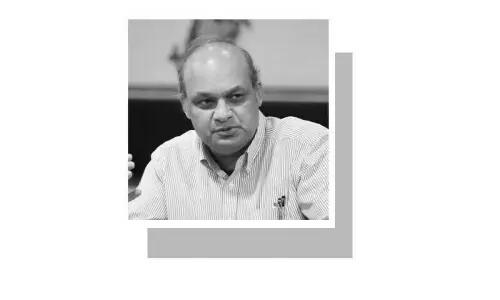
Friendship and reality
IN an earlier article (October 23) I mentioned loyalty to friends as one of our professed values. I have thought more about the subject, and found that, contrary to the average student’s expectation, friendship has been a recurrent theme in writings on political and moral philosophy. I should like to present here some of these expositions.
Aristotle addresses the subject in Nicomachean Ethics (Books VIII & IX). The sum of his argument is that friendship is a partnership in virtue. The object of all human action, he says, is happiness. True happiness is the same as goodness or, if you will, virtue. A good person is one who lives and acts in accordance with reason (as opposed to passion or whim).
Aristotle goes on to say that friendship is an essential component of the good life. Friendship between good persons is to be distinguished from that based on utilitarian considerations or those of transient pleasure (such as one may get from the company of a person who is enchanting or has a good sense of humour). The one based on the sharing of virtue is more inclusive and enduring, while those based on expectation of gain or fun are incomplete. In the former case, friends do good to each other for each other’s sake. This does not preclude being mutually helpful and pleasant. In addition, they share each other’s joys and sorrows. It is, thus, a fuller relationship.
Friendship between good people is deep down self-love or, we may say, it is one’s friendship with one’s own self. Yet, a good man needs friendship with others because, being by nature gregarious, he derives happiness from contact with them. Moreover, it has a positive influence on the development of each party’s character. Their friendship increases the more often they meet, do things together, and correct each other. Friendship is, then, an intrinsic part of the good life.
Cicero (106-43 BC) — a renowned Roman jurist, statesman, administrator, orator, and philosopher of his time — also thinks of friendship in ethical terms. Virtue, he says, is the soul of friendship. While it may be that all of us need friends, and friendlessness is a wretched state, true friendship can exist only among good people. Friends will tell each other the truth even if it is going to be offensive, and they will neither ask each other to do, nor will they do if asked, anything that is wrong.
Identity, or similarity, of views on divine and worldly matters, joined with common interests and mutual affection, is the parent and preserver of friendship between men of virtue. These men value honour, purity, equity, and liberality; they have the courage of their convictions, and they reject greed, lust, and violence. There is sharing of confidence among friends; one can unburden oneself to a friend without reservation and without fear of betrayal. One shares the friend’s joys and sorrows, and sees in him one’s own “second self.” (Recall Aristotle’s similar observation.) Old friends should not be forsaken for new ones.
Jesus, not a political philosopher as such but the source original for the thinking of several mediaeval Christian political philosophers (e.g., St Augustine, Thomas of Aquinas, William of Occam, Nicholas of Cusa, John of Salisbury) made a specific reference to friendship during his last meal with his disciples. He said they were not his servants but his friends, and that they were friends to one another. As such they were to love one another as he had loved them. Their friendship was founded not in expectation of gain but in their common allegiance to Jesus and to virtue as he had elucidated it. Thus, once again, friendship became a partnership in virtue.
Let us now consider friendship as seen by thinkers who claim to be concerned with “ground realities”, with things as they are and must be, and not with how they might have been or ought to be. In his essay on friendship, Francis Bacon (1561-1626) wrote that a true friend was one “to whom you may impart griefs, joys, fears, hopes, suspicions, counsels, and whatever lieth upon the heart to oppress it, in a kind of civil shrift or confession.” Kings may raise some persons to be companions. He may call them his friends, but actually they rise to be no more than favourites. Their status results from the king’s indulgence, and they keep it during his pleasure. They can be returned to their original station, or somewhere even lower, at his whim.
According to Thomas Hobbes, probably the most eminent of the English political thinkers, friendship is not a good in itself; it is a means to desired advantage. Men who seek and enjoy the company of others do so by their own choice, not in response to the call of human nature. For with their differing opinions and passions, their incompatible strivings, and their competitive pursuit of scarce resources, they are, by nature, not friends but antagonists. Even shared passions and pursuits, which form the basis of partnership, instigate hostility, giving rise to countless causes of quarrel.
Friendships are the means for acquiring more of some desired good. A friend is one who does what you ask him to do, even though he is not otherwise required to do it. But he will be your friend if he expects the relationship to work to his benefit also in a measure that he considers adequate. In politics one makes friends to defend against a common foe. Apart from situations where association with someone is fun, friendship, in Hobbes’s reckoning, is like an alliance of convenience, and often a shifting one. He emphasizes repeatedly how unreliable friends are likely to be. They will keep their covenants only if they fear that breaking them will bring them intolerable consequences.
Hobbes thinks that wealth, joined with liberality, is the most convenient way of acquiring friends (as well as servants). A rich man who is stingy will effortlessly make any number of enemies. A combination of eloquence and flattery is the next best way. (Cicero thought flattery worked only with the feeble-minded.)
Let us now move on from philosophical to sociological expositions. In this perspective friendship is a comfortable and relaxing relationship, involving “self-disclosure” (sharing of confidences), which presupposes mutual trust. It also involves sharing of joys and sorrows, loyalty, and mutual assistance (when needed). It takes the investment of much time and emotional energy to develop. Friendship will wither without physical contact: friends must meet periodically and talk together. But in conversations, neither side should make long speeches, for that will sound to the other as a sermon. Some sort of equality and mutual respect must also be present if friendship is to endure.
A friend, to begin with, is someone with whom you have some significant commonality of background, views, values, and ways. Beyond that, he is one who finds being with you to be enjoyable; he accepts you as you are; believes in you; forgives or overlooks your mistakes; says good things about you to others; tells you the truth when you want to hear it. He is trustworthy: he will keep your secrets, and he is there for you when you need him. You don’t have to be charming or put up appearances; you can be just yourself. There are limits to this relationship, as there are to all others: there are things that neither of you will ask the other to tell or do.
Friendship as a partnership in virtue may still exist in some ideologically committed groups. But I doubt that most friendships among other people will answer that description. I think the sociologist’s exposition of friendship will ring more bells in most ears than will the philosopher’s.
Kings, it is said, have no relatives, and we may say, with Francis Bacon, that they don’t have friends either. Friendships are likely to be rare even in the world of democratic politics. Two members of our National Assembly, having roughly the same social standing, and neither in the other’s way of advancement, may become good friends. But the moment they become competitors, or one of them reaches a position that makes him the other’s superior, their friendship will most likely cease.
Politicians of high rank are like kings in this respect. Mr Jinnah did not have any personal friends that I have ever heard of; nor, to the best of my knowledge, did Jawaharlal Nehru. Once, in the summer of 1974, I asked Prime Minister Zulfikar Ali Bhutto if he had any personal friends. He said all his friendships were made in the “public interest”, meaning that he did not have any. The same can probably be said of Ayub Khan, Ziaul Haq, and now General Musharraf.
At one tine time Winston Churchill was thought to be a personal friend of Prime Minister Lloyd George. But that was not what Lloyd George thought. He is reported to have told his secretary-mistress, Frances Stevenson, that “Winston would make a drum out of the skin of his own mother in order to sound his own praises.”
Robert Jackson, a judge of the United States Supreme Court, and Franklin Delano Roosevelt (FDR) had known each other since their younger days. They drank and played poker together for many years. Harry Hopkins, aide and confidant, joined President Roosevelt for martinis (which FDR mixed himself) in his retiring room on the second floor of the White House every evening. But neither Jackson nor Hopkins (nor for that matter anyone else other than his wife, Eleanor) presumed to be familiar enough to call him by his first name (Franklin). They addressed him as Mr President.
The insight provided by both philosophers and sociologists, to wit, that some sort of equality is a pre-requisite to friendship would seem to be entirely sound. There simply cannot be friendship between high and low, when one is inferior to the other in rank and status. In politics it is certainly lonely at the top, and relationships can be treacherous even at lower echelons.
The writer is professor emeritus of political science at the University of Massachusetts at Amherst, US. Email: anwarsyed@cox.net
Politics of vengeance
THE assassination of Pakistan’s first prime minister marked the beginning of the politics of vengeance in the country. Since then, this phenomenon has followed an increasingly relentless course. Over a period of 54 years, a prime minister (H.S. Suhrawardy) died in exile under murky circumstances, another (Z.A. Bhutto) was hanged, Mohammad Khan Junejo was summarily dismissed and two former premiers (Benazir Bhutto and Nawaz Sharif), accused of serious offences, are in voluntary and forced exile respectively.
The fate of the military rulers who came in between wasn’t any better. Ayub died a broken man not long after he had celebrated his decade of development with great pomp, Yahya died in destitution and Ziaul Haq in a sabotaged plane crash. Coming to present times, Prime Minister Shaukat Aziz is lucky to have survived one assassination attempt and President Musharraf has been even more fortunate in surviving two.
The roots of this political vendetta, to which no end is yet in sight, lie in personal rule, and personal rule as opposed to institutional governance dates back to the very first government formed after independence. Its beginnings have been recounted by Sir Zafrulla Khan, foreign minister in Liaquat Ali Khan’s cabinet, in a series of interviews, covering the events leading up to the partition of the subcontinent and Pakistan’s formative years, with Professors Wilcox and Embree of New York’s Columbia University in 1962 when he was Pakistan’s permanent representative at the United Nations. The interviews have recently been published in a book.
When the question of power and responsibility was raised in the cabinet, Zafrulla Khan quotes Governor-General Jinnah as having said: “We must come to some clear understanding. If you want me to be purely constitutional head of government, I am quite willing to carry on on that basis. But then the people must know where the responsibility for decision rests. It must be made quite clear publicly. On the other hand, if you are willing to accommodate yourselves to the position that on matters of outstanding importance, we put our heads together and in case differences arise and cannot be resolved, you would be prepared to accept my point of view, then equally we can carry on on that basis, and then also the people should know how we are carrying on. I do not attach too much importance to constitutional theories and I am willing to fall in with whichever way of conducting business should appeal to you.”
Mr Jinnah’s concern, thus, was more about people’s preferences rather than with the constitutional position which in any case was ambiguous under the amended 1935 Government of India Act. Mr Jinnah was conscious of the fact that the people would not accept a decision if they were to know it did not have the approval of their Quaid-i-Azam.
But then, in the first year of independence the tasks before the government were pressing and many. As Zafrulla notes, there was “complete accord” between Jinnah with his “cold, sharp incisive intellect” and a “slow and deliberate but much more human” Liaquat. On occasions, says Zafrulla, “differences arose between the two...but they managed to adjust themselves to each other quickly” because the cause was one, only the approach differed.
It is no longer the age of Jinnah and Liaquat. Then public interest took precedence over everything else and integrity brooked no compromise. The constitutional position now is also relatively better defined but personal rule has remained ascendant under the 1973 Constitution through its various phases — whether civil or military. The arrangement that worked between Jinnah and Liaquat is unlikely to work between Musharraf and Shaukat Aziz for now it is an age of deal-makers and turncoats. The party that Chaudhry Shujaat heads is a far cry from Jinnah’s Muslim League.
The cycle of vengeance started well before 1970, as no direct elections were held, and accelerated when every election held after that year was rigged. All power tended to gravitate to the person at the helm of affairs (whether a politician or a general didn’t matter) and he misused it to gerrymander the constituencies and to rig the electoral rolls and the ballot.
All signs suggest that it may be no different next time round. The powers that the president exercises are beyond those that even his own amended Constitution vests in him. The elections and by-elections held over the past five years inspire little confidence that the next due in 2007 would be any fairer or more representative.
Staging a coup d’etat, though it is the antithesis of democracy, thus, has become an acceptable way of changing a government or, more precisely, dislodging the individual in power, for there remains no other choice in the absence of fair and frequent elections. The people of Pakistan are not politically awake enough to force a change through collective peaceful pressure as the people of Ukraine and Georgia did in the recent past. Violent street protests that our parties can mount would, in all probability, wind up the same way they did against Ayub in 1967 and against Bhutto in 1977.
It lies in the hands of President Musharraf to put an end to the more than half-a-century old cycle of vengeance and violence by letting every individual and institution perform the function and exercise the power that the Constitution vests in them.
And, more important, no party or person should be barred from participating in the next election unless disqualified under the normal law of the land. The result of an unrepresentative or rigged election will no longer prevail. The turmoil that follows may put the country back once again for 10 years.
Some are more equal
IN the week when the government bill setting up a unified Commission for Equality and Human Rights reached its committee stage in the Commons, the Commission for Racial Equality has unilaterally declared that it is pulling out of the plan. The new body was intended to bring together not just the three existing bodies fighting discrimination (on race, gender and disability), but also to take on discrimination on three new fronts: age, religion and sexual orientation. The three new areas form part of an EU directive which has to be implemented by next year. Six separate bodies pursuing discrimination was always rightly regarded as absurd. Now clearly there is a danger that other parties could break away.
The CRE had already negotiated a delayed entry into the new body in 2009, rather than in October 2007 when the new commission will be launched. But this concession proved insufficient in reassuring CRE doubts. While disability campaigners were given a standing committee to oversee discrimination in their field, ministers refused to agree to CRE proposals for separate units within the new body for each of the six fields. The CRE’s concern is that its four million pounds funding of 100 race equality councils pursuing community cohesion work was not being guaranteed under the act. Moving the main body to Manchester, which was announced without consultation recently, was the final straw. More than half of Britain’s ethnic minority citizens and residents live in London and most leading minority groups are also located in the capital.
What should happen now? The CRE can declare that it is not joining the new commission, but the new act will abolish all existing bodies by 2009. More pertinently, its 20 million pounds budget comes direct from Whitehall. But do ministers, in the wake of last month’s conflict in Birmingham and their own ambition to improve community cohesion, want a public fight with the main body advancing better race relations? All sides have an incentive to compromise. Four decades ago, there were two separate bodies where now there is only the CRE: one policed discrimination; the other promoted better community relations. If the role of the first was placed within the new commission, then the monitoring of discrimination on six fronts — and the obligation to promote equality — could go ahead as planned. Meanwhile, community cohesion could be pursued by a separate group. The Home Office has been thinking along these lines. It may be time to put those thoughts into practice.
The Guardian
Planted propaganda
IN hindsight, maybe it shouldn’t be surprising that the Pentagon has been secretly paying Iraqi journalists and news organizations to write and run positive stories about the war. After all, this is an administration that paid a US columnist and peddled phony video news releases at home, too. But saying it was predictable makes it no less loathsome and damaging to find that the Bush administration has treated the very idea of Iraqi democracy with even greater contempt.
The Los Angeles Times reported this week that US military “information operations” troops have been writing pro-US articles and handing them to a Washington firm that translates them into Arabic and places them in Baghdad newspapers without revealing the source. Operatives from the firm “sometimes pose as freelance reporters or advertising executives when they deliver the stories to Baghdad media outlets,” according to the Times. It said the military also has bought an Iraqi newspaper and taken control of a radio station “to channel pro-American messages to the Iraqi public.” On Friday, Knight Ridder added a new morsel: that US army officers created an outfit called the Baghdad Press Club that pays members as much as $200 a month to churn out positive pieces about American military operations.
The problem with this propaganda, as senior military officials who blew the whistle on it understood, is that it undermines the very effort it is trying to promote. An essential element of a democracy is a free press, not one controlled or covertly manipulated by government. As a senior Pentagon official told the Times, “Here we are trying to create the principles of democracy in Iraq. Every speech we give in that country is about democracy. And we’re breaking all the first principles of democracy when we’re doing it.” That shouldn’t have been so hard to figure out.
The Washington Post
| © DAWN Group of Newspapers, 2005 |