ISLAMABAD: The National Price Monitoring Committee (NPMC) on Thursday asked provinces to play a proactive role in maintaining price stability to provide relief to the public.
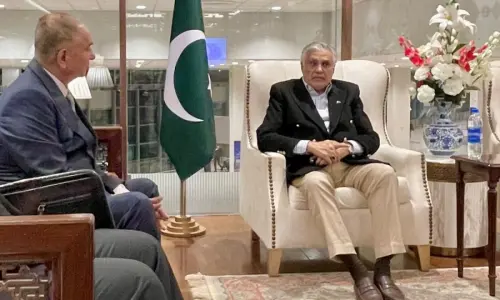
Finance Minister Ishaq Dar, who chaired the NPMC’s meeting, called for strengthening of the committee and improving implementation of its decisions to ensure effective monitoring of essential items’ prices.
Dar emphasised that consumer associations in the West were playing the role of watchdogs to check rise in prices.
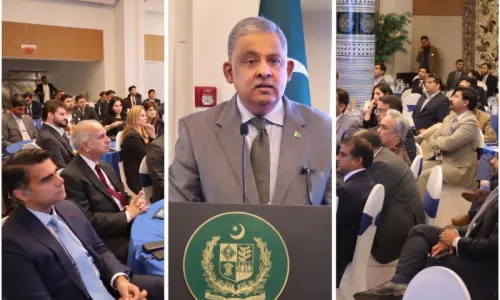
During the meeting attended by the representatives of various ministries and government departments, Dar asked provinces to actively participate in the deliberations of the NPMC and take practical steps to control price hike.
The finance minister said the price stability of essential items was the priority of the government. He said statistics showed that prices of more than 50 per cent items during last two weeks remained unchanged, which “indicates that the government’s measures are proving fruitful”.
The committee asked the ministry to follow up the progress of its summary submitted to the cabinet division about a draft bill to revive ‘Executive Magistracy System’. Dar also highlighted the importance of the system in controlling prices of commodities, saying the issue would be discussed in the next meeting of the federal cabinet.
The minister lauded the Federal Board of Revenue (FBR) for timely notifying 43 essential items on which general sales tax (GST) was not applicable, and asked the board to publicise these items for the convenience of the general public.
The Ministry of National Food Security and Research informed the committee that it was working on a ‘National Food Nutritional Security Policy’ which would soon be circulated to all stakeholders. The policy, to be finalised by December 30, would contain short- and long-term measures to ensure food security in the country.
The NPMC was informed that seven million tonnes of wheat were in the stock compared with 6.7 million tonnes the last year. The private sector has imported 124,000 tonnes of wheat which would further improve the stock position.
The meeting also discussed sugar, oil and other essential items and noted that the stock position was enough to meet upcoming demand.
The meeting reviewed the trend of inflationary pressure by various indicators, including consumer price index (CPI), food, non-food, core, wholesale price indexes and sensitive price indicator (SPI). The committee was informed that CPI was recorded at 8.5pc during August 2013. Similarly SPI and WPI were also reported at 10.1pc and 8.3pc, respectively.
The SPI for the week ended on Sept 5 recorded an increase of 0.04pc due to hike in prices of 19 commodities out of 53 items, while prices of 10 items decreased and prices of 24 items remained stable compared to last week ended on Aug 29.
The food items whose prices rose were eggs (4.08pc), potatoes (3.57pc), red chillies (1.71pc), masoor pulse (0.85pc), gram pulse (0.59pc), wheat flour (0.53pc), bread plain (0.4pc), curd (0.19pc), cooking oil (tin) (0.11pc). As for non-food items, the prices of kerosene (3.24pc), diesel (2.42pc) and LPG (2.40pc) registered increase.
The items which recorded decrease in their prices were tomatoes (14.50pc), bananas (8.85pc), Garlic (2.18pc), onions (1.17pc), mash pulse (0.82pc), sugar (0.64pc), chicken (0.42pc), moong pulse (0.28pc), mustard oil (0.08pc) and vegetable ghee (loose) (0.03pc).
The price committee observed that in comparison with the regional countries, the prices in Pakistan are the lowest with respect to rice (basmati), beef, chicken, red chillies, eggs and the second lowest in wheat, wheat flour, garlic, sugar, onions and petrol. However, the prices of tea, tomatoes, diesel and urea are higher in the country.
The meeting also reviewed the price trend of 28 selected items among the provinces, and observed some variations in the prices of wheat flour, rice basmati broken, rice (irri-6), pulses, beef, mutton, milk fresh, powdered milk, ghee, tomatoes and garlic.