Beyond Kalabagh
GIVEN how the issue keeps cropping up, often as a diversionary tactic, it would be premature to conclude that the Kalabagh dam project has been ‘shelved’. Still, that is what the water and power minister said on Monday, provoking protest from a section of the people. But it can be assumed that at least in the immediate future the matter will not receive further consideration. The argument presented by the minister is wholly in keeping with democratic principles. He said that since three provincial legislatures had rejected Kalabagh, it was ‘impractical’ and against the spirit of federalism to pursue the project. A substantial segment of the PPP’s vote bank in Sindh, the Frontier and Balochistan is vehemently opposed to the Kalabagh dam, and espousing its cause would make no political sense for the country’s only truly national party. In any case, the government has enough on its plate right now without raking up fresh controversy. And Kalabagh is a sorer point than most. Since the 1980s it has been roundly condemned by the smaller provinces, usually along nationalistic lines, as an attempt by Punjab to usurp their water resources. Hence shelving the project until consensus has been achieved makes sense.
Politics aside, Kalabagh is problematic on other counts as well. Water in the Indus downstream of Kotri has been reduced to a trickle as it is, the only exception being the monsoon season. The sea has moved inland as a result, wiping out coastal communities and forcing mass migrations, which have in turn increased pressure on towns and cities. According to one estimate, over two million acres of arable land has been lost to the sea over the last two decades, a trend that the country can ill afford in these times of food shortages and rising prices. Livelihoods have been lost and the riverine ecosystem has also suffered immense harm. The construction of the Kalabagh dam will only compound these problems. Besides eviction by an encroaching sea, there is also the problem of persons displaced by the project itself. Given that many Mangla affectees are still awaiting compensation more than 40 years down the road, there is no knowing the fate awaiting those who might be ousted from their homes by Kalabagh.
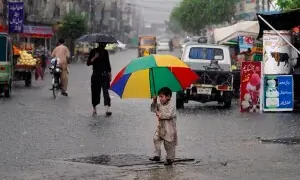
No one can take issue with the need to conserve water and increase storage capacity. Contrary to what some in Punjab have asserted in the past, water is not ‘wasted’ when it flows into the Arabian Sea, for reasons outlined above. It is, however, wasted in times of floods. What are needed — and this will take money and effort — are reservoirs in barren areas to which excess from the Indus can be channelled during the rains. Not only would storage capacity increase, the misery associated with floods could also be alleviated. As for electricity generation, it should be clear by now that the sustainable answer lies in renewable energy sources including wind, biomass, solar and tidal power. At the same time, efforts must be expedited to tap Thar’s vast coal reserves, which ought to be the backbone of future thermal power generation.
Peace for Lebanon
ELECTED as head of state on Sunday for a six-year term, Michel Suleiman brings to Lebanon’s presidency a man regarded by all sides as a neutral and unifying force. A Maronite Christian, Suleiman enjoys the support of such incompatible politicians as the West-supported Fouad Siniora and Hezbollah chief Hassan Nasrallah. The election itself is an achievement, for the Lebanese parliament had failed to meet no less than 19 times to elect a head of state after Emile Lahoud walked out of the presidential palace in November 2007. As army chief, Suleiman is credited with keeping the army united and away from Lebanon’s fractious politics which has a proclivity for violence. During the Hezbollah-Sunni militia clashes earlier this month in west Beirut, Suleiman earned the nation’s gratitude by refusing to take sides in the fratricide. With his election, in which he was the sole candidate, the nation must heave a sigh of relief, for the threat of another civil war is behind it. The Doha agreement, which paved the way for Suleiman’s election, is a political victory for Hezbollah, because it gave the opposition the power of veto over cabinet decisions. In a speech marking the anniversary of the Israeli withdrawal from south Lebanon, the Hezbollah chief hailed Suleiman’s election as the beginning of a new era and promised his militia would not use force for achieving political goals.
Even though American and western leaders have welcomed Suleiman’s election as president, the Doha agreement is widely seen as a setback for American influence in the region and a victory for Syria and Iran. The beginning of indirect talks between Damascus and Tel Aviv in Istanbul also shows that Syria has managed to emerge from its isolation. However, it remains to be seen whether the Lebanese will be able to work the Doha agreement and ensure a lasting peace. Even though the civil war ended in 1990, Lebanese politics has been violence-prone. Western governments watch developments in Lebanon carefully, and Israel misses no opportunity to create mischief. Syria withdrew its troops under international pressure following Rafik Hariri’s murder, but it has not reconciled itself to Lebanon’s existence as a sovereign country and is not without genuine support. It is now for the Lebanese people to rise above parochial loyalties and work the Doha agreement. Peace will ensure economic recovery, especially because foreign investors are keen to invest in its tourist industry.
Breaking down barriers
MUSIC knows no boundaries, allowing its universality to transcend age-old divisions and bring strangers —even rivals — closer to one another. Which is why one should appreciate, rather than condemn, concerts such as the one staged by Pakistan’s Junoon band in Srinagar on Sunday. Considering the militaristic attitudes that have over the decades come to dominate the Kashmir question, it was not surprising to hear jihadist concerns that the rock band’s presence would send the ‘wrong message’ to the international community about India’s political status in the Valley. However, the huge response to the band that played at the opening of the Institute of Kashmir Studies despite the death threats it had received from militants gave a different impression. Politics was forgotten as prominent South Asians, including Indian President Pratibha Patil, former Sri Lankan President Chandrika Kumaratunga and civil society representatives from Pakistan amongst others enjoyed the performance that received thunderous applause from thousands of young Kashmiris. While this was not for the first time that Pakistani musicians performed in occupied Kashmir, Sunday’s concert, organised by the South Asia Foundation, created greater waves on account of the popularity of the band and its Sufistic message of peace.
There is no doubt that cultural exchanges, particularly in the performing arts, between India and Pakistan have been gaining momentum as part of people-to-people diplomacy. But they are especially relevant in war-scarred territories like Kashmir where there is anger against religious militants and their acts of violence as well as Indian troops that have perpetrated countless excesses on the population. Here, the people, especially the youth, need unrestricted forums to interact with those from the other side and in order to build up a non-political base for promoting peace in the region. Perhaps access of this kind will propel the governments of India and Pakistan to take a less rigid view of the situation and soften their respective political stances.
OTHER VOICES - European Press
The culture of secrecy must end
Malta Today
THE alacrity with which Transport Minister Austin Gatt opened an investigation, following allegations of bribery related to the acquiring of an instructor’s driving licence from the Transport Authority … displays an eagerness and promptness to face allegations of corruption in public service. This should serve as a test case on how to deal with similar claims.
Allegations of corruption will always be with us, as will the tendency of persons to cast aspersions, often without the willingness to step forward and put all known facts on the table. That citizens in our small country are unwilling to step forward and publicly make allegations is perfectly understandable.
Besides, the absence of a Whistleblowers’ Act leaves such persons vulnerable to … persecution at their place of work. But this tendency has also led to a widespread belief that no one in our country is ever held accountable, let alone made to pay, for his or her incorrect behaviour. It is against this backdrop that the prompt action of a minister who has long carried a no-nonsense tag about him is to be commended.
At the same time, European levels of correct behaviour are not to be expected only of the political class, but also of all persons holding public office and whose wages are paid out of public funds. These standards are best guaranteed, not just by a probing press, but also by having all the tools and legal mechanisms in place to detect irregularities and to take instant action.
Firstly, the Permanent Commission Against Corruption needs to be beefed up with more human and financial resources, allowing it to function with full executive powers at an arm’s length from the government of the day. The authorities may also consider the example of Italian magistrates, who are entrusted with ample powers to institute investigations on their own, without having to wait for the go-ahead from the attorney-general or the police.
The present government has long promised a Freedom of Information Act, and it is precisely for these reasons that the initiative should be a top priority. After all, failure to make public cases of wrongdoing, often motivated by an irrational fear of tarnishing the government’s own reputation, is invariably counterproductive: such secrecy creates the impression of corruption, even when there is none involved…. — (May 25)
A plea for sanity
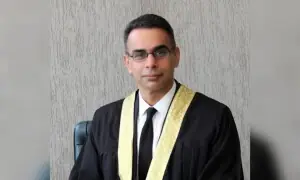
DOES anyone in the legal community realise that its movement for the restoration of judges cannot endure, let aside succeed, in the vacuum that it has created around it from day one? After shunning all political parties, the lawyers’ last hope is now the PML-N trumpeting their cause and putting up a show of strength as seen in Faisalabad the other day. What happens outside Punjab is anyone’s guess.
An ill-advised effort was made from March 9, 2007, onwards, when the chief justice was made non-functional by President Musharraf, to spurn the public’s association with the movement. Even if concerned citizens turned up to join the lawyers’ protest, they were told to march separately and not alongside the black coats. Political workers, too, were told likewise. Why? Nobody knows. None has questioned the tactic. The grand movement goes on, directionless, with a tunnel vision expecting to see light at the far end; how far, and whether there is light at the end of the tunnel, nobody has bothered to ask.
The wisdom behind keeping the struggle a puritan effort aimed at restoring the rule of law has been found lacking in its practical application. Bookish ideas do not always lead to a meaningful outcome that can involve the people and win the day. The apartheid of sorts that the lawyers practised by keeping political workers out and insisting all along that their struggle remained apolitical is appalling.
The legal community’s decision to boycott the February elections was no less so. The lawyers may have been in the vanguard for seeking justice but it has been an abstract movement for justice per se, as opposed to justice for the people whose lives it must touch to stay relevant as an agent of change for the better.
Bar associations and court premises have served as the legal community’s platform for furthering their cause. The vision to involve the people has remained elusive, even though the people at large were ready to support the cause, the same people who ignored the call for the boycott and went out to vote on Feb 18. The will of the people is now manifest in the elected parliament, with the PML-N being the odd one out, among coalition partners, that wholeheartedly backs the legal community’s stand on the restoration of the judges.
It need not have come to this had the lawyers not shunned the people, mounted as they were on their high horses.
With the PML-N espousing the cause and its promise to extend it government patronage in Punjab, there is little of the pristine (?), apolitical character left to the movement. Not that there is anything wrong with that. Why was politics regarded as a bad word in the first place, and why should lawyers not participate in political activities, demand political and social change? Gandhi and Jinnah were both: lawyers and politicians. Neither saw a paradox in mixing the two.
If the lawyers’ argument is that politicians in this country are a discredited creed, they need to think again. On the opposite side of the spectrum will be heard voices saying that the legal community, too, has failed to deliver justice all these years. But the people of this country are very generous.
The difference is that when the same discredited politicians go to them for a higher goal, say, democracy, they oblige; even as the lawyers shun them as a plebeian lot, they still turn out to walk behind them, keeping a distance so as not to appear to be rubbing shoulders with their condescending countrymen in black coats. Why this contempt for the public? And now for the elected parliament with which the legal community, given its lack of vision, may be about to lock horns?
Again, the latter need not happen. But whose is that one voice of sanity within the legal community that will say what needs to be said? The time is now to get talking to the ruling politicians and parties. The PPP’s offer to talk matters out with the legal community should be welcome. It is the only window of opportunity still open for the lawyers to seek a settlement of the compounded issue which, having been left to their own devices, they have made a sheer spectacle of.
If Barrister Aitzaz Ahsan is willing to forgive and forget the gory drama of May 12 in Karachi, and which many blame on the MQM, why is he in a mad rush to issue an ultimatum to his own People’s Party: that the lawyers will accept nothing short of a complete reversal of the Nov 3 PCO, including the annulment of the appointment of the judges who took oath under that order? Is the lure of the street, one that is going nowhere, more appealing to the lawyers than getting the matter resolved and moving on?
There may be a cunning side to Mr Zardari and a contrasting simplistic one to Mr Sharif, but who would one rather talk to and try to win over? That is the big challenge. Is the legal community up to it?
It is too early in the day for street agitation after the induction of a democratically elected government. It will attract only so many PML-N workers in Punjab alone, and just the black coats elsewhere, because no other political party that has received the mandate to rule endorses the insulated way in which the lawyers have conducted their movement.
True, any broad scale upheaval in Punjab will be very hard to ignore, as the former judge, Justice Tariq Mahmood, so eloquently says. But where will it all lead? Little order could be expected to come out of any further chaos as the country struggles to make sense of the existing disorder. It will hardly serve the purpose of reinstating the judges, for one. Saving the day now and entering into a dialogue with the PPP is more likely to do just that.
Failing this, President Musharraf, the proclaimed bad guy, may not have the last laugh, but someone surely will. It certainly won’t be the lawyers.