



 0
0

 ONE of the major stumbling blocks for exporters in India is the delay in transporting cargo from production centres in the hinterland to the few ports and airports that can handle such goods.
Transporting cargo by rail — which should obviously be the most efficient and cost-effective mode of transport — is not favoured by many exporters, because of delays in booking the consignments, in their transportation, the high costs, and the enormous amount of paper-work, and even corruption that is involved in the operation.
Exporters and importers handling bulk cargo prefer road transportation, which again is a time-consuming process. It is only in recent years that the major national highways — linking the metros and major cities — have been four-laned. There are very few six-laned expressways, and lesser highways can scarcely take the heavy loads.
Many Indian transporters have professionalised their operations, using a modern fleet of vehicles – including container carriers. But there is an acute shortage of good drivers, who can negotiate sharp curves on narrow roads on mountainous stretches, or through congested cities.
Road transport is also hazardous, not because of dacoits and highway robbers, but their uniformed counterparts, who demand bribes from truckers at every stage. Then there are the numerous check-points, octroi ‘nakas,’ toll gates, and other government and local body check-posts.
Officials manning these posts consider it their right to extract money from the trucks carrying expensive cargo. According to a recent World Bank report – ‘Road Transport Service Efficiency Study’ – the Indian economy was losing between Rs10-25 billion annually by way of lost truck operating hours because of hold-ups on the highways.
Indian trucks averaged just between 60,000 and 100,000 km a year, as against 250,000 to 400,000 km averaged by trucks in the developed world. This under-utilisation is because of the delays at various check-points on the highways.
Transport Corporation of India, a leading transporter, did another study recently, and the findings were shocking. A truck carrying nine tonnes of cargo from Mumbai to Kolkata – a distance of 2,150 km – took nearly eight days to traverse the journey because of the man-made barriers.
While in the developed world, a truck can average about 1,000 km a day, in India, most trucks barely manage to cover a third of the distance, travelling at a sedate 10 km an hour. Travelling between Mumbai and Kolkata, a truck has to stop about 50 times to pay various taxes, octroi and toll.
The rules vary from state to state, and even though trucks have national permits, they are harassed at every point. A truck travelling between Mumbai and Delhi would end up spending nearly Rs20,000 on various tolls and taxes; about 10 per cent of it would have to be paid to corrupt officials to speed up the processing of papers.
The World Bank estimates that such ‘facilitation payments’ add up to nearly Rs75 billion a year, hurting the trucking business. Not surprisingly, the share of the trucking business is coming down sharply.
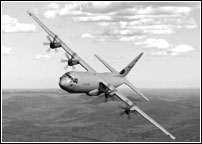
THE air cargo business, which had a marginal role in the movement of cargo all these years, is all set to emerge as a powerful new alternative to both road and railway transport.
According to a recent study by the Associated Chambers of Commerce and Industry of India (Assocham) – the Assocham Eco Pulse study on ‘Changing Pattern of Cargo Traffic in India’ – the air cargo business has overtaken both shipping and railway freight traffic in the last three years.
While the air cargo movement has increased by 19 per cent, shipping has grown by a little over 10 per cent and railway freight by 9.2 per cent. Domestic air cargo traffic has grown by an astounding 35 per cent last year, while international cargo movement expanded by 15 per cent.
Low-cost domestic carriers have been offering attractive prices to companies transporting a variety of goods. The lack of refrigerated trucks and refrigerated warehouses has forced exporters of perishable goods to use aircraft. Similarly, a growing number of other industries are also opting for air cargo, especially when consignments have to be transported across vast distances – such as Mumbai to Kolkata or Delhi.
The air cargo segment has seen a compounded annual growth rate of 9.5 per cent over the last six years, according to the Assocham study. Not surprisingly, there is a rush for cargo carriers and also for dedicated air freight airports.
Airlines are rushing in with freight operations, as they see tremendous growth prospects. Air India, the nation’s flag carrier – which has just been merged with its domestic counterpart, Indian – is planning to aggressively expand its international cargo operations.
The airline, which has a cargo network covering a dozen domestic points, recently launched a service to Europe. According to V. Thulasidas, chairman and managing director, Air India, the airline is eager to cater to other markets including China and Japan.
It converted an Airbus 310 passenger aircraft into a freighter, and has deployed it on the new route covering the Middle East and Europe. The airline aims to convert other passenger aircraft as well over the coming months into freighters. Cargo traffic accounts for about 10 per cent of its revenues, but the airline is keen to raise it sharply over the coming years.
Other airlines are also eyeing the attractive segment. Turkmenistan Airlines plans to start dedicated cargo operations from Amritsar in Punjab to Europe. Other airlines are also looking at the north India city as a major gateway for international trade. Amritsar airport now has international flights operating out of it, especially to countries like the UK and Canada, home to thousands of Punjabis.
The operation of cargo flights from Amritsar will boost exports from north India, especially of food, processed goods, flowers and other perishable commodities.
BUT the biggest cargo hub that is likely to come up soon will be located in Nagpur, located centrally, and almost equidistant from Mumbai, Delhi, Kolkata and Chennai. The federal government and the government of Maharashtra are promoting a sprawling Multi-Modal International Air Passenger and Cargo Hub at Nagpur (Mihan).
The ambitious project has got bogged down in the usual controversies – land acquisition, disputes between governments and ministries, and political one-upmanship – but once it takes off, it promises to be a major cargo hub in the country.
The Mihan will be located adjacent to a sprawling multi-product special economic zone (SEZ) and an IT park, which will be promoted by the DLF group. This would ensure a captive market for the cargo airport, as most of the goods produced at the zone would be for export markets.
Mihan is coming up on 4,300 hectares of land, and about half of it has been acquired by the joint venture company that will be developing it. The project is expected to generate about 120,000 jobs, besides boosting the economy in a backward region of the state.
Reliance Industries Ltd (RIL), one of the largest private sector groups in the country, is also planning a cargo hub next to its proposed Rs400 billion, 25,000-acre SEZ in Haryana. However, the group – which is controlled by Mukesh Ambani – has still not got the necessary clearance for its cargo airport at Jhajjar in Haryana, on the outskirts of Delhi.
The new cargo airport would be located barely 70 km from the national capital. Delhi’s international airport, together with Mumbai’s was privatised last year, and the new owners have been promised by the government that new airports would not be allowed to be developed in their vicinity.
With air cargo traffic expected to grow at double-digit rates over the coming years, the government is toying with the idea of hiking foreign direct investment (FDI) levels in the sector from 49 per cent to 74 per cent. According to Civil Aviation Minister Praful Patel, India would need at least 500 cargo aircraft over the next 10-15 years to cater to burgeoning traffic.

























