0
0

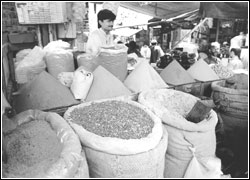 While many factors are responsible for skyrocketing prices of essential commodities, half- hearted measures by special magistrates have also not been helpful in ensuring price stability. These price magistrates were given extra powers by amending the relevant laws to punish profiteers and hoarders in their respective districts.
No doubt increase in prices can also be explained by such factors as demand and supply gap, manipulation of the market by hoarders and speculators, rising transportation cost, costlier imports etc. but the ultimate responsibility lies with government for managing all these factors to ensure stable prices.
Over the past one year, the special magistrates held meetings with market players at their offices, prepared price lists and issued warnings to retailers and wholesalers but these efforts did not yield any positive result.
From the consumers’ point of view, these efforts on the part of price magistrates were bound to fail in controlling prices. And the prices of various kitchen items are still going up without any check.
On the eve of the budget, an increase of Rs15-20 per kg in rice prices was followed by rise in prices of ghee, cooking oil, fresh, powdered/tetra milk, flour varieties, some pulses etc. Rice prices haves surged over the past few months.
Increase in imported palm olein prices is stated to have led to a jump in ghee and cooking oil prices. Branded ghee makers have increased prices of ghee and cooking oil for 2.5-5 litre/kg tins by four times since September 2006. Similarly, rates of fresh milk have gone up by Rs2 per litre since the last one year while tetra and powdered milk producers have increased their prices more than fresh milk suppliers.
Price magistrate was a new concept in an emerging market - a policy shift -introduced by the government last year. But the system has not worked. In Karachithere used to be magistrates (DC) who monitored and controlled prices before the devolution of power at the district level six years ago. And to be fair to them, they were successful—to an extent-- in their efforts because of their frequent visits to markets along with a police posse. But then it was a regulated economy.
After the devolution, the City Government had to face the daunting task of curbing the price hike, especially during Ramazan. In initial years, their officials inspected the market but for the last two years their efforts have slackened, leaving the consumers at the mercy of profiteers.
The government decided to issue price list of kitchen items every month after 2006 Ramazan but so far only two prices lists have come out, with discrepancies in wholesale and retail rates as compared to rates fixed by the government. The price list could not be enforced effectively as wholesalers and retailers refused to follow these rates.
But no action was taken against any retailer/wholesaler for not complying with the price list. Now everything has been put in the cold storage.
Market experts say that the government undertakes the exercise of price checking as a face-saving device. But in reality, price checking campaigns open new avenues for officials for earning an extra buck. According to them, some kind of secret deal has been struck between officials and market players as is evident in case of increased rates of milk.
The city government has its own version. It says it is difficult to cope with the situation with only 18 deputy district officials (DDOs) revenue, coupled with 70 officials including town nazims, town municipal officials etc, especially in Karachi with a population of 16 million and a large number markets.
Even the consumers are blamed for giving a free hand to retailers and not showing any resistance. They have no forum where they can voice their demands. In many posh areas they are hardly anyone bothered about price increase. Hardly anyone visits any of the complaint centres established in almost all the areas, especially during Ramazan. It is also true that these centres remained without staff or even if they were present, they performed their responsibility half-heartedly The market people also know how to keep low-paid officials in good humour.
These officials fail to collect data on imports, crop estimates and stocks in the market, etc before meeting the stakeholders and market players. And ultimately they cannot make headway due to lack of market knowledge.