0
0

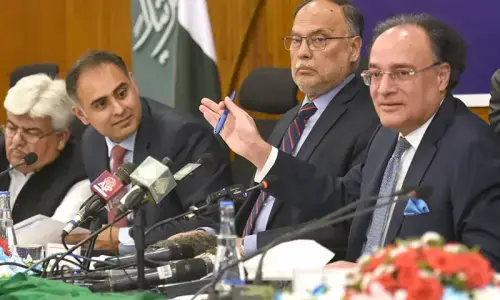
KARACHI, April 23: Speakers at a seminar held in connection with the World Earth Day on Monday stressed the need to preserve natural resources and initiate further measures to rectify the damages done to the nature.
The seminar was organised by Sindh environment and alternative energy department on the theme of ‘pollution and its hazards’ here at a hotel.
The speakers were of the view that efforts should be made for availability of adequate and clean water and ensuring unpolluted air to breath, a challenging task in the wake of increasing human population and lack of willingness both in the government and private sectors, a couple of the speakers noted.
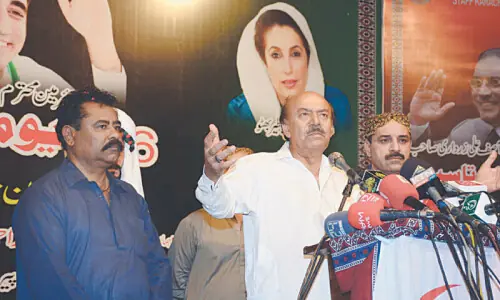
Speaking as chief guest, the provincial minister for environment and alternative energy, Dr Sagheer Ahmed, said that a check on environmental degradation was possible only when all the stakeholders, including those from education, health, finance and planning sectors liaise for the purpose.
Noting that the rates of violations of environmental provisions or pace of degradation of nature were relatively high in Pakistan, he said that the lack of awareness about environmental liabilities and responsibilities was the main reason behind it. We have been failing to match what is practiced in developed countries for sustainable development, he added, calling for not escaping the regulatory and mandatory obligations.
He appreciated the speakers of the seminar, mostly researchers, for their deliberations and remarked that knowledge and awareness about environmental issues and pollution were up to the mark at the higher education level, but there was a need to introduce essays and chapters relevant to environment and pollution in the textbooks for students at the matriculation and intermediate levels.
Dr Iqbal Ali, an environment consultant and researcher, said that water resources in the country were shrinking and if efforts were not made to handle the situation it would be difficult for the industries and food sector to survive in the future. We should conserve potable water and use the internationally relied system of treating the waste water for uses other than drinking, he added, informing that various small and big waste water treatment plants established in Karachi were also faced with poor maintenance problems and on the verge of losing their utility.
In his presentation, Dr M Altaf Khan talked on water management, and said that water resources were not unlimited and there was a need to use it judiciously, so as to avert any war-like situation between groups of people or countries.
Dr Badar Ghauri highlighted the finding of a Suparco research pertaining to air quality in the city and discussed various transport- related environmental problems and damages inflicted on human lives and plants due to uncontrolled traffic emissions.
Two researchers from the University of Sindh, Dr Mubina Akhtar Rao and Dr Aqleem Haider in their respective presentations discussed the quality of ground water and status of aquatic formations in Thar, Nara valley drain, Manchar Lake and Ural vah.
The scientists noted that due to the indiscriminate use of pesticides and fertilisers, dumping of industrial effluent, concentration of metal ions is frequent in the waters of Sindh and thus health of human beings and quality and quantity of agriculture and marine food were being affected.
The secretary of Sindh environment department, Mir Hussain Ali, Sepa Director-General Abdul Malik Ghauri, Naeem A. Mughal, a deputy director at Sepa, Hamid Hussain Syed of the NBP also spoke, while MPAs Bilquees Mukhtar and Akhtar Bilgrami also attended the seminar.