0
0

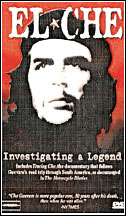 KARACHI, April 19: Today the struggle is between barbarism and socialism, and no one personifies this struggle better than Ernesto ‘Che’ Guevara. This was stated during the opening remarks at a film screening of El Che — Investigating a Legend, a 1997 documentary directed by Frenchman Maurice Dugowson. The screening was organised by International Socialists (Pakistan) at the PMA House on Thursday.
Explaining why they chose to show the film, a spokesman for the organization said that in an atmosphere where the maxim ‘might is right’ prevailed and the law of the jungle was dominant, all parts of society were in a mood for resistance. Specifically referring to Pakistan, the speaker said that this resistance was being spearheaded by lawyers. And thus the film on Che Guevara — a global icon for resistance — justified being shown.
Clocking in at just over 80 minutes, the documentary was very well put together, and keeping in mind the general audience, flowed at a moderate pace without pummelling the viewer with facts or polemics.
The narration was not overbearing and stylistically the director used a combination of interview footage, still photographs and archival material to craft a balanced film on the controversial Argentine doctor-cum-revolutionary.
The story begins in the Argentinean town of Rosario, where Guevara — full name Ernesto Guevara de la Serna — was born in 1928. Guevara was born into a left-leaning family of Basque and Irish ancestry, and in 1948 he joined the University of Buenos Aires to study medicine. However taking a year off from varsity, he decided to mount a motorcycle with friend Alberto Granado and trek across the South American continent (dramatised in the Motorcycle Diaries).
This would be a life-changing trip, as Guevara experienced a Buddha-like moment encountering much poverty and suffering in his cross-continental ride. From here, Che Guevara was convinced the only solution was armed revolt.
The film succinctly sums up nearly all major turning points in Guevara’s life: his transformation from doctor into Marxist warrior; his legendary time in the Sierra Maestra Mountains with Fidel Castro; the Bay of Pigs Invasion; the Cuban Missile Crisis; his stint as Cuban minister of industries and many others.
Though Guevara opposed capitalist imperialism tooth and nail, he was no fan of Soviet hegemony over the communist bloc either. A speech in Algiers in 1965, which was viewed by many as a veiled critique of the former USSR, was the proverbial beginning of the end for Guevara. From hereon Che Guevara would grow estranged from Castro and indeed Cuba itself, and sought to foment armed Marxist revolt the world over.
He met his end in Bolivia in 1967, as the Bolivian army hunted him down and summarily executed him in the town of La Higuera, aided by the CIA. A scene in the film where Guevara’s corpse is being prodded and poked by Bolivian army-men is particularly disturbing.
Whatever one’s political bent, El Che proves to be an informative run through the life of a man shrouded in romantic, idealistic legend. The screening was followed by a discussion.