Why this tolerance of extremism?
SCENES of utter lawlessness staged by the Lal Masjid seminary students in Islamabad on Wednesday came as a warning, yet again, that the monster of extremism has to be reined in to keep any semblance of sanity in society. Stick-wielding and armed zealots have held the federal security apparatus virtually hostage since January 21, when women students of Madressah Hafsa had first occupied a children’s library to push for their demands aimed at ‘Islamisation’ of the social order. The latest events of violence would not have taken place if appropriate action had been taken to get the library vacated more than two months ago. The government’s soft-pedalling on the issue has emboldened the misguided zealots. On Wednesday women seminary students took three women hostage after accusing them of immoral activities. Another band of zealots went about forcing music and video shops to close down or face the consequences of indulging in ‘un-Islamic’ trade. Local FM radio waves were hacked and extremist propaganda broadcast, calling the people to jihad against government policies. Two policemen and their vehicles were then taken hold of by seminary students, and later released in exchange for four madressah students whom the police had taken into custody for indulging in violence.
All this is wholly unacceptable, not only because the conduct is in complete violation of the law but more so because it aims at forcing mediaeval values on the vast majority of the people who do not share this narrow-minded view of their faith. The violators of the law and public order are not some obscure, tribal people living in their isolated hamlets in a far-off tribal territory, but right in the middle of the federal capital. The government’s apparent acquiescence in their illegal activities, ranging from land encroachment to unlawful construction and occupation of public buildings, to abduction, to intrusion into citizens’ privacy and institution of moral policing of the worst order, demands an explanation. What are the capital police doing if they cannot even stop acts of lawlessness in the city? Why was the interior ministry found napping when the writ of the state was being challenged by a band of self-styled guardians of faith and public morality? And what were the myriad of intelligence agencies doing? Isn’t it their job to pre-empt such an open assault on state authority?
In a country where hundreds of people have mysteriously ‘disappeared’, some only to resurface in American investigation and detention cells abroad, the tolerance shown towards the violence perpetrated by the Lal Masjid seminary students is but a joke. It shows a government not exactly known for tolerating dissent or peaceful protests by the opposition, and even by members of civil society, in a curious light. The peaceful and moderate silent majority cannot be held hostage by a handful of bigoted mullahs and their misguided young followers. The state’s writ must run, even if it means taking swift but firm action against the violators of the law. This needs to be done before more damage is done to the social order, and before the mainstream religious right jumps on the bandwagon and politicises the issue. Religious fanaticism which uses violence and coercion as a means of achieving its goals set by a mediaeval mindset must not be allowed to take root. Members of civil society, too, should rise to the occasion and stop this push towards obscurantism.
The peace plan again
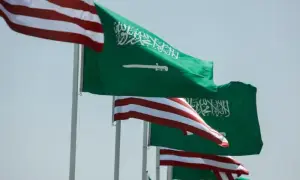
AS expected, the 19th Arab League summit in Riyadh has unanimously decided to revive the Saudi peace plan with Israel. Based on the principle of land-for-peace, this formula first floated in 2002 by the Saudi government offers normalisation of Arab ties with Israel if it vacates the Palestinian territories it occupied in 1967. It also envisages the return of the Palestinian refugees to their homes and the emergence of a Palestinian state on the vacated territory. Will the plan succeed this time when it failed to take off five years ago? There is certainly more optimism in the air today than before. So much has happened in the Middle East since 2002 that many are hoping that Israel and the Arab states will succeed in striking a deal this time. The most crucial factor is the support the plan enjoys from the US, which suggested that it be revived. America finds itself in a difficult situation in the Middle East. Its military adventure in Iraq has proved to be a messy operation and its confrontation with Iran is leading it towards a new disaster. It would certainly want to ease the pressure it faces on these counts. Ironically, after having remained unresolved for decades, the Israeli-Palestinian dispute now appears to be the least thorny of all.
But will Israel — whose intransigence is the main stumbling block in the peace process — agree to compromise now? It has made it clear again that the provisions for the return of the refugees and making East Jerusalem the capital of the Palestinian state are unacceptable to it. Will Washington be prepared to bring pressure to bear on its protégé in the Middle East this time when earlier it had been left to its own devices? Although it has not been openly stated, it is plain that the Bush administration is hoping to enlist the help of its moderate Arab allies to pull its chestnuts out of the Iraqi fire. With Iran having forged a better equation with Saudi Arabia, it is likely that the US is hoping for some softening on the Iranian front too, especially vis-à-vis Iraq and Lebanon. But will Israel oblige?
Containing Aids
ACCORDING to a news item on Thursday, Chakwal has the highest number of Aids patients and the health department is ill equipped to deal with the situation. This is not surprising considering the low priority that is accorded to health. Instead of acting when a health problem first surfaces, the issue is allowed to get out of hand before the matter is attended to. This was witnessed most recently with the outbreak of the dengue virus, particularly in Sindh where it took many lives before it could be contained. This must not be allowed to happen with the HIV/Aids problem. The health ministry cannot afford to ease up on their efforts to raise awareness of HIV/Aids threats. On the contrary, the ante has to be upped and the message of prevention has to be more forcefully driven home. It cannot just be in Chakwal where the number of cases is growing. For that reason, it is imperative that the authorities conduct proper surveys to ascertain the exact prevalence of Aids. The last reported figures show that around 100,000 people are infected with HIV/Aids but it is important to ascertain what the numbers are today. From that, one can identify the high-risk groups — usually thought to be commercial sex workers and intravenous drug users — and formulate strategies to spread awareness among the people. Men like long-distance truck drivers and migrant workers are also risk groups for which strategies like HIV tests at border points can be conducted.
There are many taboos associated with HIV/Aids that have served as obstacles for authorities wanting to tackle the issue. They must press forward with their initiatives and ensure that the message is heard loud and clear. Any complacency in this respect could lead to horrifying health problems as seen in India and South Africa.
FRIDAY FEATURE: Equilibrium in Islam
CHALLENGES confronting the Muslims today have special significance for the Islamic Republic of Pakistan because the current focus of the international community is on this part of the world. It is time that truth is separated from falsehood and a line is drawn between the good and the evil.
What is good for Pakistan is good for the Muslim world. Accordingly, a sense of direction is necessary for doing the right things and rethinking policies, domestically and internationally, in the interest of world peace, security, and prosperity, leading to peace of mind and to an environment for creativity and self
Muslims in the world need to have a strong organizational and management base to help increase their influence, provide alternative system of resolving conflicts, exchanging information, providing social and economic assistance and forging Islamic unity. Unity is essential to enable the Muslims to speak from a position of strength.
There is need to discourage violence. But at the same time effective measures are required to expose the vested interests that deliberately malign Islam and do not miss any opportunity of treating the Muslims as scapegoat, and finding excuses to harm Muslim interests for material / strategic gains. If the West resorts to extremism, it has no moral or ethical justification to label the Muslims as extremists, fundamentalists and terrorists. To every action there is an equal and opposite reaction.
Those trying to blame Islam and Pakistan for extremism and terrorism should understand that nowhere does the Quran encourage extremist approach to religious and worldly matters. Islam stands for equilibrium in personal and social life, peace, patience, courtesy, forgiveness, unity, humility, righteousness, and above all, gratefulness to Allah for all His favours.
The Quran describes the characteristics of the true believers; and the God-fearing. Righteousness does not consist in whether you face towards the east or the west. The righteous man is one who believes in Allah and the Last Day, in the Angels and the Book and the Prophet; who for the love of Allah gives his wealth to his kinship, to the orphans, to the needy, to the wayfarers and to the beggars, and for the redemption of captives; who attends to his prayers and pays the almswho is true to his promises and steadfast in trial and adversity and in times of war. Such are the true believers; such are the Godfearing (Sura: 2, Ayat: 177). To endure with fortitude and to forgive is an act of great resolution. Those who avenge themselves when wronged incur no guilt. But great is the guilt of those who oppress their fellow men and conduct themselves with wickedness and injustice. These shall be sternly punished (Sura: 42, Ayat: 41-43).
As the Quran says, obey Allah and His Apostle and do not dispute with one another, lest you should lose courage and your resolve weakens. Have patience. Allah is with those that are patient. (Sura: 8, Ayat: 46). Islam advocates forgiveness and courtesy. A kind word and forgiveness are better than charity followed by injury. Do good to others but for the sake of your Lord, the Almighty Allah. Bestow no favours expecting gain. Be patient for your Lord's sake (Sura: 74, Ayat: 67). God does not wish to place you in difficulty, but to make you clean and to complete His favour to you, that you may be grateful (Sura: 5, Ayat: 6). The true servants of the Merciful are those who walk humbly on the earth, and when the ignorant address them they say: 'Peace;', Sura: 25, Ayat: 63.
In view of finality of Prophethood (This day I have perfected your religion for you and completed My favour to you. I have chosen Islam to be your faith... Sura: 5, Ayat: 3), the task of continuing reforms and enforcing laws for correcting wrongs is the responsibility of every Muslim. Every society needs security, peace and happiness. But there is no peace of mind to be found anywhere in the world. There are selfproblems.
The Quran says that guidance from God is given in detail for all eventualities and that if a person leads his life in accordance with the commandments given by God, he would achieve peace of mind. This would make justice to prevail amongst various nations as well as in the lives of human beings. Life led in accordance with the commandments of God in the Quran would bring peace to the minds of the devout followers as well as others.
If in today's society we notice the return of undesirable social behaviours and evil practices of the dark ages making people’s lives miserable, it is moral duty of everyone in general and of the rulers in particular, to act against such wrongs with a firm correcting hand. If it is not a simple matter of lawbut is the case of tearing apart of the whole fabric of society, immediate measures are needed to check and stop the erosion with the objective to ensuring better health of society.
It should be remembered that Islam became one of the world's great civilizing forces as well as unifying forces. It stopped infanticide of girls, restricted slavery, ended tribal feuds, advanced women's rights, and stressed religious toleration.
Politicians, lawmakers, judges, administrators and scholars can get inspiration from the teachings and practice of Islam with a view to finding ways and means to solve the existing problems and correcting all wrongs. What is required is sincere legislation in the light of Islam rather than mere lip-service. Unity among the ranks of the Muslims in the world is the basic condition for putting an end to turmoils / crises that have gripped the world in recent years.
Inspiration is in the courage of conviction, unwavering and firm belief in one's mission, deep insight in existing wrongs and vision and means to correct the wrongs, even if it has to be done at the cost of supreme sacrifices, prevailing over the issues of life and death. Death is not feared by a true believer. The practical nature of Islam makes it universal, and for all mankind. This special feature or characteristic points to the fact that genuine Islam, truly and correctly perceived, must prevail, on the basis of its dynamism and strength.
Islam is much more than following the tenets and principles of its faith. It is a way of equilibrium, with fine sense of equity and justice. The message of Islam is universal with emphasis on perfect brotherhood and equality before God of all believers, irrespective of colour, origin or status. Islam's greatest priority is establishment of a moral order and a socio-economic system based on justice and ground realities concerned with all aspects of lives of the people. Universality of Islam is applicable to all people, all places, and all times, with solutions to real life problems. Scientific approach and logic is endorsed by Islam.
It was under the spiritual and intellectual leadership of Muhammad (PBUH) that unity and order replaced chaos, division, and destruction. His ability as a statesman faced with problems of extraordinary complexity is truly amazing. With all the power of armies, police and civil service no Arab has ever succeeded in holding his countrymen together as Muhammad (PBUH) did. All that he did in this context required great ability, diplomacy, firmness and farsightedness. His personality and direct Divine guidance to him made it possible.
The glory of Prophet Muhammad (PBUH) consists in the fact that he fully realized the moral and political necessities of his people, along with their intellectual development, and opened for them a career of unprecedented brilliance, that his efforts for their substantial improvement will be felt to the end of time; that he abolished many cruel and degrading customs, putting an end to innumerable social evils.
To meet the challenges confronting the Muslims today, there is need to recall and recapitulate, with a view to following the example of the Prophet of Islam, Muhammad (PBUH), as the role model, and understanding how Islam attained the summit of its greatness, and raised the people to higher status in the comity of nations, in a short period of time.
"In applying the principles to real life situations and problem solving, the laws and orders (commandments by God in the Quran) are not subject to obsolete and stereotyped interpretations. An accurate understanding of Islamic jurisprudence is required. An objective approach is needed to understand Prophet Muhammad (PBUH) and the great revolution which became possible because of his character and vision, and the zeal and devotion with which his followers rallied round their persecuted Prophet, risking their lives in his defence, for the glorification of Allah, and for the task of reforming society, with a view to restoring man's dignity.
Demonisation of Islam is not something new (the recent reported incident being the attack on the Holy Quran and Prophet Muhammad by Dutch antiimmigration politician Geert Wilders). For centuries the West has subjected Islam to the worst form of intolerance and hostility. However, interest has also been shown on the part of some western (non -Muslim) scholars, specially during the last two centuries, to study Islam more objectively, with a view to discovering the truth and disseminating more accurate information without being accused of partiality. These western authors (Islamic historians), in their search for truth, have removed some gross misperceptions and prejudices against Islam and the Holy Prophet (PBUH).
Whereas, wide circulation of such objective and unbiased information supplied by western scholars is helpful in spreading the truth about Islam, there is need on the part of the Muslim scholars to improve their own communication skills so as to convey the concepts and basic teachings of Islam with utmost accuracy and due consideration to removing all sort of barriers to communication.
The writer is a former director, National Institute of Public Administration (NIPA), Government of Pakistan.
| © DAWN Group of Newspapers, 2007 |