0
0

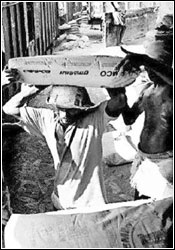 INDIA’S per capita consumption of cement, at 125 kg, is among the lowest in the world. Most of the rural poor, who live in mud huts, and even a significant number of the urban poor (who make do with pavements or tin-roofed hovels), are unable to afford the commodity.
Yet, cement is one of the most politically sensitive industrial products in the country, and governments have over the years flirted with the idea of controlling this sector, especially it’s pricing. In the pre-reforms era, cement prices were decided by government fiat, and when prices escalated, politicians threatened the industry with nationalisation.
Of course, like most such sectors where government decided on pricing, production and investments, cement — along with steel — continued to languish, and acute shortages of the commodity were rampant. Needless to say, the well connected and the affluent bought cement in the black market, and rent seekers thrived in such an environment.
The opening up of the Indian economy in the 1990s saw the government ease control over industries like cement and steel, which consequently thrived. India’s annual cement production, for instance, shot up from around 50 million tons, when the reforms were initiated in 1991, to about 160 million tons at present. The next five years will see an additional 100 million tons being added to the production capacity.
But many politicians still lapse back atavistically into the past, momentarily ignoring the realities of today. The defeat of the Congress in two northern Indian states — Punjab and Uttarakhand — a few days ago, and fears of the likely rout of the party in elections to India’s biggest state, Uttar Pradesh, due to be held in April and May, has triggered off calls for a return to the era of price controls.
The Congress leadership believes that the party lost elections in the two states because of inflation — which peaked at 6.73 per cent a few weeks ago, well below the double-digit rates of the 1970s — and ministers have started warning the industry, advising it to take measures to rein in prices.
The budget saw the introduction of a dual excise duty policy for the commodity — cement priced above Rs190 for a 50 kg bag now attracts a duty of Rs600 a ton (as against Rs400), while the duty on cheaper cement (priced below Rs190) has been reduced by Rs50 to Rs350.
Dismissing the distorted duty structure, the cement industry last week hit back, embarrassing the government by raising the price of the commodity. Most cement companies raised the price by Rs12 a bag from this month, rubbishing the government’s bid to curb inflation by raising duties.
In Mumbai, cement prices topped Rs255 a bag, and heading further northwards, up from the pre-budget levels of Rs240. The government then tried a carrot-and-stick approach, appealing to the Cement Manufacturers’ Association of India to cut back prices, while also threatening to impose a ban on exports.
INDIAN cement producers export under 10 million tons of the product annually, mainly to the Gulf and to countries in South Asia. An arbitrary ban on exports would result in the Indian industry earning a bad reputation as being an unreliable supplier.
Similarly, countries like Sri Lanka, Nepal and Bhutan (with which India has trade agreements), which import Indian cement, will be annoyed if suppliers arbitrarily go back on their export commitments.
Observers feel the government is unlikely to carry out its threat, though hints of an export ban did dampen cement scrips on the stock market.
Banning exports is also unlikely to result in lowering of prices. Most of the exports are accounted for by companies in Gujarat, which find it cheaper to transport the commodity to the Gulf by sea. With domestic demand being high — in the western region, demand is growing at almost 15 per cent annually — the market should be able to absorb the additional supplies without really affecting prices.
The government tried to encourage imports by abolishing import duty, but international prices are quite high, and there are not many takers at such a high price. The cement industry has told the government that with capacity expansion the price of cement will decline. Cement price is highly elastic, and linked to demand, which is soaring.
The infrastructure and real estate sectors are booming, boosting demand for cement. Prime Minister Manmohan Singh estimates that India would need about $350 billion to be invested in the infrastructure sector over the next five years, mainly in roads, airports, ports and power plants.
The real estate sector is also booming, and prices have doubled in many localities in cities like Mumbai, Delhi and Bangalore, over the past one-year. Demand for cement is growing by 10 per cent annually, and the industry is unable to keep pace with the soaring demand.
About $10 billion is to be invested in enhancing capacities by 100 million tons over the next five years, which analysts consider to be inadequate to meet the growing requirements for the commodity.
CEMENT prices are high in India because of a variety of factors, including high government duties and taxes, and fragmentation of the industry. Excise duties, sales and other local taxes, and limestone royalties add up to nearly half the cost of ex-factory cement prices.
Power costs are also soaring, and in many states cement firms have to install expensive captive power units, as the state supplied power is erratic and unreliable. The industry, which was shackled by various regulations and government fiats in the pre-reforms era, is still undergoing transformation.
Licensing rules of the past ensured that many ‘mini-cement plants’ remained stunted, as owners did not want to miss out on the benefits that were offered to smaller units by the government. There are over 400 cement plants that have a capacity of less than 200,000 tons.
But recent years have seen dramatic consolidation in the industry. Swiss major Holcim, and the Aditya Birla group are the two major players in the sector, and between them now account for over 65 million tons annually. Holcim has invested a whopping $2 billion in the industry, and plans to invest equally large sums in the near future.
Other international giants that have been attracted by the opportunities in India include Heidelberg Cement of Germany, Lafarge of France and Italcementi.
Transportation costs are also high in India, as most cement consumers prefer trucks instead of railway wagons. Despite the renewed focus on its freight division by Railway Minister Lalu Prasad Yadav, many bulk commodity producers avoid sending goods by railways because of delays and pilferage.
But with petroleum prices having risen sharply over the past two years, transportation costs have also gone up. Similarly, the Supreme Court has imposed restrictions on the carrying capacity of trucks, preventing truck-owners from overloading their vehicles to make a quick buck.
Indian highways are among the most dangerous in the world, and accidents are rampant. Many of the heavy vehicles, including buses and trucks, continue to be in service despite having outlived their utility.
Cement is produced in certain pockets and has to be transported long distances, adding to the costs. Many city administrations also slap ‘octroi’ duties on commodities like cement, making it even more expensive.
But municipal corporations, for whom octroi is a lucrative source of income, are reluctant to scrap the regressive duty, though several expert committees have called for its withdrawal. Ultimately, it is the cement consumer who has to suffer, by paying artificially high prices for the commodity.