0
0

ISLAMABAD, Oct 24: Feeling the heat of dengue fever, the health ministry on Tuesday said vector control was the only solution to check the outbreak of dengue fever in some parts of the country for which the role of municipal administrations became pivotal.
“Dengue fever is not a health issue alone and also related to our environment,” federal secretary, health, Anwar Mehmood told reporters at the health ministry.
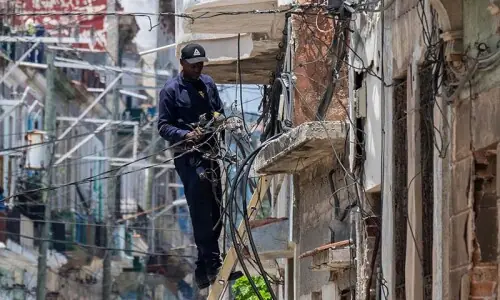
The role of municipal administration becomes all the more important since fumigation, fogging and removal of solid waste from the cities was their job, the secretary said.
World Health Organisation (WHO) representative Dr Khalif Bile also endorsed the health secretary’s point of view saying proper case management, vector control by involving municipal administrations, social mobilisation and education among the people could create a big difference in controlling the disease.
WHO, he said, was closely working with the ministry for effective case management of the dengue fever and to develop human resource for containing the disease.
“We expect that all the municipal departments would play a proactive role in helping us by doing proper garbage disposal and giving proper treatment to water storage tanks,” the secretary said.
The secretary also denied that a dengue patient had died in a Rawalpindi hospital on Monday, saying the mosquito-borne viral infection was not the cause of the 14-year-old girl’s death.
Dr Nilofer Ansari, Acting Medical Superintendent of the Cantonment General Hospital (DGH) said Mehreen was brought to the hospital from Pindi Gheb with ‘Septic Shock’ (a different kind of infection) and not with dengue.
About the growing number of suspected cases, Anwar Mehmood said, the people were coming in a large number in the hospitals because of better awareness created by the media.
“The current spike, though much severe, is the continuation of the November last year’s outbreak of dengue fever in Karachi. However, the fatality rate remained contained around a little over 2 per cent which is also dropping to 1.86 per cent due to better case management by hospitals”, he said. It will subside as the winter sets in, he added. During the first spike in 2005, the fatality rate was seven per cent.
Out of a total of 81 blood samples in Rawalpindi and Islamabad over the last three weeks, 34 samples, including three of the Shifa International Hospital, have been confirmed.
As regards to Karachi, a total of 1,392 patients with symptoms of dengue disease were admitted to different hospitals in Karachi since October 2. Of these 455 were found to be positive for the virus. 25 deaths have been reported so far from the infection in Karachi.
In addition three cases have also been confirmed in Khushab and Chakwal each, four in Kotli (Azad Kashmir) and one in Peshawar.