0
0

KARACHI, April 8: As many as 500 people are believed to have lost their lives on the way to hospitals during the first two months of this year, as the vehicles/ambulances carrying these patients were late in reaching hospitals owing to traffic congestions on city roads.
With so many roads dug up in almost every locality, the remaining roads get naturally flooded with vehicles, and unmanageable and erratic traffic movement does not allow ambulances or vehicles with hazard lights to find their way out.
According to statistics collected by the traffic police from various hospitals, 288 people were pronounced dead on arrival at five different hospitals in the month of January and 210 in February.
In the Jinnah Postgraduate Medical Centre and the National Institute of Cardio Vascular Diseases, 126 people were brought dead in January and 1,010 others in February.
Similarly, in Abbasi Shaheed Hospital, 78 people were brought dead in January and 33 in February; 42 were brought dead to the Liaquat National Hospital in January and 16 in February; in Civil Hospital, 27 arrived dead in January and 26 in February; and these figures at the Aga Khan University Hospital were 20 in January and 34 in February.
There is a general complaint that long traffic jams have become a routine and the city and provincial governments are not taking appropriate actions to improve the situation.
Officials attribute many reasons for their inability to overcome the problem.
They claim that the Sindh governor or chief minister might not know that any section officer or the head muharrar in any traffic section in the city cannot be posted without the consent of the staff of the governor’s or chief minister’s houses.
They said there were 64 traffic sections across the city, and in 90 per cent of these sections, the section officers were posted on recommendations of the staff of these two power centres.
The section officers, who were either sub-inspectors or inspectors, were not afraid of being transferred or punished, as they had the backing of influential people.
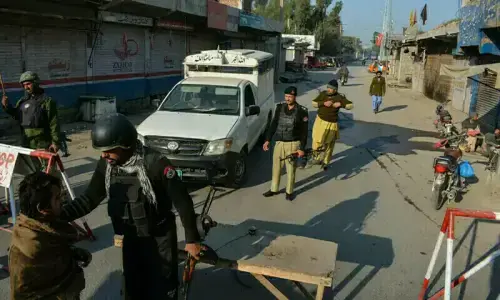
High officials, right from the DIGs to the Sindh Inspector General, appeared helpless in enforcing their writ in the present scenario, but they were forced to take responsibility of the pathetic situation, the sources claimed.
The sources said that field officials posted as section officers could perform their duty if they believed that a departmental action could be taken against them if their output was not impressive, and if they failed in regulating and managing traffic flow in their respective jurisdictions.