Religious politics in Northern Areas
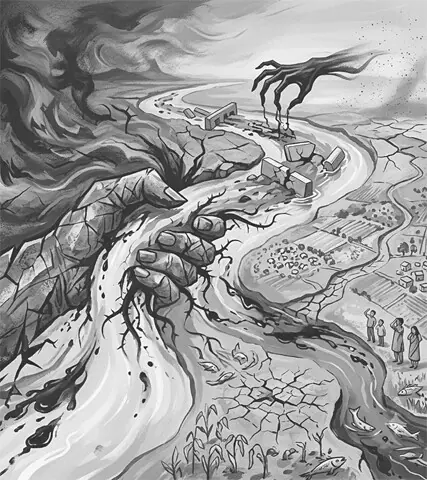
This refers to the recent torching of many girls' schools in various parts of Diamer district. These events are the outcome of the social, economic, cultural and political deprivation that people in the Northern Areas have been suffering for a long time.
For a better understanding of the situation we need to analyze the spontaneous upsurge of religio-political actions in the context of Islamic resurgence the world over and geo-politics.
Because of its geo-strategic location - bounded by the former Soviet Union, China, India and Afghanistan - all local events in the Northern Areas are both national and global.
The geo-political situation of the Northern Areas renders all such events as religious violence into acts that are at once and simultaneously local, national and global. This blurring of distinctions not only produces a distinct consciousness in the region, but also makes its politics very different from the rest of Pakistan.
The interface between the Northern Areas and the rest of Pakistan is crucial to understand local religious politics and violence. Communication with the rest of the country facilitated an influx of people and goods from other regions.
It also enabled local religious elements to foster a nexus with national and global Islamist discourses and movements, bringing skewed economic prosperity which did not benefit every section of the area's society.
Until relatively recently, local kings wielded political authority over scattered valley domains and served as hubs of traditional economy, culture and society.
With the abolition of local princely states, these traditional structures collapsed, leaving society with no viable alternatives. These rapid developments gave birth to an identity crisis.
At the same time, local, national and global geo-political situations were conducive to the stepping in of sectarian parties and bringing about a shift in identity politics from an ethnic to a religious basis.
In such a situation, the best guarantee for a stable relationship among different sects is the representation of the area at local and national levels by local nationalist and national parties.
Instead of providing an alternative in the shape of locally-elected governments, the Pakistani ruling class and the establishment denied suffrage to the local people. To safeguard its vested interest, the bureaucracy supported religious and sectarian parties.
Whenever national and nationalist parties in Gilgit-Baltistan rallied against both the economic exploitation and political deprivation by the state machinery, dominated by non-local ethnic groups, the religious parties aligned with the bureaucracy.
To maintain the status quo the bureaucracy sowed the seeds of sectarianism, and the people are now reaping the crop of sectarianism that is likely to devour the last vestiges of enlightenment by burning schools and bringing the status of women at par with cattle.
To save the region from the forces of darkness, it is imperative for the people to confront the obscurantist forces and seize their rights usurped by the bureaucracy. It is also time for President General Pervez Musharraf to take drastic action against those involved in burning and bombing the schools.
Otherwise the dragon of fanaticism will grow too strong to be controlled and ultimately play havoc with the centres of enlightenment all over the country.
AZIZ ALI DAD
London, UK
Vice-Admiral Choudri
This is with reference to Rear Admiral Khalid Wasay's letter (March 9) about differences between Admiral Choudri and Ayub. The problem (actually there were many problems) with Ayub was that he was hung on to the strategies adopted by his British superiors even after independence.
Sir Claude Auchinleck gave him two erroneous assumptions: one that East Bengal was a "plains" area and therefore defenceless (should remain that), and, two, that the Bengalis were not a fighting race. Ayub faithfully stuck to the theme that the defence of East Pakistan lay in West Pakistan and therefore found a ruse not to develop the navy for that wing.
Ayub had developed a psychological apathy for Bengalis which he showed by not inducting them into the armed forces. By the time he found the errors of his ways, the damage had gone beyond repair.
Ayub always remained uncomfortable among able commanders, and Admiral Choudry was an able officer. Imagine FM Ayub stunning his senior commanders after the 1965 cease fire by saying that one lesson they had learnt was that if they crossed the cease fire line, India would cross the international border.
I agree with Admiral Wasay that Ayub was sea-blind; he was air-blind too. In Operation Gibraltar, even air chief Asghar Khan was not taken into confidence in the planning stages.
Also, like his succeeding colleagues (quoting ZAB), he was power-blind. Interestingly in October 1958, when Asghar Khan refused to accompany the three generals to Iskander Mirza to force the latter's resignation, he (Asghar Khan) found himself a virtual prisoner of Ayub for over an hour.
It is a historical fact that no usurper ever took the air or naval chiefs into confidence before their putsches. They always became accessories to the fact after it took place.
The nation and not the navy alone should be proud of admirals like Admiral Choudri.
ASLAM MINHAS
Karachi
NCEL physical delivery process
This is with reference to the article "Hedge trading in cotton: whose right is it?" by Mr Naseem Usman (March 1).
The writer discusses the establishment of the National Commodity Exchange Limited (NCEL) for conducting futures trading, and assumes that contracts, traded on the NCEL, will not be physically settled. This is entirely incorrect and misleading.
For each contract which will be listed and traded on the NCEL, the exact points of delivery will be redefined in the approved contract specification note before the commencement of trading.
These points of physical delivery will be NCEL-approved warehouses. Additionally, the final settlement between the buyer and the seller via the NCEL clearing house will be on the basis of cash against a warehouse receipt, together with a certificate of quality and quantity issued by an NCEL-approved inspection agency.
The NCEL will have tried and tested risk management policies and procedures in place, including pre-trade initial margin, maintenance margin, daily market-to-market of positions and online settlement of variation margin, real-time monitoring of exposure and position limits, etc., together with being a buyer to every seller and a seller to every buyer for eliminating counterpart risk.
Furthermore, the NCEL's online and offline monitoring and surveillance will be second to none. There will be continuous monitoring of trading activity, including for front running, trading opposite, pre-arrangements, pattern trading, fake bid and offers, trading around major market announcements, etc., coupled with strict adherence to position limits for each and every listed contract to ensure smooth functioning of the exchange and commodity futures markets.
Finally, I wish to reiterate that the NCEL is adopting the best practices in future trading.
AASIM JANG
Managing Director, National Commodity Exchange Ltd, Karachi
Panic on PK785
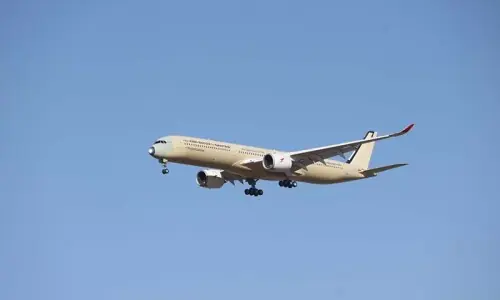
Can somebody imagine the panic and fear that would grip passengers if an announcement is made just prior to the landing, asking them to prepare for crash landing? This is exactly what my family encountered on PIA's first Boeing 777 flight from Islamabad to London.
As soon as the landing gear was lowered and the "No Smoking" signs came on, this announcement for a crash landing came on. For 30 seconds, there was panic among the poor passengers.
They all forgot that there was no in flight entertainment system working on this brand new state-of-the-art aircraft on the eight-hour long flight from Islamabad.
Thirty seconds can be an eternity in a situation like this and seem to last forever. Finally, somebody made an announcement just while we were about to land that all was well and that it was just a computer software error.
These Boeing 777s are flying safely all over the world. The problem we were told by a non-confident staffer was in the software installed for the in flight entertainment system and the seats installed on these new aircraft.
These were chosen by PIA's new team that went to negotiate and then accept it at the time of delivery. Those who were handpicked for training have been unable to understand the sophisticated technology, or perhaps there is some serious problem with the system. All this, however, does not make sense to the poor passengers.
PIA was a great airline to fly with. New aircraft alone do not make a great airline, nor does a powerful MD. It is the human resources of the workers and the service that they provide which matter. This is the job of a professional management, where professionals work and merit prevails.
RAZIA C.
Park Rochdale, OL., UK
Cricket fans' responsibility
The Indian cricket team will open their tour of Pakistan with a one-day international at Karachi on March 13. The Pakistan Cricket Board (PCB) and the people wanted India to play a Test match also in the biggest city of Pakistan, but for security reasons the Board of Control for Cricket in India (BCCI) did not deem it fit for its team to stay for a longer period in the city. So the request was turned down by the BCCI.
Going by the example of New Zealand and South Africa it is a good sign that India at least agreed to play a one-day match at Karachi.
The PCB will be under tremendous pressure to ensure that the Karachi match is held successfully. It is also up to Karachiites to realize the importance of this match and share the responsibility of the PCB. With their help, support and cooperation it will be possible for the PCB to hold the one-dayer in a peaceful atmosphere. Once this match is successfully held, it will go a long way in dispelling the fears of other foreign teams which regard Karachi as an unsafe venue.
A trouble-free match between the arch rivals of cricket at Karachi will make it possible for the PCB to hold Test matches in the city in the future. So the onus of making the match at Karachi a success is not on the PCB alone; the people of Karachi are equally responsible for the success or failure of this one-day international.
They must not forget that the eyes of the world are focused on this match. For Karachi cites it is a good opportunity to prove to the world that, for any type of cricket, Karachi is as good a place as any other centre of Pakistan.
RAFAT MAHMOOD ANSARI
Islamabad
What should pensioners do now?
Hundreds of letters appearing in your esteemed daily and other newspapers should be sufficient evidence of the fact that pensioners in the thousands are feeling deeply aggrieved; more than half are living below or near the poverty line and very many are widows drawing family pension.
After having been engaged in a fruitless struggle to obtain justice for pensioners I have come to the conclusion that none in the finance ministry or in parliament or in the corridors of power is bothered about the plight of old pensioners.
The major culprit is the finance ministry whose primary duty is to frame and implement rules which are fair to all classes of pensioners. Seventeen years ago the Wafaqi Mohtasib gave an unequivocal pronouncement that old pensioners were victims of discrimination which should be removed. It was the finance ministry which refused to implement these recommendations on the pretext of a shortage of funds.
When I persuaded a senator to bring this to the notice of the president, his response was: "....I personally agree with the recommendations of the Wafaqi Mohtasib. However, you will appreciate that there are many other considerations... ."
We should not have expected him to overrule the finance ministry. After all, he was a retired finance secretary. This attitude seems to stem from the mistaken belief of this ministry (given in writing) that granting a cost of living relief to pensioners is an act of "grace".
Think for a moment: If "atta allowance is granted to all employees, high and low, but denied to pensioners; if a prime minister gives a dearness relief of Rs200 a month to all employees, but denies it to pensioners; if all serving government employees get a dearness increase equal to 35 per cent of their salary but the same is denied to pensioners, how will you describe it in your human dictionary? Callous? Insensitive?
Does it point to the belief that pensioners are a politically irrelevant and useless segment of society? Surely, no sane person can maintain that while a secretary cannot withstand the pressures of rising prices without state assistance, a poor, old pensioner can.
So, I approached the Federal Shariat Court which delivered a favourable judgment, but the finance ministry appealed against the judgment before the Shariat Appellate Bench of the Supreme Court which struck down the judgment of the Shariat Court after a decade.
In its judgment it made the historic observation: "... liberal interpretation of pension laws/rules rendering them totally ineffective is neither permissible nor possible...."
Old pensioners pose a human problem. Where do they go from here?
I. A. SHARWANI
Rawalpindi
Incomplete project
This is with reference to the letter "Incomplete housing project" (February 26) by Mr Hassan Akhtar about the incomplete housing projects initiated in Sector I-11 of Islamabad by the Pakistan Housing Authority (PHA).
Being an affected person myself I endorse the views of the writer and would like to add that similar housing projects were also started by the PHA in other sectors of the capital, like G-7, G-8 and G-11.
Although the allottees have paid all dues and much time has passed, the fate of these housing projects still remain in the doldrums. The PHA is solely responsible for the inordinate delay which has caused great financial hardships to allottees.
In these circumstances, the allottees have no choice but to live in rented houses and bear an additional financial burden of Rs7,000 to Rs12,000 a per month. Those getting an average monthly salary of Rs15,000 find it more difficult to meet their expenses.
The ministry of housing and works is requested to take effective measures, complete its projects without further loss of time and save the allottees from further suffering.
MAHMOOD JAVED
Islamabad
Verifying powers
Mr Ali Khan's proposal (March 1) that the government should allow the retired gazetted officers to verify/ attest forms and documents deserves serious consideration.
We all know that, because of various reasons such as downsizing in government offices or the golden handshake scheme, the number of serving gazetted officers is fast decreasing. This has created much pressure on the officials who can attest documents.
To overcome the pressure, either the requirement of attestation by gazetted officers should be done away with (as it is a legacy of the past century when documents had to be typed out and compared and submitted for signature), or more and more persons such as retired gazetted officers should be also permitted to do all verification/attestation of forms and other documents. he bar, if any, on retired officers should be removed for speedy and accurate disposal of cases.
GHULAM AHMAD
Karachi
Dr A.Q. Khan
It was very generous of General Musharraf to have allowed Dr A. Q. Khan to keep his ill-gotten wealth. Can he at least make sure that Dr Khan's income is taxed?
Where were the CBR and the income tax department and why didn't they ferret out the doctor's enormous wealth and worry over his lavish lifestyle?
F. ALI
Karachi
Investment in agriculture sector
The director-general, Board of Investment, has asked the members of the Karachi Chamber of Commerce and Industry (KCCI) to invest in agricultural-based industry and foodstuffs.
The acting president of the KCCI has pointed out many impediments to local investment in these sectors. I would like to point out two more serious impediments:
1. Machinery used in both agriculture and agriculture-based industry and the foodstuffs industry are chargeable to a highest rate of customs duty at 25 per cent ad valorem. Under the provisions of SRO 439 (I)/2001/ 18-06-2001, these machines are exempted in excess of 10 per cent of the duty under the heading priority industries. Other industries listed under this SRO, viz export industries, value-added industries, high tech industries, are exempted in excess of five per cent duty. This discrimination against import of agricultural machinery in custom duty should be removed immediately.
2. India is manufacturing high-tech machines used in the agriculture and foodstuff industries at cheaper costs. All machines used in agriculture and foodstuffs may be allowed to be imported from India. The removal of the above-mentioned impediments will help boost investment in the agriculture and foodstuffs industries due to a lower cost of imports.
M. S. LODHIA
Karachi
Easing traffic congestion
I have read about the decision taken by the Karachi nazim and published by newspapers more than once that heavy traffic will not be allowed to enter the city during peak traffic hours both in the morning and in the evening.
One wonders why this directive has not yet been implemented. It was a correct step to ease traffic congestion in the city, specially on roads leading to the Super Highway from Shershah during peak traffic hours.
At present there is a long queue of long-bed trailers and trucks on these roads from Sohrab Goth to Liaquatabad. These slow-moving vehicles are a source of traffic jams at busy intersections and thereby create lots of problems for motorists. This situation requires that something must be done immediately before the opening of the Northern Bypass.
ENGINEER DILAWAR HUSAIN
Karachi
Haj policy: suggestions
I request the government to consider the following points when it draws up next year's Haj policy.
1. Candidates who applied for Haj 2004 and were not selected should be given preference for Haj in 2005 if they apply.
2. All applicants who are senior citizens may be allowed to proceed for Haj without any condition, along with their wives, sons and daughters.
DR RASHID CHAUDHARY
Islamabad