



 0
0

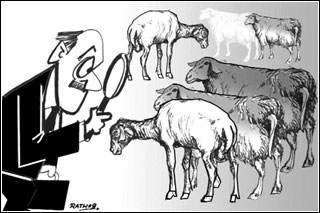 THERE is an increase of 10-15 per cent animals at Bakra Piri in Karachi, every year. This market is considered to be the biggest one in the country which last year brought in 300,000 cattle and 400,00 sheep and goats.
Of this around 15 to 20 per cent animals make their way from Sindh and Balochistan and the rest from the far-flung areas of other provinces. These animals are camped at the Super Highway.
Last year a havoc was created about the occurrence of “foot and mouth disease” in the cattle market, creating lots of problem. On investigation it was found that the problem was due to the improper planning and the mismanagement. Actually the disease was “vesicular stomatitis”, which broke out in those animals which were brought earlier from the far-flung areas and were managed badly due to the following reasons:
1. Animals kept standing without shelter for more than 20 days under stress on uneven stony grounds.
2. Squalid sanitary conditions.
3. Animals fed roughages due to the shortage of green fodder.
4. Over-stressed animals brought much earlier from Punjab and other areas. There were no problems in animals brought 5 to 6 days before Eid from the nearer places.
5. Shortage of sweet water.
6. Speedy winds carrying sand and stone particles mixed in wheat bhoosa taken by animals, which created smaller puncture wounds on gums tongue etc.
7. Increase in number of flies and mosquitoes.
8. Over-crowding and congestion.
Saliva was dribbling from the mouths of those animals which were brought earlier and whose mouths were opened many times daily through the pressure of thumb. Chewing of hard fodder caused wounds in the mouths, creating “foot and mouth disease” like conditions. No such syndrome was observed in those animals which were fed better succulent fodder, as many pure bred Holstein Friesian and their cross progeny were available in the market.
Foot and mouth is a highly infectious disease mainly in exotic animals and their cross progeny. Local animals are vulnerable to catching it. The danger is more if the exotic animals, standing with the local species, are infected with the disease increasing the likelihood of spreading it among the local breeds. Thus, it is important to plan bigger area to cut down the chances of spreading any infectious or contagious disease among the sacrificial animals.
1. A more spacious levelled area should be earmarked with cattle on one side, and sheep and goats on the other. The whole area need to be divided into sectors with each sector accommodating only 25,000 animals. A space of 200 yards should be left in all corners between each sector which should serve as a market for animal feed and for other essential items. The entry of each sector should have antiseptic bath-dip enabling all to walk through it.
2. The exotic animals and their progeny should be kept in separate places in one sector.
3. The animals should not be allowed into colony more than 10 days prior to Eid-ul-Uzha.
4. Every owner should arrange shelter above their animals to protect them from heat, cold weather and dust.
5. The area should be cleaned regularly, at least once daily, in the morning and the dung should be removed and the area be sprayed with suitable disinfectant.
6. Sweet water or tolerable water should be made available for animals.
7. Green fodder should be made available.
8. Safe sprays for killing of flies and mosquitoes be carried out daily.
9. The officers of Animal Husbandry Department should be authorized to check the sale of freon, rotten and unhealthy fodder, cottonseed cake. The fodder and cottonseed cake affected by fungus and other un-hygienic material is sold, which creates diseases problems, in animals as well as human beings.
10. Only senior veterinarians may be permitted to practice there. No new inexperienced, unqualified veterinarian should be allowed to practice in Bakra Piri.
11. On entry point, all animals should be checked by senior veterinarians and the ailing, wounded animals be kept separately for treatment, in a temporary quarantine, so that they may not spread diseases to other healthy animals.

























