SC upholds Bait-ul-Mal aid for Hindu girls
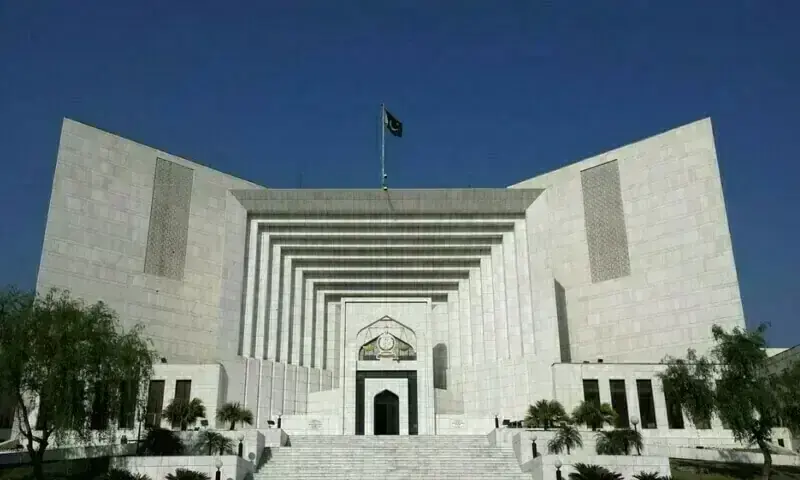
• Rejects plea against SHC order requiring Pakistan Bait-ul-Mal to pay Rs10,000 per month to each girl, with 10pc annual increase until marriage
• CJP says courts may look beyond legal questions to address underlying predicament
ISLAMABAD: The Supreme Court on Monday rejected a plea filed by the Pakistan Bait-ul-Mal (PBM) challenging the Sindh High Court’s Dec 1, 2022, order directing the welfare institution to provide financial support to two Hindu minor girls.
A three-judge SC bench, headed by Chief Justice of Pakistan (CJP) Yahya Afridi and comprising Justice Naeem Akhtar Afghan and Justice Miangul Hassan Aurangzeb, upheld the SHC Larkana Circuit Court’s order requiring the PBM to register the minors as beneficiaries for payment of monthly maintenance of Rs10,000 each, with an annual increase of 10 per cent, until their marriage.
Though the Supreme Court appreciated the concern shown by the high court for the welfare of the minors, it laid down a framework for future cases, stating that cases should be referred to the PBM for consideration where circumstances disclosed before a court appear to warrant recourse to the institution.
Bait-ul-Mal may thereafter facilitate the applicant by assessing their circumstances in accordance with the applicable policy and eligibility criteria and determining the extent of assistance.
“This course allows the concerned court to bring a deserving case within the reach of the welfare institution established to respond to it, without displacing the structure through which the PBM is required to administer its assistance,” the court observed.
The controversy stemmed from PBM’s challenge to the Dec 1, 2022, SHC order, which held that Ram Raj — the paternal grandfather of the two minor Hindu children — was not personally liable for their maintenance under the applicable family law. However, the high court also directed Bait-ul-Mal to register the minors as regular beneficiaries and pay each of them monthly maintenance.
It so happened that Shrimati Reeta, a Hindu woman, married Ravi Kumar in 2012, and two minor daughters, Jasika and Sanika, were born of the marriage. Ravi Kumar later died by suicide on May 20, 2017.
With no independent source of income to maintain herself and her daughters after her husband’s death, Shrimati Reeta instituted proceedings before a family court in Jacobabad, seeking maintenance for the minors from one of the respondents, their paternal grandfather, Ram Raj.
Ram Raj’s own circumstances were scarcely better. Aged and infirm, he too lacked a source of income and a residence of his own and was living in a dharamshala (charitable shelter).
Nevertheless, the family court decreed the claim for maintenance and directed Ram Raj to pay Rs3,000 per month to each minor, with an annual increase of 10pc. The decree was maintained in appeal, after which Ram Raj invoked the constitutional jurisdiction of the SHC.
CJP Afridi observed in the judgement that courts were not infrequently faced with cases where resolution of the legal question at hand did not necessarily resolve the underlying predicament of the parties. Thus, in fully discharging its judicial function, a court may look beyond the immediate legal question and seek to address that predicament.
And when a state institution exists precisely for that purpose, the court may very well seek its assistance, he observed. The present case, the CJP noted, demonstrated precisely why such recourse may sometimes become necessary.
The judgement noted that the minors’ mother was a widow without an independent source of income, while their paternal grandfather, himself aged and infirm, was living in destitute conditions.
The judgement noted that the two children belonged to a religious minority in a country where minorities occupied a particularly vulnerable position, with social and economic hardships often bearing upon them with greater force.
While poverty, loss of familial support and other forms of hardship were difficult to withstand in themselves, their impact might be considerably more acute for those who already stood outside the social majority, the verdict said.
Therefore, institutions of the state must remain mindful of this reality, the judgement said, adding that for Jasika and Sanika, their minority status formed a crucial part of the wider context in which their need for support should be considered.
Published in Dawn, September 8th, 2026