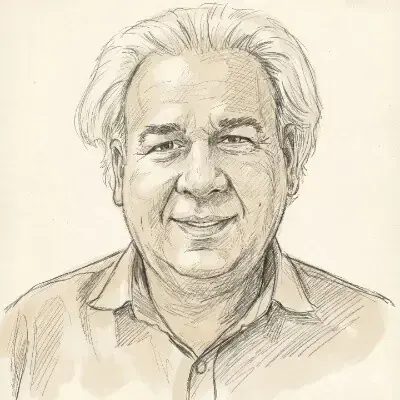
Afsanay Shahid Hain
By Shahid Naqvi
Ilm-o-Irfan Publishers
ISBN: None
175pp.
There are multiple ways to analyse works of art. One is to ascertain the role that empathy has played in its creation, which is exceedingly important.
Of all the textual forms of expression, fiction helps us understand life’s intricacies and the complexities of the human condition with a fair degree of lucidity. The reason for that is it carries the plot-characters-conflict trinity, which no man can escape in his lifetime.
The first short story collection in Urdu by Shahid Naqvi, Afsanay Shahid Hain [Stories as Witnesses], is a book that deserves to be read with attention. Naqvi has previously published a novel, Jo Tum Pe Guzri [What You Suffered], which came out when Covid-19 was wreaking havoc on the world.
The author is a well-known actor, with several TV serials and series to his credit. He is also renowned for his ability to mimic celebrities. His latest book, however, doesn’t mimic anyone. Neither does it imitate life, as is often said about art. These stories present life — or perhaps a better word would be existence — as it is. The reference is to realism intensified by global socio-economic disparities.
A debut Urdu short story collection explores empathy and inequality
The first story in the collection, ‘Goongi Awazein’ [Voiceless Voices] has a bit of an allegorical touch to it. One morning, the central character, Yousuf, wakes up to find that he’s lost his voice. It turns out that it’s a malaise that has affected the entire society. The story has political undertones.
A couple of tales that follow bring into focus two important familial relationships — that of brother and father — in ‘Barray Bhai’ [Older Brother] and ‘Baap’ [Father]. One is a sketch of a mischievous man suffering from a lethal disease, and the other is about a retired government official who, after retirement, has to vacate the official accommodation that he had been occupying while in service.
In order to do so, he needs to get rid of the junk that has gathered over the years. He calls a junk dealer for the clean-up, but arguing with him opens a new life lesson for him.
The book’s central crux comes from the story ‘Khazanchi’ [Treasurer]. Here, Naqvi brings into sharp focus the economic strife that many individuals and families experience. It may sound simplistic, but the writer makes the story engaging for his readers. Within the seemingly uncomplicated framework, he puts the spotlight on certain spiritual practices that sometimes give the rags-to-riches story a much-needed extra dimension, blurring the line between the subjective and the objective.
The ideological leanings of Naqvi, if they can be described as such, come to the fore in the story ‘Pinni’. Interestingly, it is the very first tale he ever penned that received a big nod from the acclaimed writer Upendranath Ashk (Naqvi describes this important episode from his life in the book’s preface).
Pinni is the young daughter of Gormi, a domestic worker — or maid — whose husband has left her, leaving her to do menial jobs — such as doing the dishes and scrubbing floors — at the residence of an affluent family. The reader can easily detect the writer’s empathy for the underprivileged and the pain he feels over economic inequality which, in turn, creates social injustice.
One can say that it is written with the tradition of the Progressive Writers’ Movement in mind, and that’s a compliment. The perspicacity with which Naqvi underlines, by touching upon all the above-mentioned issues, the tragedy that occurs in the form of the loss of innocence is worth reflecting upon. Children and innocence are synonymous. Once they start storing bad — and good — experiences in their memory banks, innocence begins to fade away.
The high point of Naqvi’s narrative endeavour in the collection comes with ‘Mascot’. This is also a tale of financial challenges faced by an ailing father whose teenage son, Jamil, has to look for work to put food on the table. Being inexperienced doesn’t land him a lucrative employment opportunity, but he does get the job of a mascot (wearing animal costumes) at social gatherings to entertain kids. Given his situation, he accepts the job, though, initially, he feels a trifle dithery. Things take a dramatic turn when the economic test assumes the shape of a moral challenge.
‘Mascot’ is a powerful story due to its linguistic flair — there are poignant lines in it, such as “bhook aap ki sehatyabi ka intizar tau nahin ker sakti [hunger can’t wait for you to recuperate]” — and its cinematic appeal. The climax of the story makes the reader feel as if they are watching a film with an unexpected ending.
Speaking of cinematics — let’s call it the visual element — ‘Qufl’ [The Lock], too, has that. Reading it conjures images of a short film in the reader’s mind, in which a rich man, a seth, gets stuck in a bathroom. While being there for a long time, his capitalist approach towards his existence suffers a dent. And yet, the author suggests, the insidious power of capital cannot be overcome with emotion.
Apart from more than a dozen thoughtfully penned tales, Afsanay Shahid Hain has five very short pieces under the generic title ‘Dhajji’ [Cloth Shred]. One can view them as epigrams accompanying the main features of the book. One of them can be roughly translated as: “Some stories make you laugh. Some make you cry and make you kneel before them. Those who don’t cry become the real target [of the stories].”
Isn’t that thought-provoking?
The reviewer, a member of staff, is an author of several books
Published in Dawn, Books & Authors, April 5th, 2026