Japan says seawater radioactivity below limits near Fukushima

Tests of seawater near Japan’s Fukushima nuclear power plant have not detected any radioactivity, the environment ministry said on Sunday, days after authorities began discharging into the sea-treated water used to cool damaged reactors.
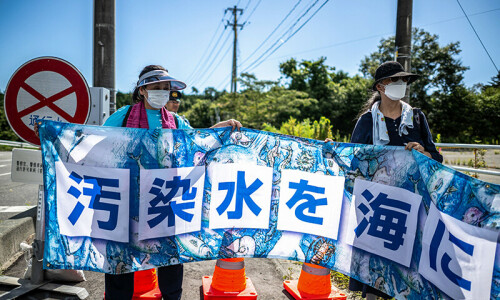
Japan started releasing water from the wrecked Fukushima plant into the Pacific Ocean on Thursday, sparking protests in Japan and neighbouring countries, in particular China, which banned aquatic product imports from Japan.
Japan and scientific organisations say the water is safe after being filtered to remove most radioactive elements except for tritium, a radioactive isotope of hydrogen.
Because tritium is difficult to separate from water, the Fukushima water is diluted until tritium levels fall below regulatory limits.
The ministry’s tests of samples from 11 points near the plant showed concentrations of tritium below the lower limit of detection — 7 to 8 becquerels of tritium per litre, the ministry said, adding that it “would have no adverse impact on human health and the environment”.
Monitoring would be carried out “with a high level of objectivity, transparency, and reliability” to prevent adverse impacts on Japan’s reputation, Environment Minister Akihiro Nishimura said in a statement.
The ministry would publish test results every week for the next three months at least, an official said.
Japan’s fisheries agency said tests of fish from near the plant did not show any abnormalities. Its test on Saturday found no detectable levels of tritium.
Plant operator Tokyo Electric Power Co (Tepco) said on Friday seawater near the plant contained less than 10 becquerels of tritium per litre, below its self-imposed limit of 700 becquerels and far below the World Health Organization’s limit of 10,000 becquerels for drinking water.
Tepco said on Sunday it had not detected any significant change. Fukushima prefecture also published tests from nine locations near the plant that showed tritium below limits.
Tepco is storing about 1.3 million tonnes of the contaminated water, enough to fill 500 Olympic-sized swimming pools, in tanks on the site.
The release of the first 7,800 cubic metres, equivalent to about three Olympic pools, will take about 17 days. It is estimated it will take about 30 years to release it all.
Japanese offices have received a barrage of telephone calls, apparently from China, complaining about the water release, the foreign ministry said, adding that it had asked the Chinese embassy in Japan to call on the public in China to remain calm.