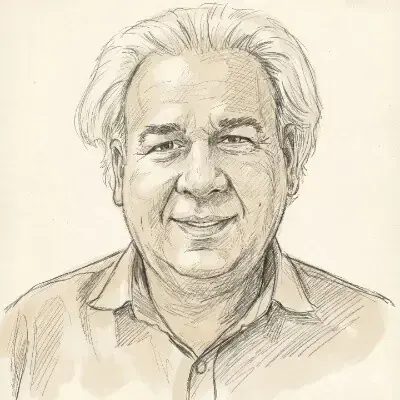
KARACHI: A small group of eminent individuals of the city gathered in the garden of the Goethe Institut Karachi on Wednesday evening to say goodbye to the institute’s director Stefan Winkler who is leaving Pakistan for Sri Lanka after a five-year stint.
Talking to Dawn as he went down memory lane, Mr Winkler said he came to Karachi in June 2015. One of his earlier assignments came about when a colleague from Mumbai got in touch with him. He had this project of poets translating poets in several cities of India, Bangladesh and Sri Lanka. He wanted him [Winkler] to take part in it; so the Karachi director brought together two Sindhi and two Urdu poets (at the advice of the late Asif Farrukhi). The poets were Amar Sindhu, Attiya Dawood, Ali Akbar Natiq and Afzal Syed. There were two poets from Germany — Daniela Danz and Andreas Altmann — in the project as well.
Mr Winkler said, “There were less challenges in Pakistan than [I] expected. I’d never been to Karachi before. Coming from the West you have a certain image of Pakistan. The first weeks I didn’t move a lot because I didn’t know the situation. [Subsequently] I encountered a lively cultural scene, which actually had started a few years before with events such as the Karachi Literature Festival (KLF). So it was easy and pleasant to meet all these cultural organisers.
“I have too many enduring memories of Pakistan. I haven’t been to a country where the people are so welcoming. Maybe because a lot of people belonging to the middle class here suffer from the fact that they know how their image abroad is. But it’s not their [real] image.”
Mr Winkler said wherever he went in Pakistan the doors were opened for him. He was able to meet all the amazing artists and writers. It was all too easy. In Colombo, he said, there will be a new set of challenges.
He pointed out another memory of Pakistan that will stay with him is that the country has a huge diversity — culturally, ethnically and linguistically. “After five years I’ve got the impression that I’m only scratching the surface because there are so many layers to them.” He recalled that once he had two young guests at his place: one was an acting student at the National Academy of Performing Arts (Napa) and the other was a film-maker. They were both from Balochistan, talking in a language he wasn’t familiar with. He found out that it was Brahvi. Afterwards, the Goethe director did a little research on the language.
Those attending the farewell included Ameena Saiyid, Noorejahan Bilgrami, Ayla Raza and Attiya Dawood, among others.
Published in Dawn, November 1st, 2020