0
0


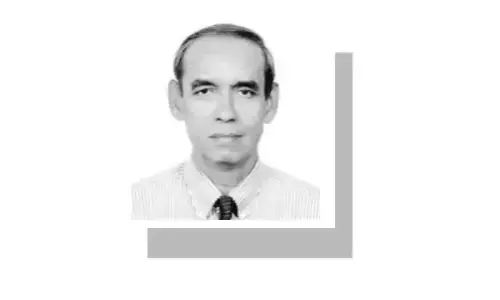
He leaves behind a number of disciples in his typical Su'ng school of Sindhi music, and his departure is an irreparable loss to this genre of music. Ironically, the last days of the life of this talented musician were plagued by hunger, disease and misery.
Suhrab Faqir belonged to a Sindhi school of mystic music that is over a century old and has become popular among the mystic singers, lovers of the school of thought and the general public. This school was started by Mohammad Faqir Khatian, whose last resting place is located near Tando Jam, Hyderabad, in the early 20th century.
Mohammad Faqir was a great poet and music lover who himself used to sing mystic poetry. Generally, mystic poetry is about the relationship between man and his Creator in symbolic form, also reflecting upon the secrets of the universe. Su'ng poetry is always in praise of the Murshid and is sung by disciples in chorus-style, therefore it is called Su'ng or 'togetherness'.
Mohammad Faqir Khatian (d. 1939) formed the first group of vocalists during the early years of the last century. He was aware of the fact that Sa'ma or 'divine meditation' was being practiced by various mystic schools throughout Sindh at the time. The Qadriya school did not allow music in Sa'ma and in order to create a transcendental togetherness, Mohammad Faqir made a combination of the two he drew poetical narration from the Qadriya school and the rhythm from the Chishtia, accompanied by dancing in ecstasy from the whirling dervishes of Maulana Rumi. During this meditation, he used yaktaro and castanets to give tonal support of rhythm.
When Suhrab Faqir thought of learning music, giants like Faqir Amir Bakhsh and Sona Khan along with a number of bhagats were already taking audiences to the heights of ecstasy. Their renditions were welcomed at almost all important congregations and shrines. But Suhrab Faqir's love for Su'ng style was overwhelming. Suhrab developed a taste for music at an early age and started visiting Sufi Khair Mohammad Hisbani, a versatile mystic poet of Khairpur, along with his father. Later, on the advice of some elders, he visited Ustad Kheta Khan of Patiala for training in music. After learning the basics, he joined a group of singers who practiced the bhagat style of music in which story-telling gets a musical narration.
When he had learnt the minutiae of music, he began visiting shrines where he sang the poetry of various poets, especially the mystics. What lured him the most was the poetry and singing style of Mohammad Faqir Khatian. He formed a group of vocalists and sang the poetry of all the mystic poets such as Sachal Sarmast, Madhu Lal Shah Hussain, Bulleh Shah, Sultan Bahu and Ghulam Farid in Su'ng style. Later, the style was also picked up by other vocalists but no one could attain the devotion, presentation and style of Suhrab Faqir.
To him, mystic poetry had to be the medium of spiritual elevation, revealing the secrets of nature to the believer in Divine infinity. His style became archetypal which, when presented in Sindhi compositions or classical art form, became unique. Suhrab became a class unto himself.
Besides singing at various places across the country, he travelled to Britain, Germany, Belgium, the Netherlands, Norway and France where his art form was highly appreciated and he was considered as one of the great mystic singers of Pakistan. His style was unique in which the vocalist does not confine to mere words but the lyrics, carrying the mystic message, can only bring the required result if the narrator gets deeply involved in translating the poetry's meaning to its core and renders the composition in complete ecstasy. Suhrab Faqir would get so engrossed in the lyrical and musical narration that it would make the listener enter a trance-like state.
For his services, he was awarded the Pride of Performance award besides the Shah Latif Award. During his last years he was not keeping good health and underwent medical treatment for a number of ailments. He leaves behind a number of students and fans, and will be remembered for a long time to come.