WASHINGTON Pakistan's tribal areas are too ungovernable and too violent to benefit from US financial assistance, says Senator John Kerry, reminding Islamabad that only security could bring prosperity to the region.
The US Senator, who is trying to push an annual $1.5 billion increase in aid to Pakistan, visited the tribal areas earlier this week after a series of high level meetings with senior officials in Islamabad.
'Youve got to build the police and the security capacity and then you can follow in to assist the citizens,' Senator Kerry, who chairs the Senate Foreign Relations Committee, told ABC News during a visit to Peshawar on Tuesday. 'You cant yet spend the money there. It is too dangerous there.'
That is an unusual admission as the United States tries to convince Pakistanis it is shifting from supporting the military to supporting law enforcement, civil society and development, the popular US television show points out.
That shift, Mr Kerry admitted, was long overdue and was necessary to save both Pakistan and Afghanistan from the rising militancy.
'If you can begin to bring law enforcement to the task, then the majority of people who dont want to live under those insurgents or under the Taliban will dare to stand up,' Senator Kerry said during an interview in the historic Frontier Corps fort in Peshawar.
'But in the absence of that, if you have a total vacuum, people are scared and theyll go underground, and thats been whats happening in the past months while weve been more focused on Iraq.'
Increasingly, the United States has linked success in the war in Afghanistan to providing alternative futures to impoverished and poorly governed populations on both sides of the porous Afghan-Pakistan border.
The Enhanced Partnership with Pakistan bill, better known as the Kerry-Lugar legislation, provides Pakistan development aid 'to help them build some schools out here, to be able to build some of the roads they need, to have a health clinic, so they can see that their lives are actually better if they choose to work with the government,' Kerry said.
'If you dont show an improvement then they sit there and theyre subject to the Taliban coming in and saying, well look, theres been a Pakistan for 60 years but your life hasnt changed.'
The bill also provides Pakistan with money for police and paramilitary training. 'Pakistan itself is threatened by this insurgency and the insurgency is slowly moving into the main parts of Pakistan,' Sen. Kerry said.
He called the Swat peace deal a 'concern' and acknowledged that while the Frontier Corps had made great strides at combating the militancy, Pakistan still needed to acknowledge the extent of the threat the Taliban posed.
'The urgency is greater than the response weve seen thus far,' the senator said. Senator Kerry said he was convinced the ISI and Army leadership were opposed to harboring militants groups. But 'is it possible that people who originally had ties to the Taliban who may no longer even be affiliated with the agency... have some ongoing connection?' he asked. 'Thats possible, sure.'
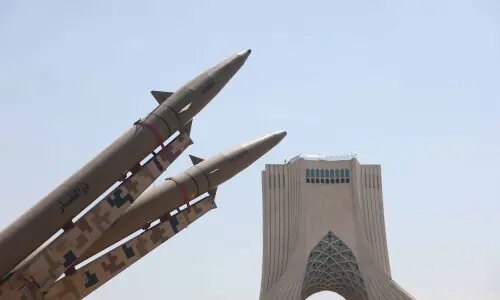
He also believes in a covert campaign that has pounded the tribal areas with some 40 missile attacks launched by unmanned aerial drones operated by the CIA. Those attacks have, largely, inspired anti-Americanism across the country.
'Ive looked at them very, very closely. And I asked for a CIA briefing to go through every single attack and understand the targeting and what the results really were. And Ive also checked them against what they know here and the judgments theyve made. And I would have to tell you that the answer to that is, I believe, yes, they have been worthwhile, and as complicated as it is, I think its made us safer.'
Sen. Kerry's statement went farther to acknowledge the CIA role in the attacks than those by other US officials unwilling to do so on the record.
Mr Kerry argued the drone attacks had been 'ginned into a political tool' in much of Pakistan, but were actually popular in the tribal areas, so long as they did not cause civilian casualties and targeted foreign fighters, usually Arab, who are living among the Pashtun villages along the border.
'The fact is that many people out here understand that that is making their lives safer,' he said.