0
0

LAHORE, March 2: Trade Minister Humayun Akhtar Khan on Sunday linked the recent increase in oil prices to the Iraq crisis, and claimed that a decrease in prices in the international market would immediately be reflected in Pakistan.
The war on Iraq would affect businesses in Pakistan, but the severity of its effects would be related to its magnitude, he said at a news conference in the Lahore Press Club.
He said Pakistan’s trade was improving and “we will achieve our targets for the current financial year provided the world remains peaceful”.
The minister, who is proceeding to the US, said the government would take steps to compete with the world in trade after the elimination of quota system in 2005. Improvement in the quality of infrastructure was one such step and the prime minister and the Punjab chief minister would soon make announcements in this regard, he said.
He said the government would also facilitate installation of state-of-the-art machinery and human resource management, besides reducing duties and the cost of capital for making Pakistani products competitive in a free trade regime.
The minister said that besides seeking concessions from the World Trade Organization, the government was trying to promote regional free trade policies. “We have asked Japan for a free trade agreement,” he said.
He said the law and order situation in Karachi was harmful for the country. However, the world must understand that Islamabad was being subjected to violence for playing an active role in the global war on terrorism. Trade activity and foreign investment had so far been on the positive side despite the law and order situation, he said.
The minister said that at a recent meeting with WTO officials, he had tried to seek concessions for the Pakistan agriculture products, which were costly in the world market because of their high rate of production.
Major world countries were heavily subsidizing their agriculture products so as to keep their prices low in the world market. “We cannot provide subsidies because of agreements with the IMF and our inability to spare funds,” he said.
The minister said he had also discussed with WTO officials free movement of trained and educated persons to other countries and revision of the body’s rules, because Pakistan feared that non-tariff barriers would be used against it.
The WTO was also informed that Pakistan had not been invited to two of its recent meetings and it would not follow decisions that were made without taking it into confidence.
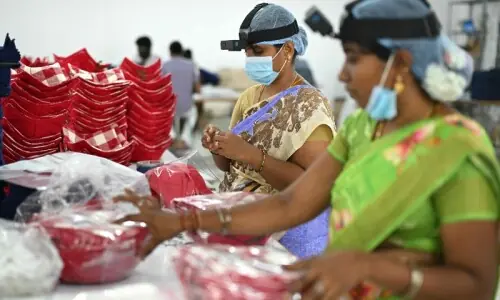
Mr Khan said that during his visit to Japan, he had requested the Japanese government to give concessions to Pakistani exporters of garments so that they could compete with their Bangladesh and Vietnamese counterparts.
He said he also went to Russia with President Gen Pervaiz Musharraf, and the visit was a success. There was a basic shift in the relations between the two countries, and both wanted an improvement in their trade ties, he said.
Replying to a question, he said the country would get rid of IMF conditionalities after the completion of Poverty Reduction Programme in 2004. “There would be no such agreement in future,” he said.
The minister said the Sri Lankan trade minister would arrive in Pakistan for a free trade agreement between the two countries. “We have asked them to give a fresh set of dates for his visit,” he said.
He said the Afghan transit trade had been creating problems for the country because of the 24 items included in the negative list. These items used to be sent to Pakistan and “we have told them that we are going to revise the list”. The list had been revised and would be submitted to the Economic Coordination Committee for approval, he said.
The minister said the overall trade with Afghanistan had improved during the first five months of the current financial year.
Replying to a question, he said trade relations with India would resume only if it agreed to start negotiations on political matters.
Earlier, he said that with the Senate election, the process of restoration of democracy had been completed in the country. Now, the success of the system depended on the conduct of politicians, he said.