0
0

ISLAMABAD, Feb 19: Government has chalked out a comprehensive plan to control human trafficking along Pakistan’s border with Iran, an interior ministry official said.
Talking to Dawn on Tuesday the official said under the plan measures would be taken including legislation to combat human trafficking, organize a national conference on human smuggling, strengthening the capacity of immigration wing of the FIA, police and the setting up of National Alien Registration Authority (Nara).
The official said an Ordinance on Prevention and Control of Human Smuggling had been promulgated prescribing severe punishments to traffickers.
He said the interior ministry will hold a seminar on Feb 20 in Islamabad on the subject. The seminar would be attended by all stakeholders, representatives of government agencies, ambassadors and high commissioners, the UNHCR and NGOs.
The official said for the capacity building of immigration staff, PISCES Project has been launched, which has started functioning at Karachi, Lahore, Islamabad and Peshawar Airports and will soon be extended to other airports.
The establishment of National Database Registration Authority (Nadra) for the issuance of computerized identity cards with several security features to citizens to prevent forgeries was one of the many steps being taken to control human smuggling.
Similarly, a Nara will be established to register aliens such as Bangladeshis, Burmese and Afghans.
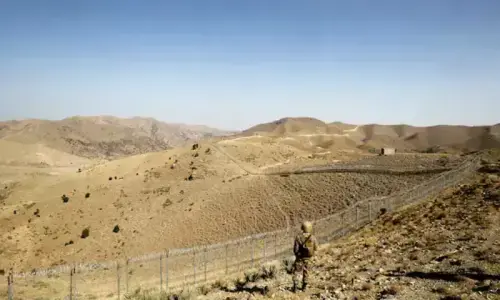
“Since most of human smuggling takes place along the Balochistan-Iran border, therefore, the government is considering giving more powers to Frontier Corps Balochistan to control the menace,” he added.
The FIA, he said, had registered 24 cases of human smuggling under the recently-promulgated ordinance on human smuggling and 18 cases had been registered against smugglers.
He said the government was also coordinating with other friendly countries both at the regional and international level to curb the menace.
The government, he said, was also cooperating with the NGOs which are working to ameliorate the lot of poor especially women and children in order to discourage trafficking of these vulnerable classes.