0
0

In 1890, on London's first May Day march, the capital was gridlocked from dawn as more than 200,000 dockers, gas workers, and radicals processed from Victoria Embankment to Hyde Park. At their front was the co-author of the Communist Manifesto, Friedrich Engels. “I was on platform 4,” he recalled, “and could only see part of the crowd, but it was one vast sea of faces, as far as the eye could reach.”
It was a moment full of socialist promise, but also tinged with sadness at the absence of his old comrade Karl. “What wouldn't I give for Marx to have witnessed this awakening, he who, on this self same English soil, was alive to the minutest symptom!”
Even now - with capitalism in crisis, plants closing, unemployment rising, and a broader, generational rejection of “free-market fundamentalism” - British communism lacks a critical force.
By contrast, the last months have seen a reawakening of socialist sentiment in mainland Europe, with sales of Das Kapital soaring. And in Japan this week, the Communist party announced that its membership had rocketed to more than 410,000, boosted by a growing popularity among the under-30s.
All of which begs the May Day conundrum why was there no Marxism in Britain? Both Marx and Engels spent much of their lives there, pamphleteering and electioneering, trying to organise the workers and accelerate the revolution. But it was in Germany, France, Italy and even America where their ideas gained traction and Marxist parties prospered.
Historians have long emphasised economics and sociology as the insurmountable obstacles. Ross McKibbin has pointed to the lack of collectivism among an English working class employed, for the most part, in small firms, and a service sector with not enough antagonism towards the boss class. Furthermore, there was a traditional radical English hostility towards collectivism and a rich civil society of clubs and institutes not overly seduced by continental communism.
But politics also mattered when it came to the failings of a mass Marxist party in Britain. The hidden truth is that Engels bears a heavy responsibility. He was in charge after Marx's death in 1883, and oversaw a disastrous series of decisions that crippled UK communism.
Most debilitating was Engels's inability to get on with anyone. He could not forgive Henry Hyndman, the leader of the Marxist Social Democratic Federation, for inspiring G20-style riots and thereby equating “socialism with looting in the minds of the bourgeois public”. The Fabians were even worse “A dilettante lot of egregiously conceited mutual admirers.” Engels invested some hope in William Morris, as a result of a shared enthusiasm for Old Norse mythology. But when Morris flirted with anarchism, Engels expelled him as “a sentimental dreamer pure and simple”. And as for poor Keir Hardie - “a cunning, crafty Scot, a Pecksniff and arch-intriguer, but too cunning, perhaps, and too vain”.
Such hostility would have been understandable if Engels had had an outstanding candidate to lead the movement. Unfortunately, he anointed Edward Aveling - a brilliant philosopher, but someone intensely disliked in socialist circles as a philanderer and thief. As a result activists shunned Engels and the Marxist influence over the political direction and ideology of British socialism diminished. It has never recovered.
So today British activists might like to ponder the awkward fact that part of the reason why there is no Marxism in Britain is because Marx and Engels lived there.—Dawn/The Guardian News Service
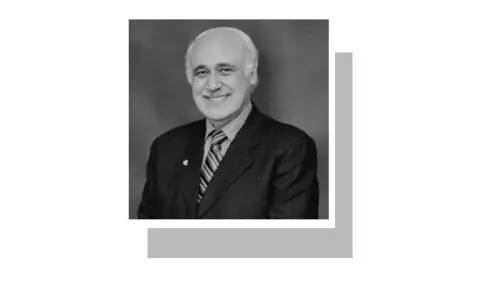
Tristram Hunt is the author of a new biography of Friedrich Engels, The Frock-Coated Communist