0
0

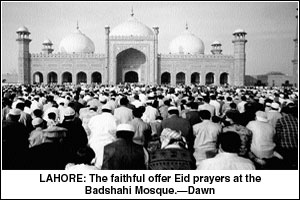 LAHORE, Feb 14: Eidul Azha was celebrated with traditional zeal and religious fervour in the provincial metropolis on Wednesday.
Eid celebrations commenced with the offering of prayers at more than 500 mosques, gardens, parks and open places. The main Eid congregations were held at the Badshahi Mosque, Data Darbar Mosque, Masjid Wazir Khan, Muslim Masjid and the Jamia Ashrafia.
Later, the faithful sacrificed cows, camels, goats and lambs and distributed meat among their relatives, friends and the poor.
The Lahore Zoo, Shalamar Gardens, Jehangir’s Tomb, Kamran Baradari, Gulshan-i-Iqbal, Racecourse Park, Model Town Park, Lahore Fort, fun lands for children, gardens, parks and cinemas attracted crowds on Eid days.
Thin attendance was observed in the offices and educational institutions when these reopened after Eid holidays on Friday.
UNSOLD ANIMALS: A sizable number of animals brought to the provincial metropolis for sacrifice remained unsold despite slashing of prices by traders due to limited financial resources of the people.
The city district government estimated sacrifice of around 300,000 animals whereas the number of households in the city exceeds 900,000. The actual number of animals sacrificed remained below the CDG estimates.
Fancy prices were demanded for the sacrificial animals by the traders in view of the mutton price increase from Rs120 to Rs150 per kg during the past six months and the high prices at which these were sold last year due to short supply. Majority of the traders insisted on charging high prices for the animals till the day before Eid when they started negotiating the prices as the buyers were reluctant to pay high prices.
The prices of sacrificial animals started falling on the night before Eid, and the goats weighing about 35kg being quoted for Rs8,000 to Rs10,000 earlier were sold for Rs4,000 to Rs5,000 each. The prices of smaller goats weighing 20kg were reduced from Rs5,000 to Rs2,500. Sheep were available in a limited number for lesser price, but the buyers preferred to buy the goats. Cows and camels cost at an average of Rs12,000 per head, but were purchased mostly by social welfare organizations, religious institutions and mosque committees for collective sacrifice.
The buying of sacrificial animals started slowing down on Eid day and concluded on Friday, but all the animals could not be sold due to the absence of buyers despite the willingness of the traders to dispose of the same at lower prices because the butchers were offering them much lower prices.
CLEANLINESS: The Solid Waste Management of the city district government failed to collect and dispose of all the waste of sacrificial animals on Eid days as usual.
The SWM had announced distribution of 300,000 polythene bags at the residences of the people for collecting the waste of the animals and hiring of 400 pickups for two days for the disposal of the same. But not even a single bag was, however, delivered as the decision was reviewed quietly after announcement. Only 150 pickups were hired instead of 400.
The special sanitation squads constituted for keeping the city neat and clean during the Eid holidays were also conspicuous by their absence as the SWM officers and the supervisory staff remained pre-occupied with their Eid celebrations.
SWM workers and officials became active with the opening of government offices on Friday morning. The SWM trucks were seen moving around with piles of uncovered garbage which remained piling up all around during the Eid holidays.