0
0


KARACHI: Remittances showed poor growth at the end of the third quarter of the current fiscal year.
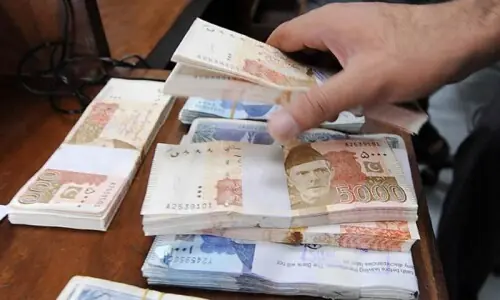
According to a report released by the State Bank, remittances grew by 6.3 per cent in the first nine months, and the total inflow as remittances rose to $10.3bn during the period as compared to $9.7bn in the same period last year.
The change in the growth pattern is significant as during the nine months of last year, remittances had grown by over 21pc as against the corresponding period of previous year.
The State Bank reported that monthly average of remittances during this period was $1.15bn as against $1.08bn in the previous year.
The average is slightly above this year, but the growth trend shows a downward trajectory.
The inflows during March were $1.119bn, lower than the inflows during the same month last year, which stood at $1.143bn.
The third quarter of the current fiscal year witnessed poor remittances growth which may be due to instability and uncertainty on political and economic fronts.
But many experts disagree with these reasons saying the volatile exchange rate regime caused real damage to remittances.
Bankers and analysts said that the exchange rate sharply increased during this period and returned with the same pace, but it again started slipping against the dollar.
During the same period, dollar was traded at Rs99 in the inter-bank market while in the open market, it was traded above Rs100.
Suddenly there emerged a peak shortage of the dollar in open market but it could not sustain despite sharp fall in the State Bank’s foreign exchange reserves and drying up of foreign investments.
A leading money changer said that frequent ups and downs in the exchange rate provided an opening to speculators and Hundi system revived for a short period that affected inflows through the banking system.
He said that the elections in the country created massive cash demand which defused the dollar demand in local market, supporting the local currency to gain against the dollar.
“Payments to IMF will keep pressure on the exchange rate and reserves of the country. Since reserves have been falling fast, there is no hope that exchange rate regime would see another debacle despite continued higher remittances,” said Atif Ahmed, a currency dealer in the inter-bank market.