1
1

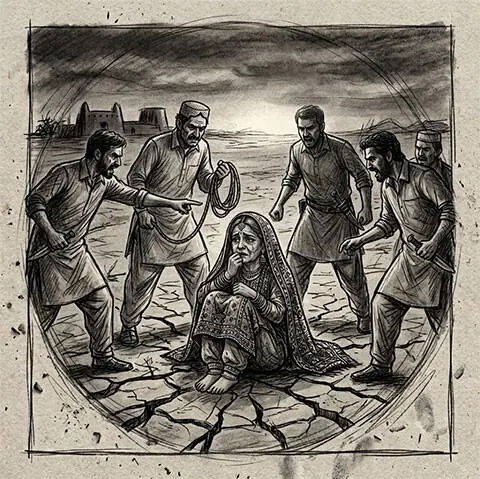
THROUGHOUT Pakistan, especially in feudal and tribal areas, a parallel judicial system exists in the form of jirga or the punchayat system. Although this system does not enjoy any legal cover and its constitutionality may be challenged under Article 175(2) of the Constitution of Pakistan, many people in rural areas make recourse to this system because of their reluctance to use formal judicial system possibly due to their mistrust in police and courts. Jirga or punchayat system has many flaws and has been severely criticized every now and then, especially for its decisions in honour crime cases. Only five most fundamental problems associated with this system are highlighted as under.
First, this system does not follow a judicial procedure, and women accused of honour crime are not provided a right to prove their innocence. The universally recognised principle of law that ‘no one should be condemned unheard’ is thus violated.
Second, as the jirga or punchayat comprises only male members, with no role or representation of women even as witnesses, most of the decisions, especially in honour crimes, are gender-biased and against women.
Third, the jirga or the punchayat consists of only influential people like waderas, sardars and chaudhrys; honour crime and rape cases normally involve women from poor families and men from influential families; there is a strong likelihood that the waderas provide cover to their friends and relatives and decide against the poor. Fourth, decisions of the jirga or punchayat are considered final and binding by the illiterate people and there is no system of appeal if one is not satisfied with the decision.
Fifth, enforcement of decisions, especially death sentences in honour crimes, by the jirga cannot be justified. The jirga has thus assumed all three powers -- legislature, executive and judiciary-- which is against the well-established principle of separation of powers.It is the constitutional obligation of the state to provide justice to its citizens. The government of Pakistan should either abolish this de facto judicial system or take concrete steps to institutionalise the jirga system.
If the government ensures that members of a jirga are fair, honest, unbiased and acquainted with the basic know-how of the law, and there are governmental checks and balances on the powers of a jirga, this parallel judicial system may serve the people and help them to have access to expedient justice.
But the present situation is quite alarming and deserves prompt attention of all relevant authorities.
ZAHEER ABBAS Islamabad