0
0

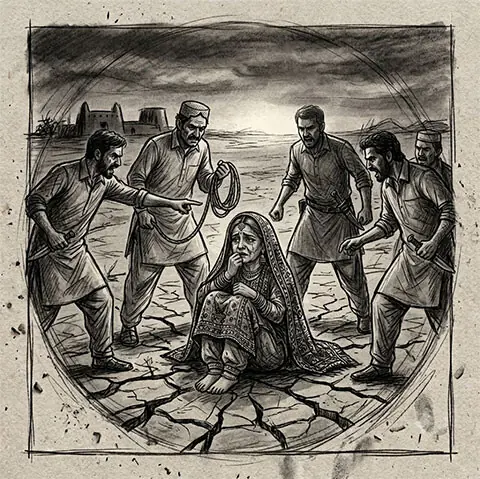
THE recent rise in karo-kari cases is a loud warning that our laws, justice system and society are decaying from within. We have reached a point where control is mistaken for respect, and violence is disguised as honour. The numbers alone should shake our conscience. This year, 105 women have been killed in the name of honour, and over the past five years, more than 500 women have lost their lives to karo-kari.
In many districts, nearly 70 per cent of the accused walk free because the cases are withdrawn, forgiven or settled through informal deals. Behind every statistic stands a woman whose life was ended, not because of honour, but because of ownership.
Karo-kari is an organised system of power; an investment that brings men returns in fear, land, inheritance and control. Once a woman is labelled ‘kari’, she loses her voice, her property rights, and her right to live. Her death becomes a shortcut for men to secure land shares, silence disputes or assert dominance within the family or tribe.
In many tribal belts, the killing is only the beginning; the real negotiations happen afterwards. Jirgas and panchayats turn murder into a marketplace, trading cash, cattle, land and even women to settle the matter. These incidents expose our deepest social fractures. They show that women are still treated not as citizens, but as possessions.
They reveal how feudal lords and tribal elites maintain their thrones through fear. Their power stands not on justice, but on the graves of women. Every honour killing serves as a reminder of who controls whom, and who must stay silent.
The state, sadly, remains an accomplice. Despite reforms in 2016, honour killers continue to slip through the cracks. In many regions, less than 10pc cases result in conviction. Police often refuse to register proper FIRs, calling such incidents a ‘family issue’. Courts delay justice for years. Witnesses disappear due to threats. Families forgive under pressure. And lawmakers hesitate to challenge tribal and feudal structures because they rely on them for political survival.
There is also a cultural silence that strengthens this crime. Many people still believe that honour belongs to men and shame belongs to women. Girls grow up hearing that their mistakes can kill them, but men grow up knowing their crimes can be forgiven. Media coverage fades after a few days. Schools rarely discuss gender rights. Religious leaders often avoid speaking against honour killings directly. The silence becomes a shield for the killers.
There is no mystery, then, about why this curse continues. It will not end — not until the government treats honour killing as a national emergency; not until jirgas are dismantled in practice; not until the police stop acting as spectators; not until education challenges outdated ideas of honour; and, not until society stops blaming dead women for the crimes of living men.
No culture, no custom, no tribe and no system has the right to turn a woman’s life into a battlefield of untamed male ego.
Sanaullah Mirani
Daharki
Published in Dawn, July 4th, 2026