0
0


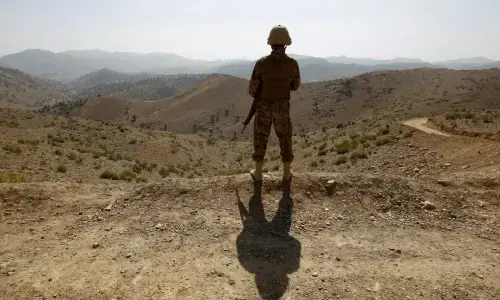
ISLAMABAD: A recent nexus of the Tehrik-i-Taliban Swat militants with the Afghan government may give rise to increased terrorist incidents on Pakistan’s border areas including Mohmand, Bajaur Agencies, Dir, Swat and Chitral, said a report by Pakistan’s premier intelligence agencies.
The report submitted Tuesday before the Supreme Court by Advocate Raja Mohammad Irshad on behalf of the Inter Services Intelligence (ISI) and the Military Intelligence (MI) on military operations in Khyber Pakhtunkhwa (KP) province and FATA suggested that the Swat Taliban, after being dislodged from the area, have resorted to IED (improvised explosive devices) attacks on the law enforcing agencies and Aman Lashkars (pro-government militias).
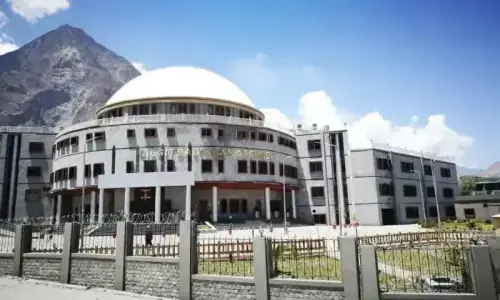
A three-judge bench headed by Chief Justice Iftikhar Muhammad Chaudhry hearing a petition challenging the Action in Aid of Civil Power Regulations 2011 had asked for the report on the setting up of internment centers in KP.
The report also carried graphic pictures of decapitated victims along with compact discs (CDs) and annexure showing statistics of casualties, suicide attacks, target killings, and schools and colleges destroyed from 2008 to 2013.
The government had established internment centers near the Pak-Afghan border at Landi Kotal, Parachinar (Kurram Agency) a tribal area of the KPK which allows the civilian government to detain persons accused of terrorism.
Read out by Advocate Raja Irshad in the open court, the report alleged that sectarian outfits took the leading role by victimisation of the Shia community especially in Quetta and Karachi, and the message conveyed was that the war on terror was not yet over rather the profile has changed and the TTP (Tehrik-i-Taliban Pakistan) has merged itself with sectarian outfits.
The TTP and the allied groups, the report said, have again resorted to conventional methods of gathering funds like collection of chandah (charity), bank dacoities and abduction for ransom.
Referring to the importance of the regulations in the current environment, the report explained that the regulations were enacted to provide legal umbrella to the military and to deal with the unprecedented ground realities.
Furthermore, continuous stationing of armed forces in territories secured from miscreants in the FATA/PATA is necessary and therefore it is imperative that proper authorisation be given to the forces to take measures to incapacitate the miscreants by detaining them during the continuation of the Actions in Aid of Civil Power.
The regulation is also necessary to ensure that the armed forces carry out operation in accordance with the law, the report said.
The apprehended militants, the report explained, have been shifted to internment centers established under the FATA/PATA regulations (Actions in Aid of Civil Power Regulations 2011).
On Jan 24, Attorney General Irfan Qadir had conceded for the first time before the Supreme Court that 700 suspected terrorists were in custody under the regulations.
Meanwhile, the report suggested that the regulations were applicable only during the duration of the action in aid of the civil power and were not applicable once the operation was over or the notification under Article 245 of the Constitution to call the army in aid of civil power was withdrawn.
Those interned, the report disclosed, include some of the most-hardened miscreants and terrorists. If released for any reason, the government is convinced that they would attack the state again and would make every effort to rejoin private armies and carry out terrorist activities and offences against the state, in particular the KP government.
It will become difficult to confine them to KP and they will slip away to main cities like Lahore and Islamabad to start another wave of terrorist strikes, the report said.
In these circumstances it is necessary that the detainees must be confined to the internment centers. Their internment orders document the reasons of their detention, the nature of charges and other details, the report said.
Through a comprehensive de-radicalisation programme, attempts are being made to revive their loyalties towards Pakistan and its Constitution, adds the report.
Advocate Ghulam Nabi, representing Prof Ibrahim of the Jamaat Islami who had assailed the regulations, told the court that he would file a reply to the report by Wednesday.
The Supreme Court subsequently adjourned further hearing until Wednesday.