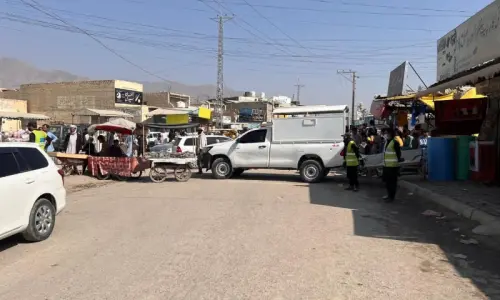
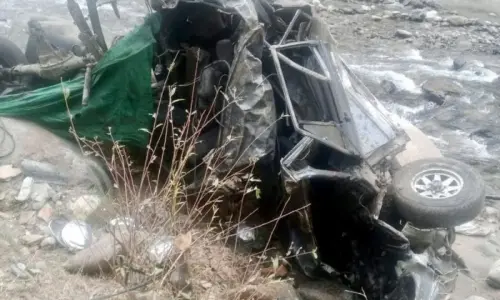
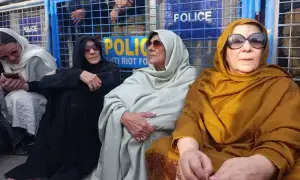
BARELY a month since the horrific and devastating bomb attack targeting the Shia Hazara community in Quetta, the militants have visited yet more damage and destruction on the besieged community. The gargantuan explosion on Saturday that killed dozens and injured many more is a bloody exclamation mark on the state’s continuing failure to protect a vulnerable people, and this time there is no incompetent political government to pin the blame on. While governor’s rule was never going to be able to immediately stop all violence against the Hazaras, the sheer scale of Saturday’s destruction indicates that even the biggest of attacks continue to be planned and executed with the state still unable to disrupt them. And therein lies a central problem with the very imposition of governor’s rule: it wasn’t put in place as a result of a well-thought-out and properly articulated counterterrorism strategy but because of the emotional and powerful protest by the Hazara community that refused to bury its dead after the Jan 10 attack in Quetta.
With no real strategy in hand at the outset, governor’s rule has in effect been making it up as it goes along. Counterterrorism is not about telling the security, intelligence and governing apparatus that it is free to do its job and will be supported in whatever steps it decides to take — it is, instead, about giving proper guidance and direction to the instruments of counterterrorism policy. There exists in Quetta in the recent past a very relevant example of just what a proper counterterrorism approach looks like: the state’s response to the targeted killing of Punjabi ‘settlers’ by Baloch insurgents that caused an exodus of a large number of Punjabis from the city. Without endorsing the army-led security establishment’s tactics — allegations of ‘kill and dump’ and ‘killing the killers’ policies abound — the approach was to systematically map a threat and then work on eliminating it.
Few will admit it, but the threat to the Hazaras has been treated differently for at least a couple of reasons: one, the community doesn’t have much political, economic or social clout; and two, they aren’t very well regarded by ethnic Baloch, either not just a callous state. Unhappily, until that changes, until the state regards the protection of all lives as an equal priority, the Hazaras will continue to suffer.