0
0

WASHINGTON, Jan 20: So far about 2,000 Pakistanis have fled to Canada to escape arrest and deportation from the United States where they had been living for years before forced to leave.
The Pakistan Embassy in Washington says it knows about 400 families who have taken refuge in Canada but acknowledges that many more might have gone quietly.
Pakistani welfare groups, who assist the refugees, say they know of at least 2,000 Pakistanis who have fled to Canada.
“They may be right. We do not have the exact figure but we know many are going,” says Imran Ali, the second secretary at the Pakistan Embassy who deals with such issues.
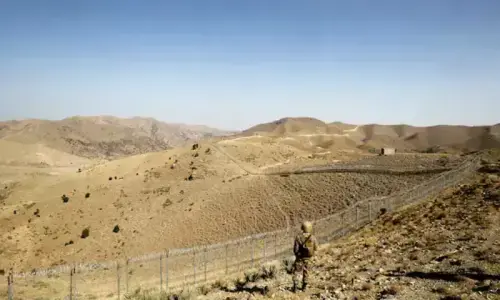
Interviews with some of the Pakistani refugees reveal that most asylum seekers use three border crossings, one in Michigan and two in New York.
Each night, Pakistanis board the midnight Greyhound bus at Manhattan’s Port Authority, and six hours later they arrive at a deserted strip mall on the western edge of Plattsburgh, NY. Taxi drivers charge $50 for the ride up through frozen northern farmlands to the border turnaround.
They walk the final 300 yards through the snow to the Canadian immigration centre.
Another popular route is the Buffalo-Niagara border crossing, which too is in New York.
So far the New York-Canada border is the busiest escape route because New York City has a vast Pakistani community.
Those who use the Plattsburgh route, end up at Canada’s Lacolle Immigration Centre, 30 miles south of Montreal. The centre’s director, Ronald Blanchet, says that since Jan 1, 150 Pakistanis have crossed this border into Canada. In normal times, he said, not more than a hundred Pakistanis crossed this border in an entire year.
In Buffalo, which sits along a busier immigration route, a local shelter houses about 200 Pakistanis a night who wait to walk across the bridge to the Canadian immigration centre and file asylum applications.
Blanchet noted that his staff runs criminal background checks, and relatively few of the Pakistanis fail, showing that the new arrivals are peaceful citizens who were not involved in criminal activities in the United States.
If applicants pass that hurdle, they can continue on to Montreal or Toronto and begin a year-long series of asylum hearings. According to a recent Washington Post report, Canada grants asylum to 54 per cent of the applicants.
Those who are rejected are returned to the United States and turned over to the American border station.
On a visit to the Buffalo shelter, journalists found dozens of Pakistani immigrants from New York city who said they were “fleeing from the night raids and fear of deportation.”
They all walk to the border in freezing cold and many end up with cold and fever by the time they enter Canada.
The Khans had come from Brooklyn where the husband worked at a Pakistani restaurant. He hid in his basement apartment for one whole week after the 9-11 terrorist attacks as he feared retaliation against Muslims. But the need to pay the bills and bring food for his wife and children helped him overcome his fears and he went back to the restaurant.
And when life seemed to be getting normal again, the US government announced this registration plan, requiring visitors from mainly 25 Muslim countries to register with the Immigration and Naturalization Service.
Since the Khans had overstayed their visas, they feared deportation, so they decided to seek asylum in Canada.
The wife pulls tight on her red, Burlington coat to ward off chill and wind, and tugs at the hand of her 6-year-old daughter. She is wrapped in a parka and carries a brown Teddy bear. The daughter cries. “Cold,” Ms Khan whispers. “It’s so cold.” Her husband walks ahead of her, pulling three stuffed valises wrapped in rope. He’s a well-built man, but not being used to such conditions, walks uncomfortably.
They come in a steady stream to these border posts each week, hundreds of Pakistanis like the Khans who have lived — often for many years — in the United States without legal residency papers. Pakistani men living as visitors in the United States have until Feb 21 to register with the INS.
For those without visas in these nervous times, deportation is almost certain. The panic started after Dec 16, when the registration deadline for the first group of Muslim immigrants expired. More than 1,200 of those who came to register were detained.
The detentions have sparked protests and demonstrations but last week the US Justice Department added five nations to the registration programme.
Rather than wait for the inevitable, many Pakistanis have chosen to run, often with families in tow. They hope the Canadians would be more sympathetic.
Khalid, 32, is from Chicago. Instead of going to Michigan, he came to New York to join two other friends who also had decided to seek refuge in Canada.
In another corner of the shelter, sits Rafia, 25, who lived in Washington, DC, with her husband. Instead of risking deportation, the husband returned to Pakistan while Rafia decided to seek a new future in Canada with her two children, a son and a daughter. She has a brother in Toronto who she hopes will help her settle.
Everyone in the shelter is “without status,” meaning that they overstayed American visas, or lost papers or have applications pending. These are proud and brave people who have already gone through a lot in the pursuit of a better future.
Many began their journeys in small, lower middle class homes in Pakistani cities. Many also had worked in the Middle East before coming here where they did achieve some prosperity.
But after prosperity, came the quest for freedom and civil rights, which, as foreign workers, they did not enjoy in the Middle East. So they came to North America, hoping to live with dignity in a free land where their children could get a better education and lead a good life.