5
5

ISLAMABAD, Feb 13: At a conference on "Social Protection in Pakistan," speakers discussed the performance of the Benazir Income Support Programme since its launch in 2008. Many called for serious reforms, noting the passage of the 18th Amendment and reports that the real value of the BISP's assistance has fallen sharply due to inflation.
The conference, organised by the Institute of Development and Economic Alternatives (IDEAS), was held in Islamabad on Wednesday.
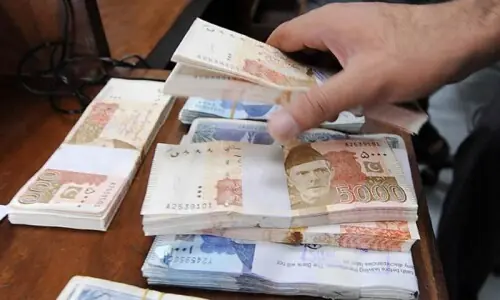
A senior research fellow at IDEAS, Dr Anjum Nasim, claimed that due to four years of persistent inflation and heavy government borrowing, the real value of the monthly Rs1000 the BISP provides to poor families has fallen by over 60 per cent. (A recent World Bank report projected a reduction of 25 per cent.)
He proposed that the amount of the transfer be increased to Rs1500 per month. This would require an additional allocation of Rs25 to Rs30 billion, which, he claimed, could easily be raised through increasing taxes and reducing subsidies on fuel, food and energy.
While the BISP was implemented in 2008, the subsequent passage of the 18th Amendment devolved a great deal of authority to the provinces.
Former State Bank Governor Shahid Kardar suggested that if the provincial and federal governments shared ownership of programmes like BISP, they could be more effective in reducing poverty and increasing protection for vulnerable segments of the population.
He recommended that the federal Planning Commission, with support from BISP management and the provincial planning and development departments, should design a social protection policy that the provinces can customise according to their needs.
Speakers also discussed more fundamental questions about the BISP. Dr. Imran Rasul, addressing the group via video-link from University College London, argued for using asset-transfer programmes rather than cash-transfer programmes.
Cern Mede, a World Bank economist, suggested that mixing conditional cash transfers with unconditional transfers would allow households to take care of basic necessities, such as food, as well as social services, such as education.
A member of the BISP board, Dr Ijaz Nabi, agreed that the ability of cash transfers to help poor people address circumstances such as crop failures, seasonal unemployment, and illness was uncertain.
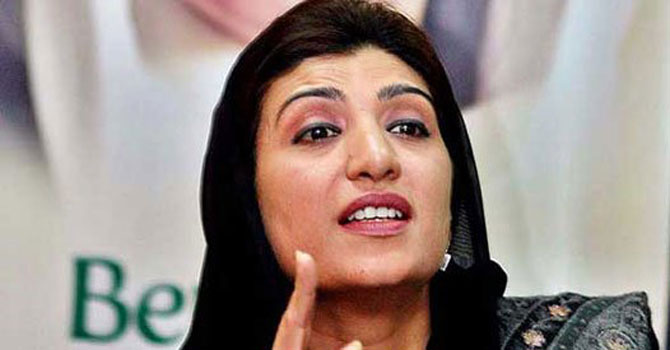
The BISP's Chairperson, Farzana Raja, said that "political resolve" was needed to ensure the programme's success, since it faced very serious tasks. Under the programme's "Waseela Taleem" component, for example, she claimed that 3 million children, out of the 9 million currently not in school, will be enrolled over the next four years.
She denied any suggestion that the government had been using the BISP for political mileage, claiming that it is implement through an autonomous board made up of non-partisan experts on social protection.