0
0

KARACHI, Jan 14: The privatisation of State-owned Enterprises (SoEs) through the capital markets has been stalled for the past four years.
The last of the foreign inflows through privatisation process brought $133.20 million in 2007-08.
The stock market participants observe that the government has perhaps passed the opportunity to reap exceptionally high prices by dithering on privatising big ticket companies.
In the outgoing year 2012, the stock prices hit their peak with the Karachi Stock Exchange giving out a return of a staggering 49 per cent return.
Many recalled that the privatisation had brought droves of new investors in equities, who were enriched by substantial extra income where they were lucky applicants in the Initial Public Offerings (IPOs) in such offerings as of OGDC, Pakistan Petroleum Limited (PPL), National Bank of Pakistan (NBP).
In early 2000s privatisation programme conducted a series of capital market transactions which helped in mobilizing domestic savings and strengthening of domestic capital markets. These transactions also included international market listings in the form of Global Depository Receipts (GDRs) for UBL (U$650.24m) and OGDC ($772.4m).
The privatisation activity was at its peak in 2005-06, when the country received aggregate of $1.540 billion through the sale process of public assets. According to people following the government’s privatisation programme, to date 167 transactions have been completed, which brought Rs476.4 billion for the country.
The Cabinet Committee on Privatisation in March 2011 had approved a roadmap of capital market transactions under which 65 entities were placed on agenda for privatisation. Those included companies in such sectors as Oil & Gas, Power and Financials.
The major transactions included further divestment of 2.5pc of shares in Pakistan Petroleum Limited via Public Offering, which was targeted for April 2012. Divestment of 5 to 10 per cent shares in Kot Addu Power Company (Kapco) through Secondary Offering/Global Depository Receipts expected by June 2012 and Secondary Public Offering (SPO) in Habib Bank Limited.
The investors kept peering as far as they could see, but none of those public offerings came to be made through the capital markets.
But a person close to the commission defended the slack progress by saying that the privatisation programme could not be conducted in isolation and was dependent on both domestic and international regulatory, financial, economic and political environment.
He stressed: “It was particularly highlighted when in 2007 global financial crisis international investors withdrew their investments from emerging markets in the face of strong liquidity crunch in developed markets.”
He stressed that the global financial crisis coupled with the weak domestic environment, which at that time was suffering from political instability and a heightened war on terrorism, stalled the privatisation programme.
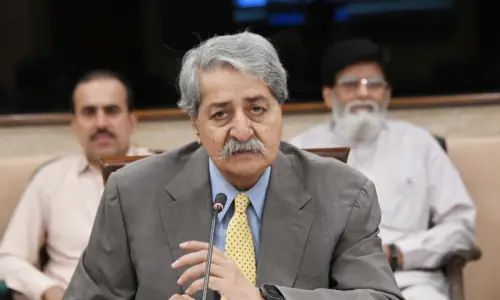
A month ago on Dec 10, 2012, the Federal Minister for Privatisation Jam Muhammad Yousaf, while chairing his maiden briefing in the Privatisation Commission pledged: “We will try our level best to speed up the process of privatisation on a positive note so as to achieve maximum benefit out of it in the shortest possible time”.
Market participants thought that in an unstable political environment and upcoming elections, no offering of shares in SoEs were likely to be made, at least in the first half of the current year.