0
0

WHILE many of the sitting government’s initiatives have seen varying degrees of success, to its credit it has presided over a number of legislative efforts that are markedly pro-women, and represent an attempt at addressing some of the worst practices that are endemic in Pakistan.
Among the laws passed in recent years are the Prevention of Anti-Women Practices (Criminal Law Amendment) Act 2011, the Protection against Harassment of Women at the Workplace Act 2010, and the Domestic Violence (Prevention and Protection) Act 2010 (applicable in the Islamabad Capital Territory only). By comparison, 2012 saw somewhat lower levels of activity with regards to such legislation. The two major legislative efforts that are meant to improve the lot of the country’s female and/or vulnerable population were the National Commission of the Status of Women Act, and the Right to Free and Compulsory Education Act which, of course, is not restricted to women.
But the year past also saw the commission of a crime that encapsulated the predicament that millions of women find themselves in as Pakistan’s economic and law and order situations come under increasing pressure. The Malala Yousafzai incident ought to be taken as a warning about the threats that face quarters that envision Pakistan as a progressive country with equal opportunities for all.
It would not be fair to say that every woman and girl in the country is under as direct a threat as that faced by Malala and her companions. Nevertheless, the challenges in the way of true empowerment for women are real and formidable, and require being addressed with a multi-pronged strategy. At the level of the state, the first step is the formulation of laws that target specific actions and discriminatory stances, and, as such, the growing body of legislation of which the above-cited laws have become part is a gainful exercise. Only once a practice has been criminalised can the project to clamp down on it be initiated.
But the next step is trickier, for persons deemed to have transgressed the law must be prosecuted and, if found guilty, be awarded punishments that would-be offenders would find prohibitive. In terms of legislation regarding women, that means changing mindsets at, for example, police stations, as well as instilling in women the confidence to report their grievances with the certainty that the state will stand by them.
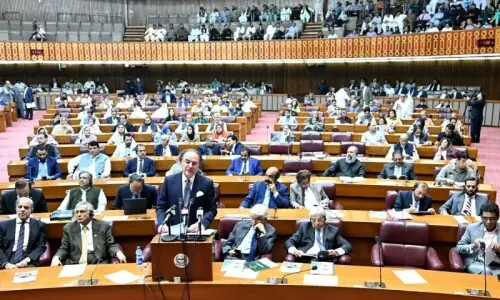
While the situation vis-a-vis women’s rights appears quite abysmal in comparison with many other parts of the world, and even some other developing countries, it is encouraging to note that in the legislative assemblies over the year, women have tended to outpace men in their performance. As the law books are put right, and with increasing women’s participation in the corridors of power, there can still be hope.
The writer is a member of staff.