Being an advocate of public health myself, I have been looking at the health side of the negotiation business. Health degradations are among the most significant damages from climate change, and health can be a motivational force towards public engagement in climate solutions. My problem is that health is the least emphasised of the topics in these climate change conferences abroad or at home. Even our National Climate Change Policy, of March 2012, has health as its weakest link. The policy is deficient in intent, substance and even language.
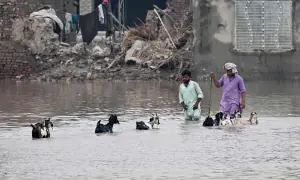
Thinking about this round of Doha conferences, I am wondering about the morality of the disasters brought by droughts, floods, tsunamis and earthquakes due to climate change. Is the change brought to the climate, and the disasters it wreaks on us, a moral issue or does the issue lie with us humans, and the ways in which we prepare for and cope with such disasters; (especially, perhaps, on how we help the victims.)
Since Adam and Eve’s original sin, God, we are told, has punished their children for disobedience, depriving them of heaven, and creating a hell for them on earth. The United States has come to Doha less than a month after Superstorm Sandy struck its east coast but their stance is as headstrong and defiant as ever in regards to accepting responsibility as the biggest polluter of the world and thereby, being one of the largest nations to be so intrinsically responsible for climate change. The US delegates kept saying it is making "enormous" efforts to slow global warming and help the poor nations most affected by it.
The main stumbling block in forging a consensus in the climate negotiations has been the self-centered stance of the US delegations to these conferences. The US did not sign the Kyoto Protocol; and even one of our two major political parties denies the science behind climate change. The US climate change negotiator Jonathan Pershing has said it. “There is no chance of the USA signing up to a climate deal that requires the country to make substantial cuts in its emissions”.
US President Barack Obama, who has just re-won the election, has already said that he will only take actions that will boost US jobs: “if the message is somehow we’re going to ignore jobs and growth simply to address climate change, I don’t think anybody’s going to go for that. I won’t go for that,” he said.

The views expressed by this blogger and in the following reader comments do not necessarily reflect the views and policies of the Dawn Media Group.