0
0

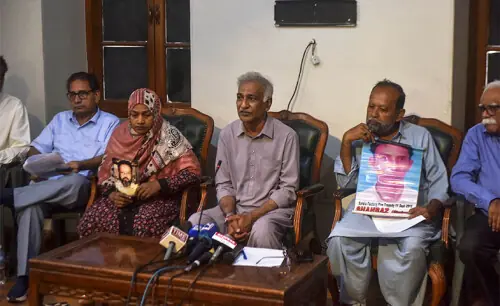
HYDERABAD, Nov 29: Speakers at a seminar have called for the establishment of peasant courts on the pattern of labour courts and suspension of imports from India until the farmers here become financially on a par with their Indian counterparts.
The seminar, ‘Food, justice and prosperity’, was organised by the Research and Development for Human Resources in collaboration with Oxfam at the local press club on Thursday.
President of the Sindh Abadgar Board (SAB) Abdul Majeed Nizamani said that with the passage of time the Sindh Tenancy Act (STA) had become ineffective and needed to be amended to make it helpful in resolving issues of tillers and landowners.
He said India gave Rs245 billion subsidy to its agriculture sector against zero subsidy in Pakistan. Even before and after partition Pakistan used to have higher productivity than India, but now India had outdone Pakistan.
He said 1.7 million acres of riverine forests and mangroves had been destroyed. The agriculture sector had become non-profitable thanks to successive governments’ faulty policies. Sindh faced disasters because of encroachments on rivers and waterways during the past three years, causing losses of billions of rupees to agriculture.
He said Pakistani farmer was economically weaker than Indian, therefore, Pakistan-India exports or imports should be allowed only when farmers of the two countries became economically on a par with one another. Import of non-tariff goods from India through the Wagah boarder be banned, he demanded.
Comrade Jam Saqi said peasants lived like slaves as the government was not serious about resolving their problems. They did not get fair prices for their produces. There was no difference between prices of firewood and sugarcane, fixed by the government. Sugar mills had not started crushing while the government remained helpless instead of taking action against mill-owners. Farmers in Sindh be provided free electricity as in India, he demanded.
Former advocate general of Sindh Yousuf Leghari said 77,000 villages of peasants were unregistered. They be registered and peasant courts set up on the pattern of labour courts.
He said peasant be given rights like that of industrial labour by the Industrial Act.
The STA should be revised accordingly and peasants be provided health and education facilities.
The Sindh Chamber of Agriculture’s Mohammad Khan Sarejo called for enactment of laws for the betterment of the agriculture sector. The peasant-landowner relationship was a friendly one and they were inseparable when it came to their economy.
He opposed efforts aimed at disturbing the equation.
Sindh Hari Committee chief Azhar Jatoi deplored that the peasants in the country were treated as slaves as they were not protected under any law.
The establishment and feudals did not want peasants to prosper. The late Hyder Bux Jatoi had spearheaded a campaign for the peasants and got the STA enacted, but it had not been implemented so far, he said.
Punhal Sario of the Sindh Hari Porihat Council opposed corporate farming in Sindh which, he said, was aimed at handing over land to foreigners, who would not be governed under labour laws. Such a decision was harmful to peasants of Sindh.
The STA had become outdated and peasant courts be established to protect their rights, he added.
Maqbool Mallah proposed that haris’ villages be regularised and they be given proprietary rights. Peasants courts be established at the district level to resolve issues such as bonded labour, judicious distribution of water and land disputes.