0
0

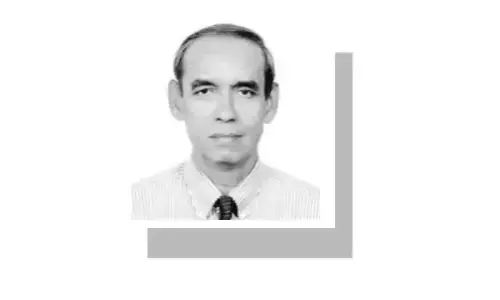
A MAN of myriad talents, Ardeshir Cowasjee, who died in Karachi on Saturday at the age of 86, will be remembered as much for his uncompromising stance on matters of principle as for his acerbic wit.
By profession a businessman who turned his hand to government service on occasion, he was for many years a columnist for this newspaper, arguing for fair play on a host of issues ranging from environmental degradation to corruption irrespective of where it occurred.
Born in Karachi in April 1926, Ardeshir Cowasjee was the son of ship-owner Rustom Fakirjee Cowasjee, a leading businessman and merchant. He studied first at the Bai Virbaijee Soparivala (BVS) Parsi High School and then at the DJ Science College.
As the Second World War broke out, he joined the family business and focused on the shipping side, in which he had most interest. Indeed, years later, when the shipping company was nationalised by the Bhutto government in 1974, Ardeshir Cowasjee was vocal in his criticism of the move and it remained a sore point with him.
Marrying Nancy Dinshaw in 1953, Ardeshir leaves behind him two children, daughter Ava who works with the family business in Karachi, and son Rustom, an architect based in the US.
In 1973, Ardeshir Cowasjee was appointed by the Bhutto administration as the managing director of the Pakistan Tourism Development Corporation, though he did not stay in that position too long. He then was appointed chairman of Port Qasim Authority and again, his acerbity and straightforwardness ended up alienating the powers that be and he was relieved of the post.
In 1976, for reasons still unknown, he was sent to Karachi Central Prison for 72 days’ ‘rest and recreation’.
During the Ziaul Haq years Ardeshir Cowasjee had a very brief stint as an adviser on ports and shipping but once again, his temperament meant that the posting was short-lived. In 1988, when Gen Zia was killed and the caretaker government freed the press from the severe restrictions that had earlier been imposed on it, he started contributing to the ‘letters to the editor’ section of Dawn.
The biting accuracy and fearlessness of his observations led to the newspaper inviting him in 1989 to become a weekly columnist, published first on Fridays and then Sundays. This involvement continued over the next 22 years until, at the age of 85, he decided to cease writing regularly. His last piece of writing as a weekly columnist was published on the last Sunday (Dec 25) of 2011, though he promised to write on a case-to-case basis when invited.
Much though he disliked the description, Ardeshir Cowasjee can best be described as a committed crusader against corruption and a dedicated campaigner against all sorts of environmental abuse, particularly the practice of land-grabbing of amenity plots in Karachi and the violation of building regulations. Through his columns — and through court as well — he exposed corruption wherever he found it, regardless of who was involved.
He was equally impatient of incompetence, nepotism, outright or stealthy robbery and the infringement of law. He spared none, from those at the pinnacle of power to the lower stooges who serve their purposes.
Ardeshir Cowasjee made enemies and was threatened, but his stance remained uncompromising. He used his pen to tirelessly raise public awareness against the lawlessness and criminality that has been inflicted on society. A soon-to-be-launched book, Vintage Cowasjee: A Selection of Writings from Dawn 1984-2011, re-publishes his work. Amongst the issues he raised often was the urgent need for an independent judiciary that could truly uphold human rights and the rule of law.
Mohammad Ali Jinnah, the man and his convictions, was amongst Ardeshir’s main topics of writing. Even as he quoted the man who brought about Pakistan, Ardeshir made it his mission to remind his readers what Jinnah had wished from the country he had made possible.
In his later writings, as Pakistan slid deeper and deeper into chaos, it was possible to discern behind the façade a heart broken by what the country had become; yet he will remain an inspiration for the many who still believe in a better future.