0
0

As Z.A. Bhutto launched his campaign for the recognition of Bangladesh, he met with resistance from the opposition. But he remained undeterred because he knew that India had all the cards. After a tour of Khyber Pakhtunkhwa he came to Punjab, one of his power bases. As in the 1965 war, Punjab was the worst affected during the 1971 war and most of the POWs belonged to Punjab. Knowing that he had to be cautious in his move, Bhutto intelligently played a political stunt. In Faisalabad he announced the release of more than 600 Indian POWs who were arrested during the 1971 war. It soothed the feelings across the border.
In Sindh he faced no difficulty as it was his home province; he travelled the whole of Sindh, met notables and addressed a few rallies at selected towns and cities. His rallies in Sindh not only encouraged him, but also gave him the mandate to recognise Bangladesh at any moment he chose.
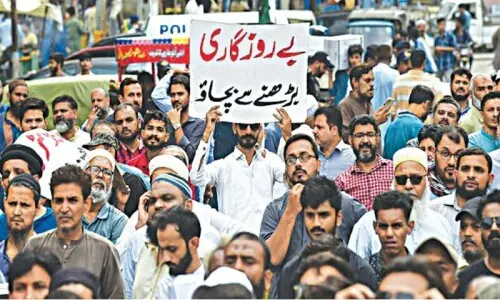
Jamaat-i-Islamai and some other rightist groups were organising protest rallies and even resorted to picketing the towns and suburbs of their choice, but this did not deter Bhutto from carrying out his mission. He did it at a fast pace as he had reportedly pledged to Indian premier, Indira Gandhi, that he would get Bangladesh recognised by late August.
From his country-wide tour Bhutto concluded that people were with him on the recognition issue but he knew it was the National Assembly which would authorise him through a resolution to make a formal announcement. In the first week of January 1973, Bhutto visited Karachi to speak on the issue of recognition. Being under the influence of Jamaat-i-Islami, the Nishtar Park audience were not prepared to accord him a “Manzoor” vote and chanted “Namanzoor”. Seeing the situation Bhutto also started raising slogans “Namanzoor, Namanzoor”. It worked well and after a while hundreds of people came near the stage, dancing and raising slogans of “Jiye Bhutto”. At the end of this show people settled down to listen to him; he warned them that if they did not want to recognise Bangladesh he will not do so, but then they should not blame him for the rising prices as the government would not get any international assistance till Pakistan recognised Bangladesh. This calmed the audience.
Bhutto was to leave for the United States on the invitation of President Nixon on July 16. He wanted the National Assembly to pass a resolution for the recognition as it would facilitate him in his talks with the US president in Washington and with Indian and Bangladeshi officials in New York. On the final day he addressed the National Assembly and the session continued till early morning. He spoke about the purpose of recognition, responded to opposition’s criticism and hopes for the future. Finally, the House agreed and the resolution was passed at 3am, July 15, 1973.
Bhutto flew to the US but on the way he had stopovers at Paris, Geneva, Rome and London for recreation. Incidentally, at Rome he was informed by the White House that President Nixon was not well, which forced him to stay longer in Europe. It later surfaced that President Nixon was not ill but busy sorting out the fallout of the Watergate scandal. Bhutto arrived in London on July 23, 1973, where he met the British Prime Minister Edward Heath, who hosted a formal dinner and they held talks on topics of mutual interest.
Reports suggest that during this meeting the British prime minister advised Bhutto “to take a less rigid stand on the question of the trial of the 195 POWs and instead recognise Bangladesh soon, so that the situation in the subcontinent eased and the process of normalisation was allowed to go ahead”. There was no obvious reason for this advice but Heath appeared perturbed over the increasing influence of Soviet Union in the region. It appeared that Heath’s advice sounded feasible to Bhutto, as he was eager to normalise ties because it suited Pakistan the most. It was also considered necessary because with the recognition of Bangladesh foreign aid to Pakistan was expected to begin flowing; however, the debt used by the then East Pakistan was questionable and an agreement in this respect was also needed.
Bangladesh claimed that Pakistan, in league with China, was blocking the entry of Bangladesh to the United Nations which was against the spirit of the Simla Accord.
Bhutto had weighed all options and seemed prepared to declare the recognition of Bangladesh, but he wanted to take full advantage of it and waited for some appropriate time. It came a year later.
shaikhaziz38@gmail.com